


20 Backyard Ideas For Kids That Actually Get Used
A yard full of potential and a child who drifts back inside within ten minutes is one of the most familiar parenting contradictions.
The best backyard ideas for kids tend to share one quality: they invite an obvious action the moment a child steps outside.
Most backyards have more usable space than they first appear, especially once the lawn stops being treated as one undivided rectangle.
Setup cost and upkeep time vary wildly across these ideas, so it helps to know which ones need almost nothing to maintain and which need a seasonal check.
A few of these work in tight suburban plots; others need a decent run of open lawn, and that distinction is worth knowing before committing to anything.
1- Backyard Swing Set With Slide
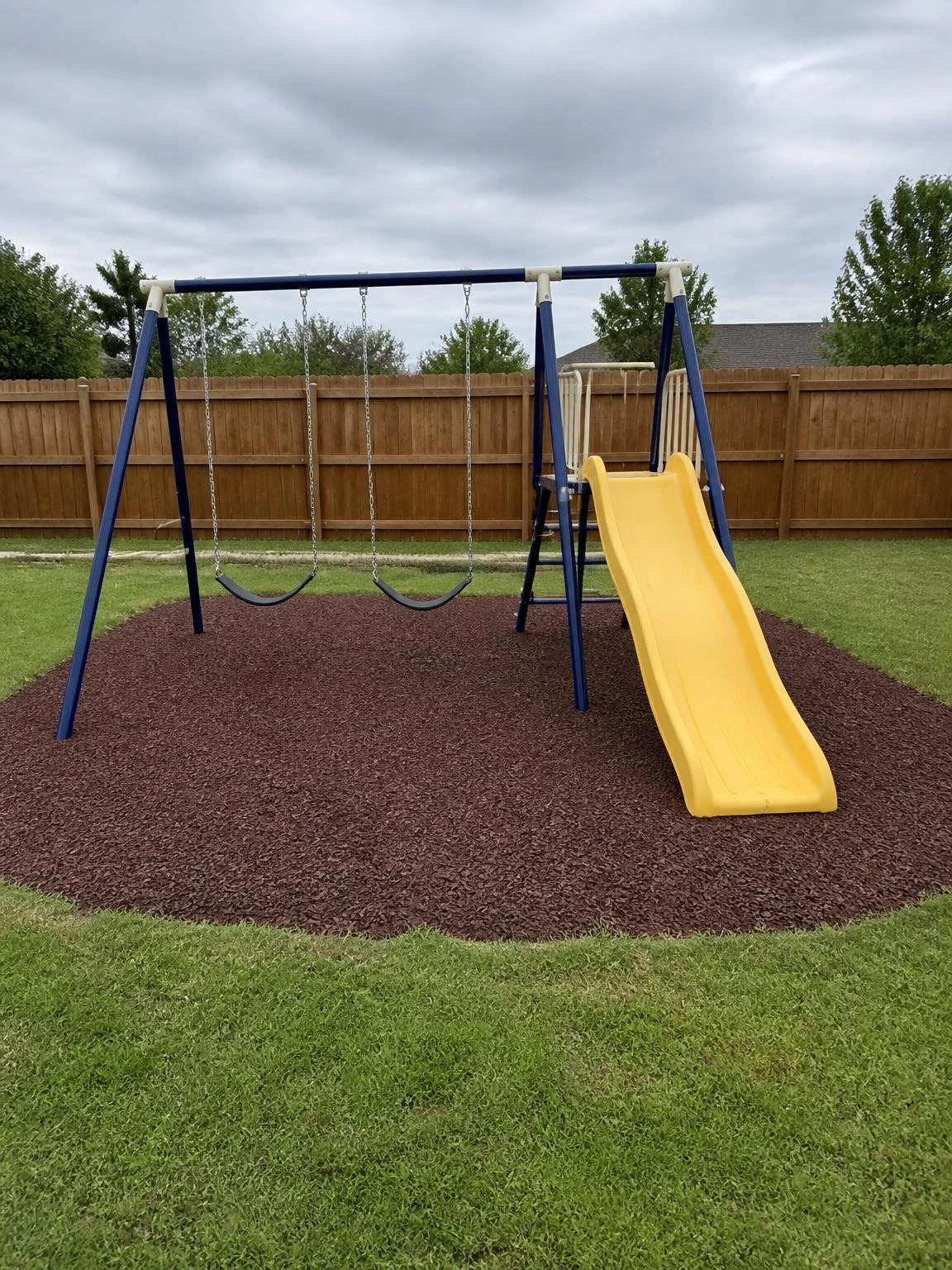
A powder-coated steel A-frame in navy and ivory holds up to years of hard use better than painted timber, which tends to crack at the joints.
Two belt swings and an attached yellow UV-resistant plastic slide give children something to do immediately without needing equipment or rules explained.
Lay a rectangle of rubber mulch safety surfacing under and around the structure, extending at least six feet from the outer edge in every direction to meet standard fall-zone guidelines.
The mulch also defines the play zone visually, which helps keep lawn mowing straightforward around the edges.
Before anchoring the frame posts, check your local codes for required setback distance from fences, since this varies between municipalities and can affect where the set can legally sit.
2- Raised Sandbox With Lid
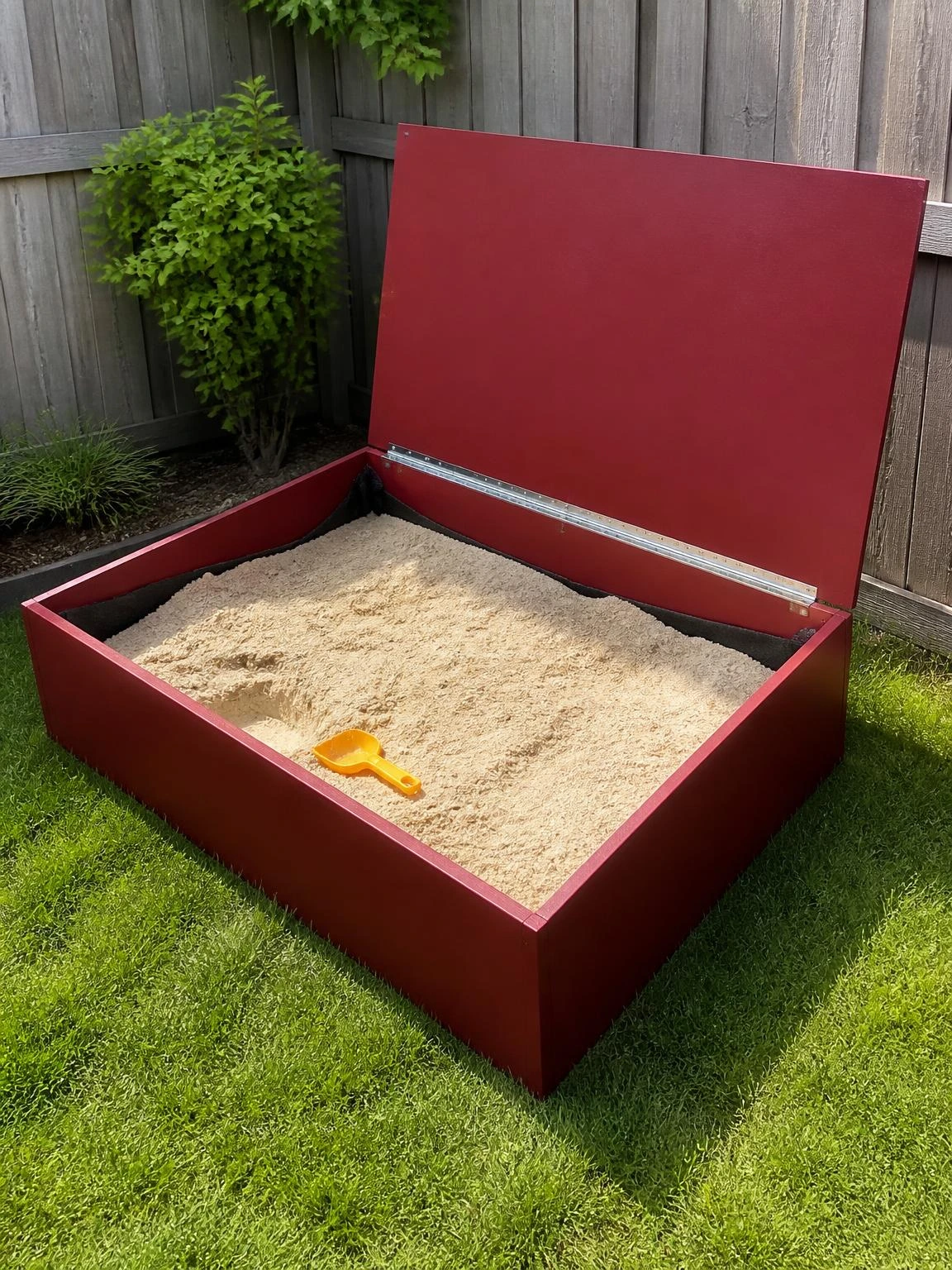
A sandbox without a lid is essentially an open invitation for neighborhood cats, and the problem compounds quickly once word gets out.
Build or buy a rectangular raised box with smooth-painted plywood sides and fit a hinged lid using piano hinge hardware so it opens fully and stays propped.
When the lid closes flat it doubles as a bench seat, which is genuinely useful rather than just a design note.
Line the base with landscape fabric before adding play sand; it allows drainage while blocking burrowing insects from moving up through the floor.
Paint all exterior surfaces with an exterior-grade paint in a color that reads well against the lawn, something in the warm gray or burgundy range sits quietly in most backyards.
Keep the sand depth at around six to eight inches so there is enough to dig without the box becoming too heavy to reposition.
3- Backyard Water Table Station
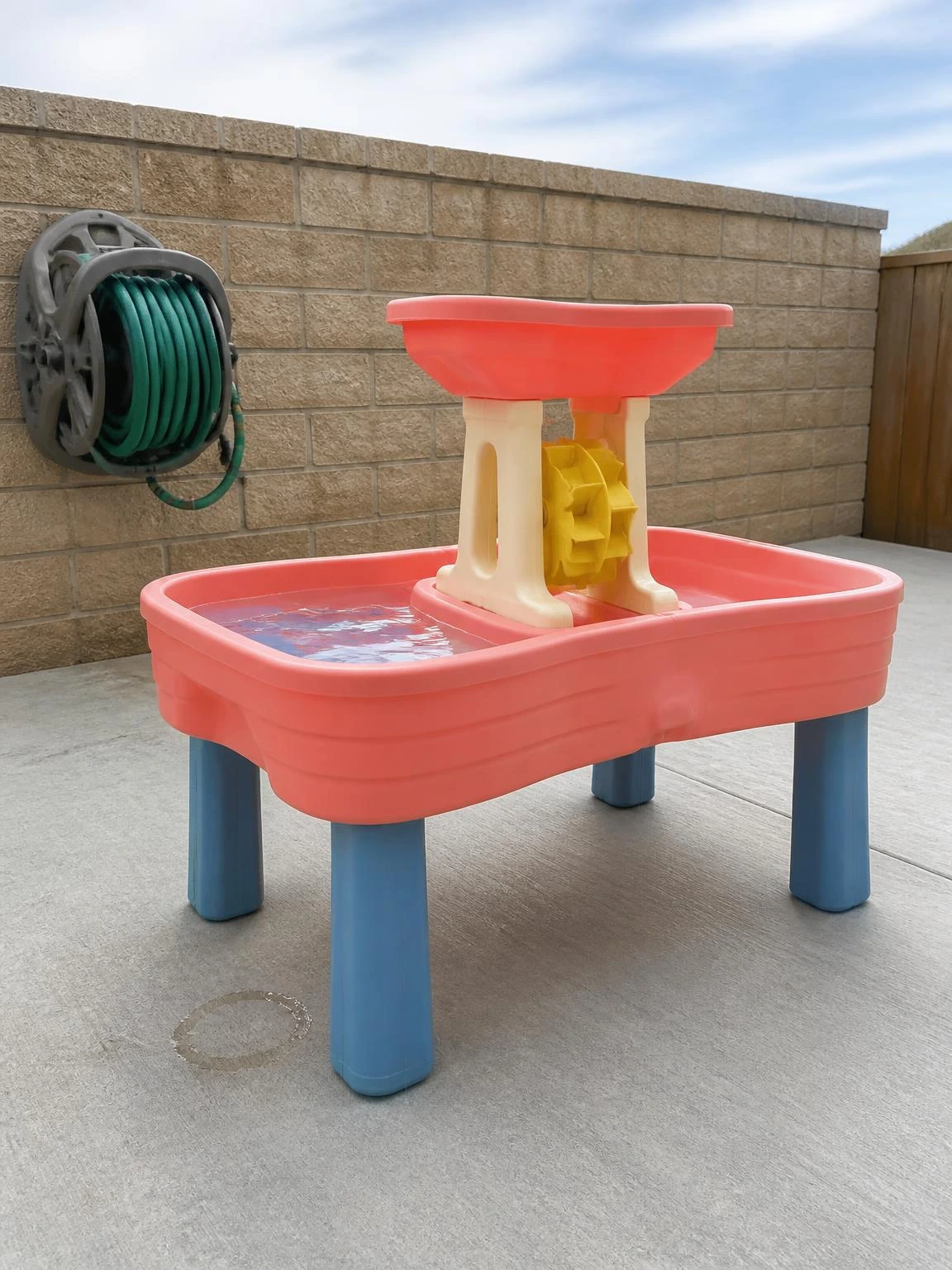
A coral-accented molded plastic water table at toddler height with two basins and a central waterwheel is one of the simpler ways to occupy a two to five year old on a warm afternoon.
Place it on a sealed concrete patio slab rather than lawn, since the surrounding ground stays drier and the table sits level without sinking.
Keep a wall-mount hose reel nearby so refilling is quick and the hose does not become a separate obstacle across the patio.
Empty and tip the table at the end of each day to prevent standing water accumulating in the basins and becoming a mosquito breeding site.
Children must be supervised at all times around any standing water, regardless of how shallow the basin appears.
4- Backyard Chalk Pavement Zone
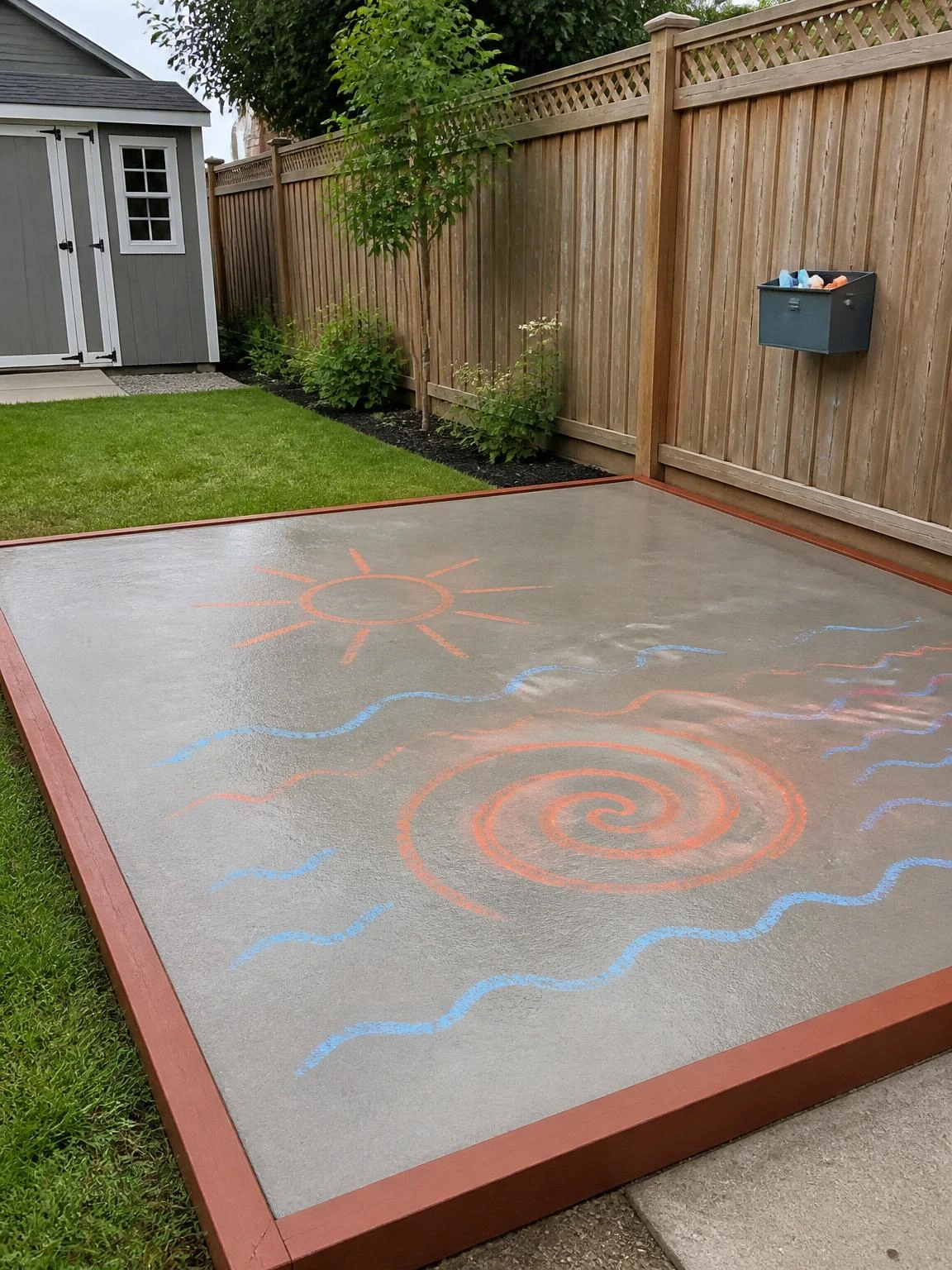
A dedicated chalk zone works better than a general patio because children know exactly where drawing is welcome, which saves arguments about other paved areas.
Define the section with a low painted timber border so the zone has a clear edge from the surrounding lawn.
Mount a small powder-coated metal bin on the nearby fence or wall to hold chalk sticks; it keeps them off the ground and off garden furniture.
Seal the concrete with a water-based masonry sealer before first use so chalk washes off cleanly with a hose rather than staining into the surface.
Unsealed concrete absorbs chalk pigment with heavy use and can leave a persistent ghost of drawings even after washing, so the sealer step is worth doing properly before the kids arrive with their first sticks.
5- Kids’ Backyard Mud Kitchen
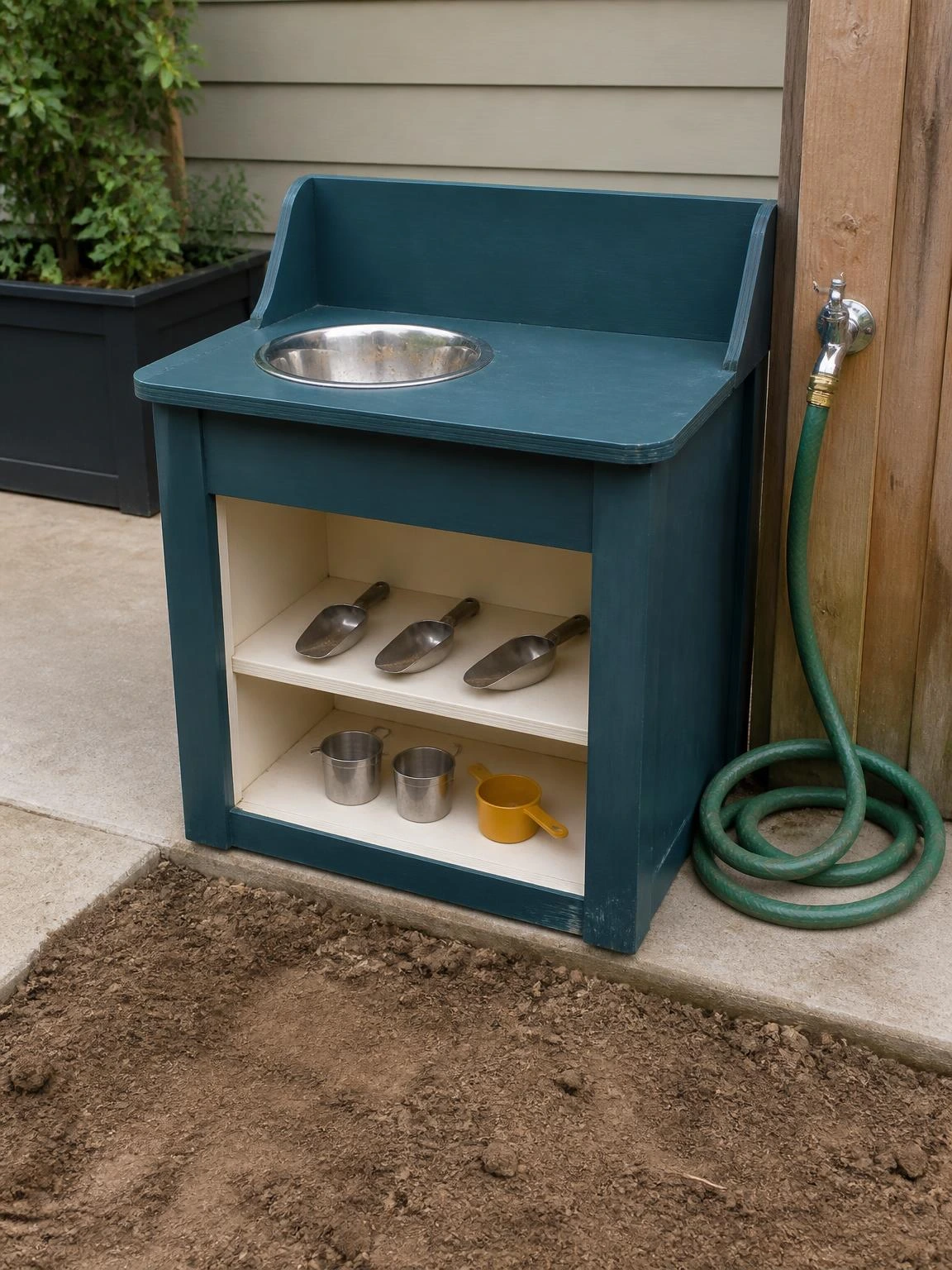
A mud kitchen built from an exterior-painted plywood cabinet placed at the edge of a patio, with a packed-dirt play area in front, gives children a defined space for the messy play that happens anyway.
Set a stainless steel mixing bowl into a cut opening in the counter surface so it sits flush and stays put during enthusiastic stirring.
Paint the whole unit in deep teal with warm white shelving below, and store metal scoops and cups on the lower shelves where small hands can reach without assistance.
Use exterior-grade paint on every surface and seal all cut plywood edges with waterproof wood glue to prevent delamination when rain or hose water gets in.
Avoid pressure-treated lumber for any surface children will touch directly, since the treatment compounds are not appropriate for prolonged skin contact.
A nearby hose bib on the fence post makes the whole setup self-contained and keeps children from trailing mud into the house for water.
6- Backyard Stepping Stone Path
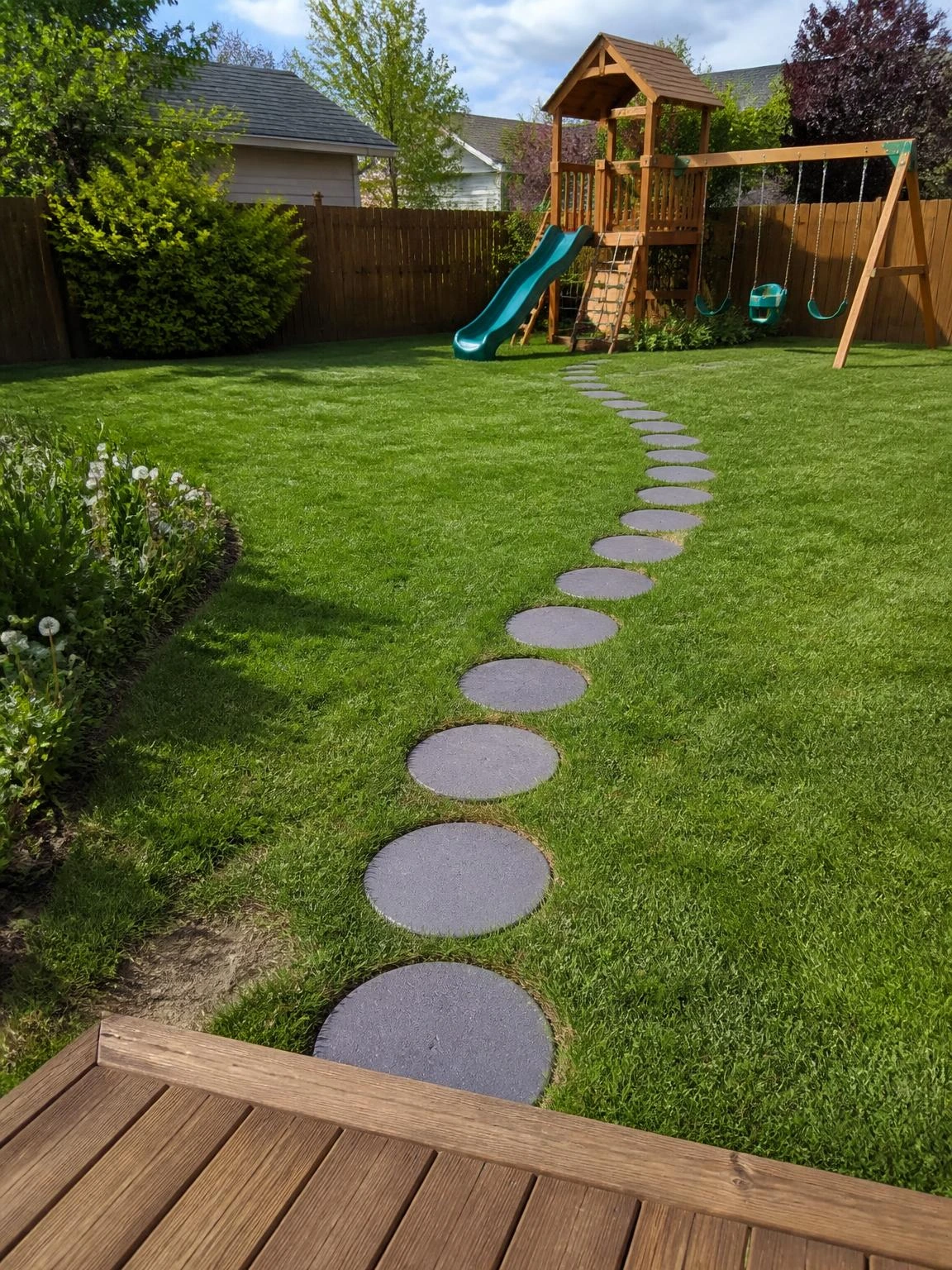
A gently curving path of round precast concrete stepping stones connecting the patio to the play area gives children a clear route and quietly stops a dirt track from forming across the lawn.
Space the stones for a child’s stride, which in practice means closer together than an adult would naturally place them.
Set each stone flush with the soil surface so a lawn mower passes over without catching an edge, which removes the main maintenance headache of stone paths in lawn.
Stones placed too far apart for small legs cause children to step off into the grass almost immediately, so the spacing really does matter more than the aesthetics here.
Muted plum or stone-toned precast pavers read calmly against healthy lawn grass without competing with the rest of the yard.
7- Outdoor Art Easel Station
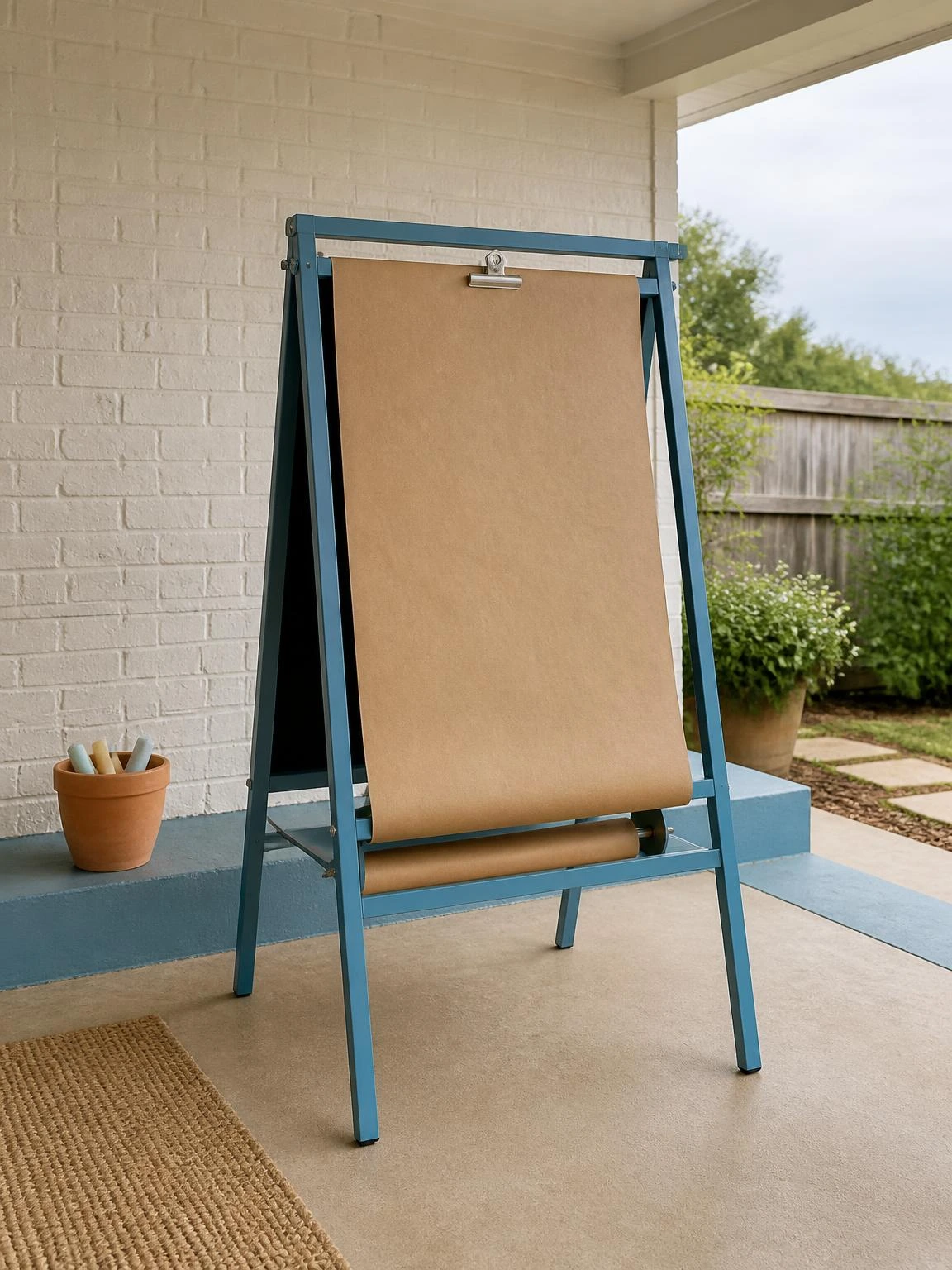
A powder-coated steel double-sided easel set on a covered patio handles most weather conditions without rusting, provided the hardware is genuinely rust-resistant rather than just painted over mild steel.
One side holds a melamine chalkboard panel; the other carries a kraft paper roll on a dowel holder, giving children two different drawing surfaces without needing to carry supplies outside.
A magnetic clip on the paper side holds sheets firmly in a light breeze, which is a small detail that makes outdoor drawing sessions far less frustrating.
Store the paper roll indoors when not in use; even on a covered patio, humidity causes the roll to swell and the paper to wrinkle within a few weeks.
Paper-roll holders left fully exposed to weather without any overhead cover will deteriorate quickly, so this idea genuinely depends on having at least a partial patio roof.
8- Backyard Balance Beam Course
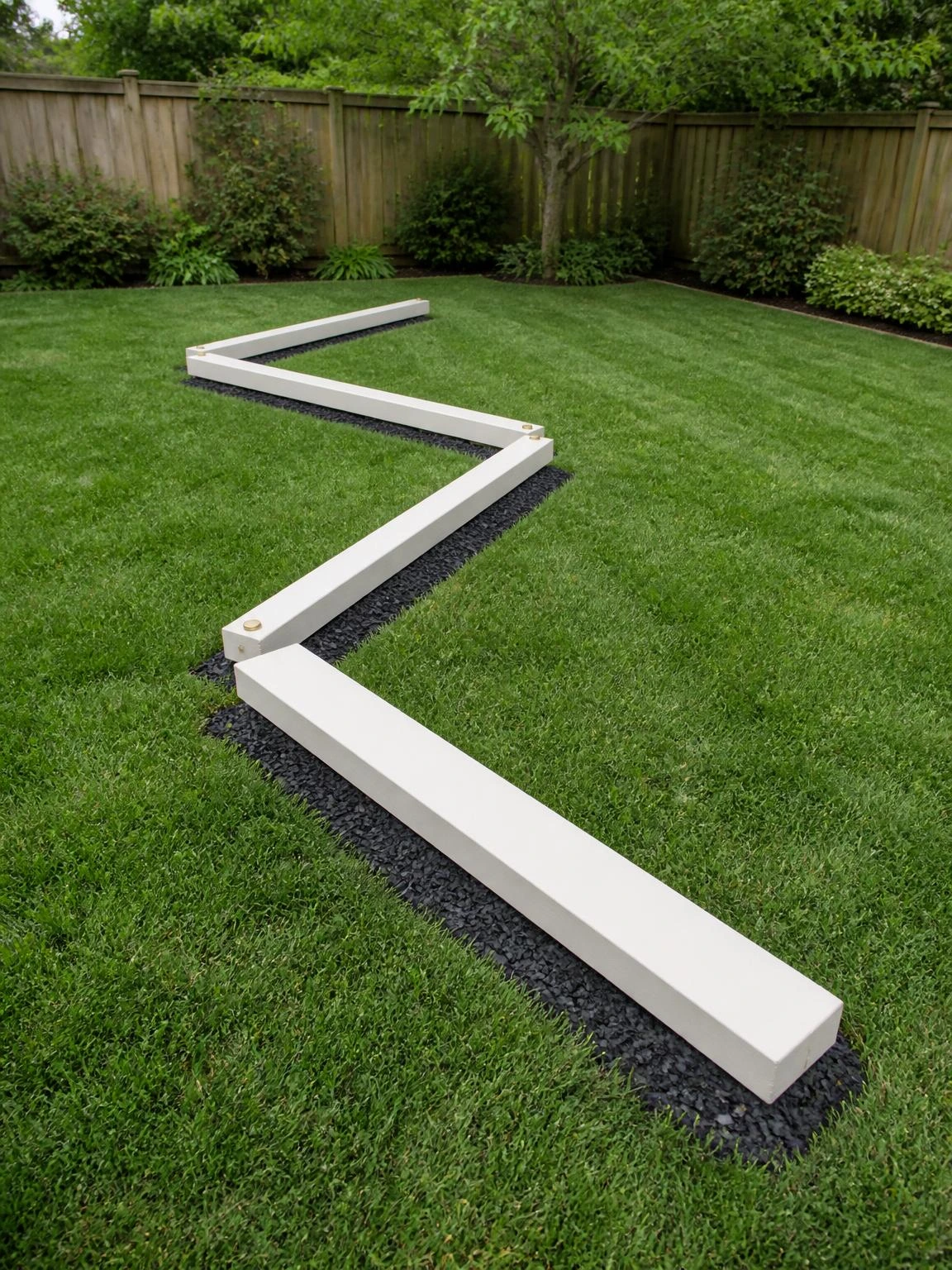
Three smooth-painted timber balance beams arranged end-to-end in a slight zigzag across the lawn make a course that holds attention longer than a single straight beam ever does.
Vary the beam widths slightly across the three sections so each one presents a different level of difficulty as children progress along the course.
Secure each beam with short galvanized metal ground stakes and lay a rubber mulch strip beneath each one to cushion the inevitable step-offs.
Sand all surfaces to a smooth finish before painting with exterior paint; splinters on a balance beam are particularly likely because children grip the sides when they wobble.
Keep beams at ground level so that falling off means stepping down rather than dropping, which removes the need for any additional safety surfacing beyond the mulch strip.
9- Backyard Sprinkler Splash Pad
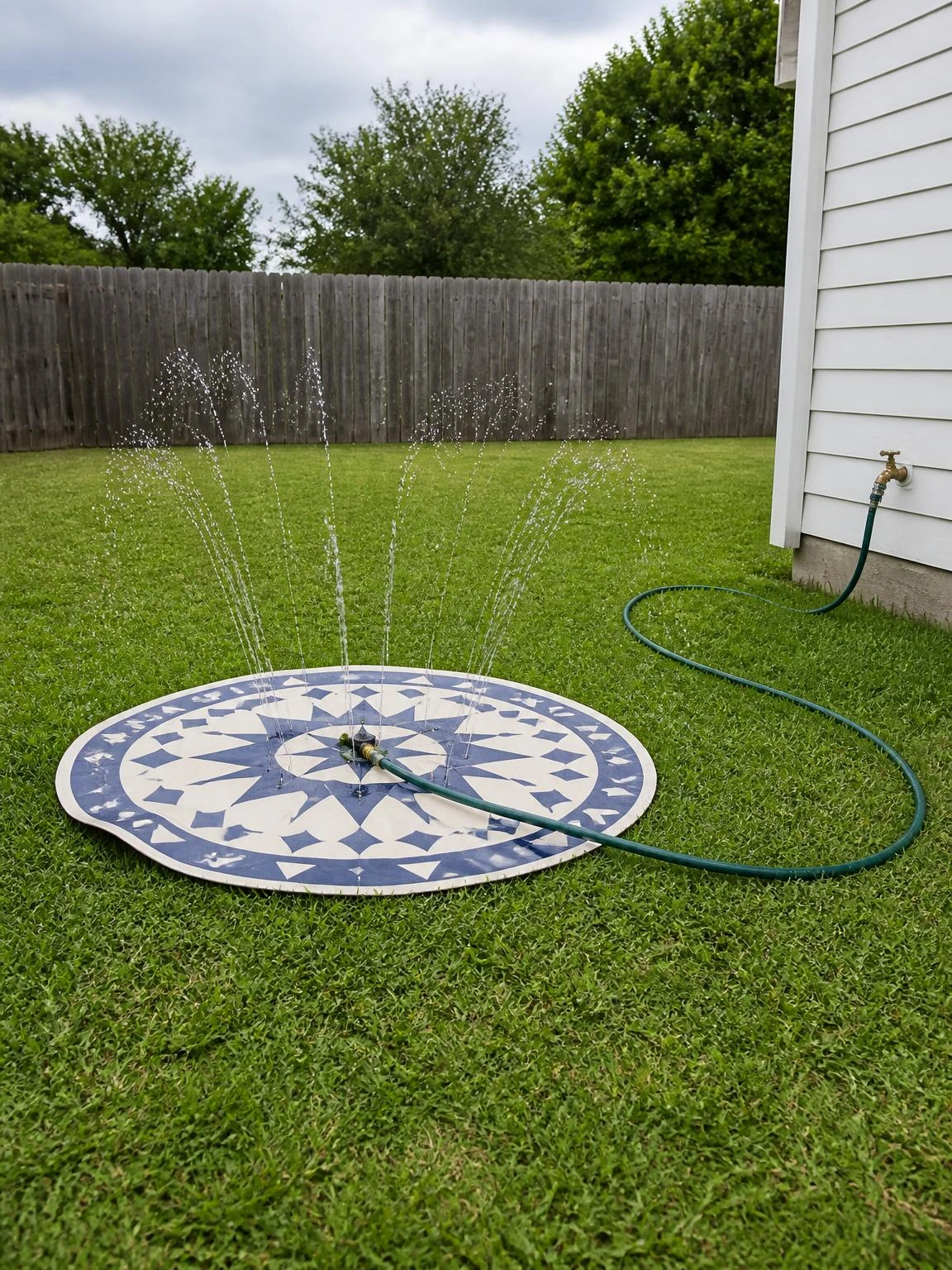
A round PVC splash pad mat laid flat on the lawn with a central hose connection is one of the more affordable summer additions for young children, and it stores in a bag when the season ends.
Connect it to a standard garden hose and the small nozzles spray upward across the mat surface, which children find entertaining at a level a regular sprinkler never quite achieves.
Move the mat to a different lawn section with each use to prevent grass kill from prolonged water saturation in one spot.
Do not use the mat on concrete or paving; on hard surfaces it shifts under wet feet and becomes a slip hazard almost immediately.
A navy and ivory mat reads crisply against green lawn and tends to show less dirt between uses than lighter solid colors do.
10- Backyard Playhouse With Porch
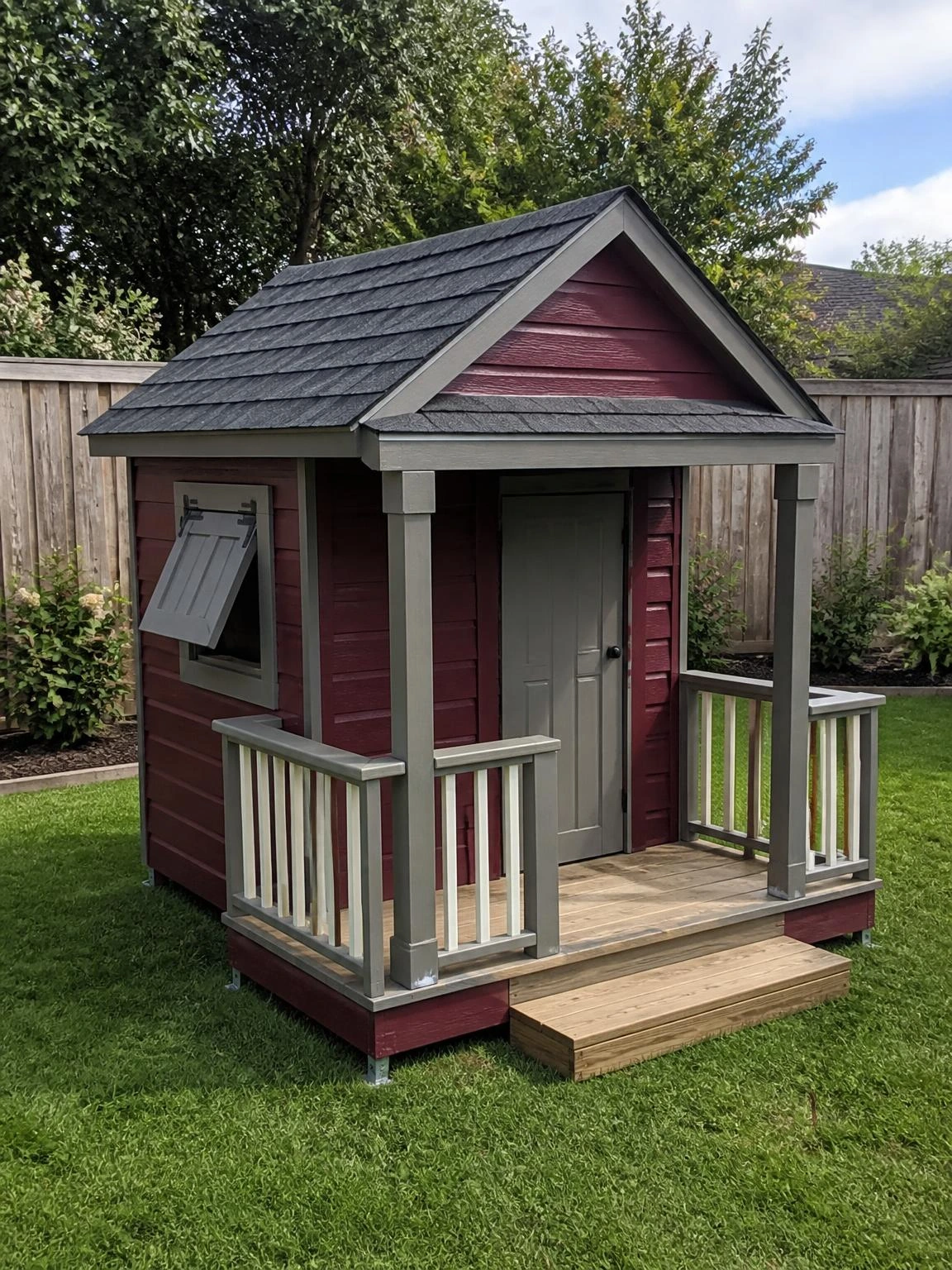
A compact painted timber playhouse with a gabled roof and a small covered front porch gives children an outdoor space that feels genuinely separate from the adult parts of the yard.
Use exterior-grade timber cladding in burgundy with warm gray trim and an asphalt shingle roof, which handles rain and UV better than most painted roof panels at this scale.
Build or position the porch so the roof pitch sheds water away from the doorway, keeping the step-up area usable in light rain rather than becoming a puddle.
Anchor the playhouse to ground stakes rated for your soil type; an unanchored structure on soft lawn can tip in strong wind even when children are inside.
A single functional shutter on the window and a low porch railing are the details that make a playhouse feel like a real building rather than a toy, and children respond to that distinction more than most adults expect.
11- Backyard Outdoor Chalkboard Wall
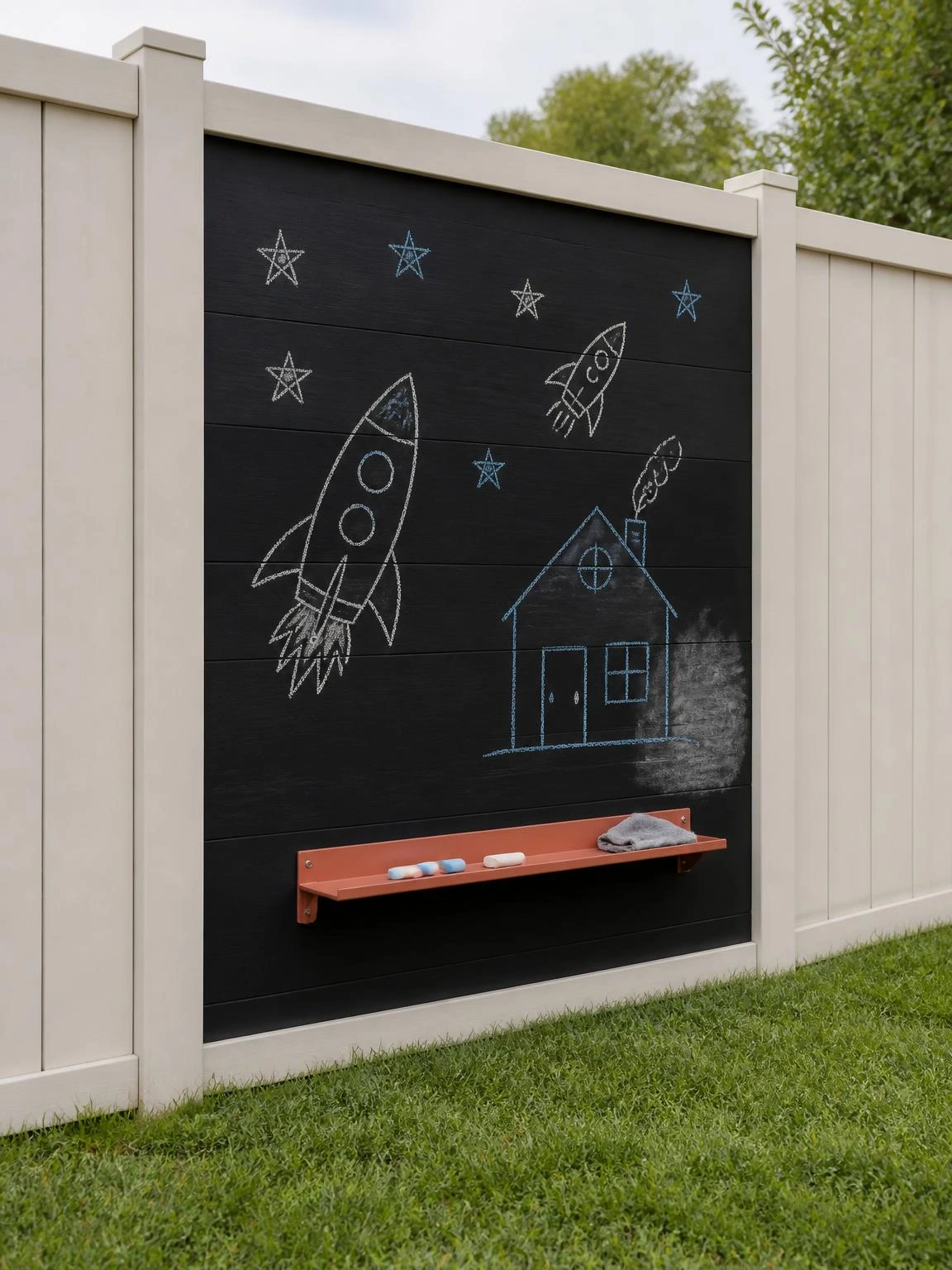
Painting a single timber fence panel with exterior chalkboard paint gives children a large drawing surface without any freestanding structure taking up yard space.
Apply two coats of matte black exterior-rated chalkboard paint and season the surface before first use by rubbing the flat side of a chalk stick across the entire panel, then erasing it.
Mount a small powder-coated metal shelf bracket below the panel to hold chalk sticks and an eraser cloth so everything stays in one place.
Interior chalkboard paint will peel outdoors within a single wet season, so confirming the product is specifically rated for exterior use is not optional.
Leave the adjacent fence panels in their natural painted color so the chalkboard panel has a clear visual boundary and children know exactly where the drawing area begins and ends.
12- Backyard Hammock Lounge For Kids
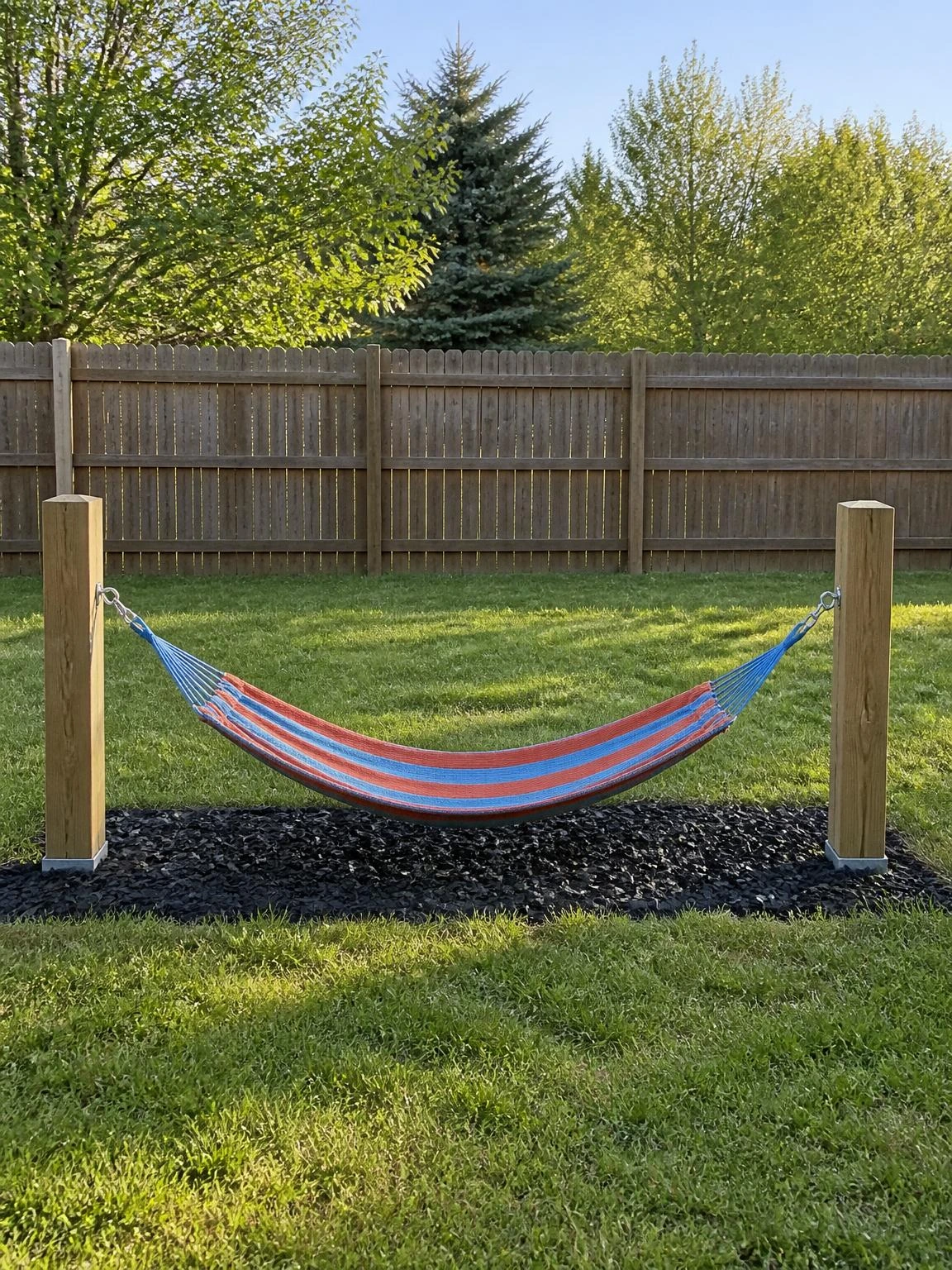
A cotton-weave hammock in a rust and soft blue stripe pattern hung low between two square timber posts reads as a genuine outdoor lounge spot rather than just play equipment.
Set the posts in concrete footings and attach the hammock with stainless steel eye hooks, positioning it so the lowest point of the sag clears the grass by no more than roughly 18 inches for safe child use.
Lay a rubber mulch strip beneath the hammock’s full length so the landing surface is forgiving during the inevitable sideways exits.
Inspect the eye hook threads and the bases of the timber posts each spring for wood rot or hardware corrosion before allowing children back on it after winter.
Cotton-weave hammocks need to come down or be stored in a dry location over winter in wetter climates, since prolonged moisture causes mildew that weakens the weave.
13- Backyard Outdoor Storage Bench For Toys
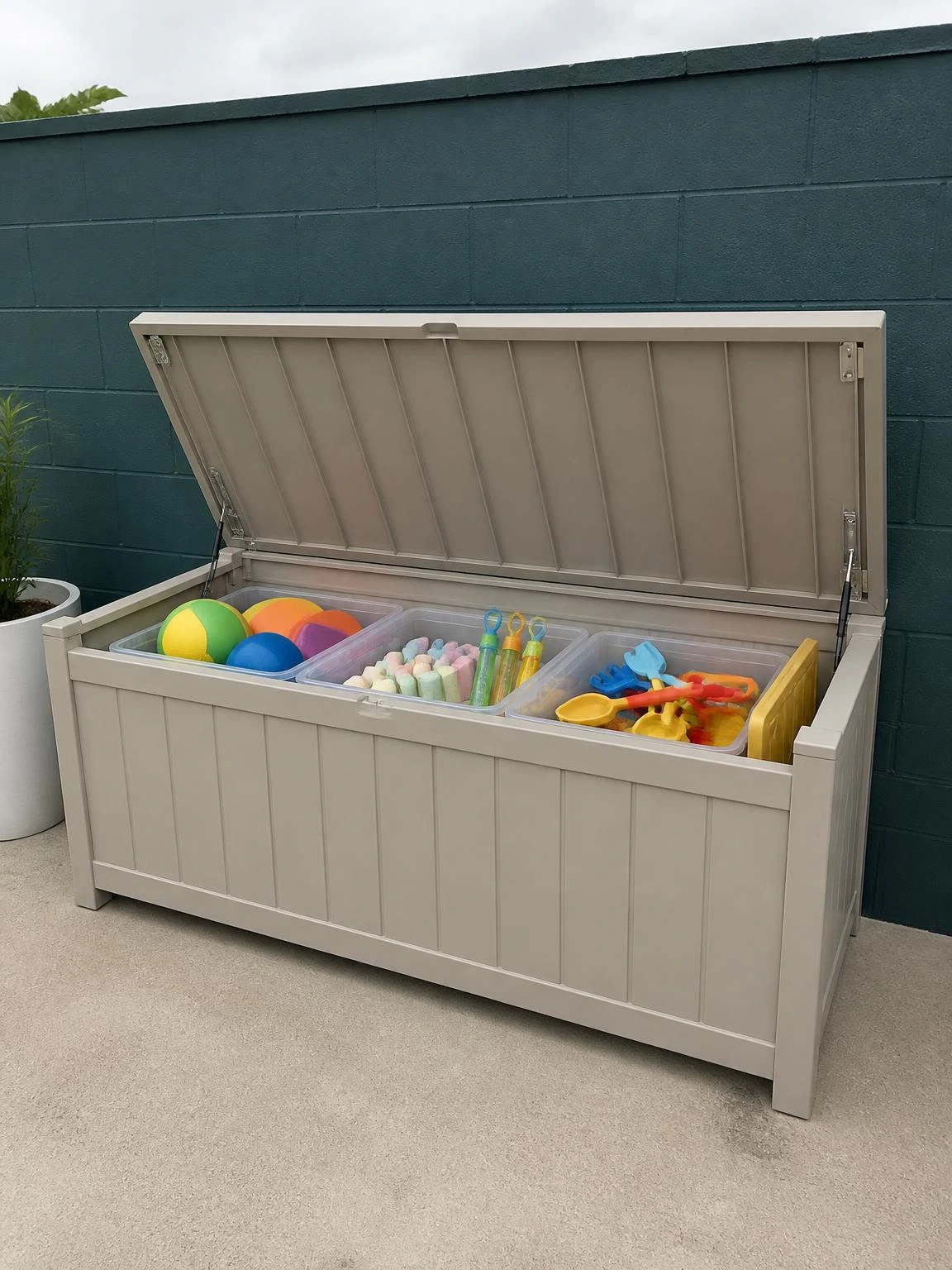
A large weatherproof resin storage bench with a hinged seat lid placed against a patio wall keeps outdoor toys out of the rain without requiring a separate shed.
Group the contents into labeled clear polypropylene bins inside the bench so children can find and return specific items without tipping everything onto the patio floor.
Deep teal paint on the adjacent wall and the bench’s warm neutral resin color sit well together on a concrete patio without the storage piece feeling like an afterthought.
Before buying, confirm the lid has a slow-close hinge or a lid-stay mechanism; a heavy resin lid that drops freely is a genuine finger hazard for small children retrieving toys independently.
The bench earns its floor space most when it replaces a scatter of bins, nets and buckets that currently have no fixed home on the patio.
14- Backyard Tee-Ball Station
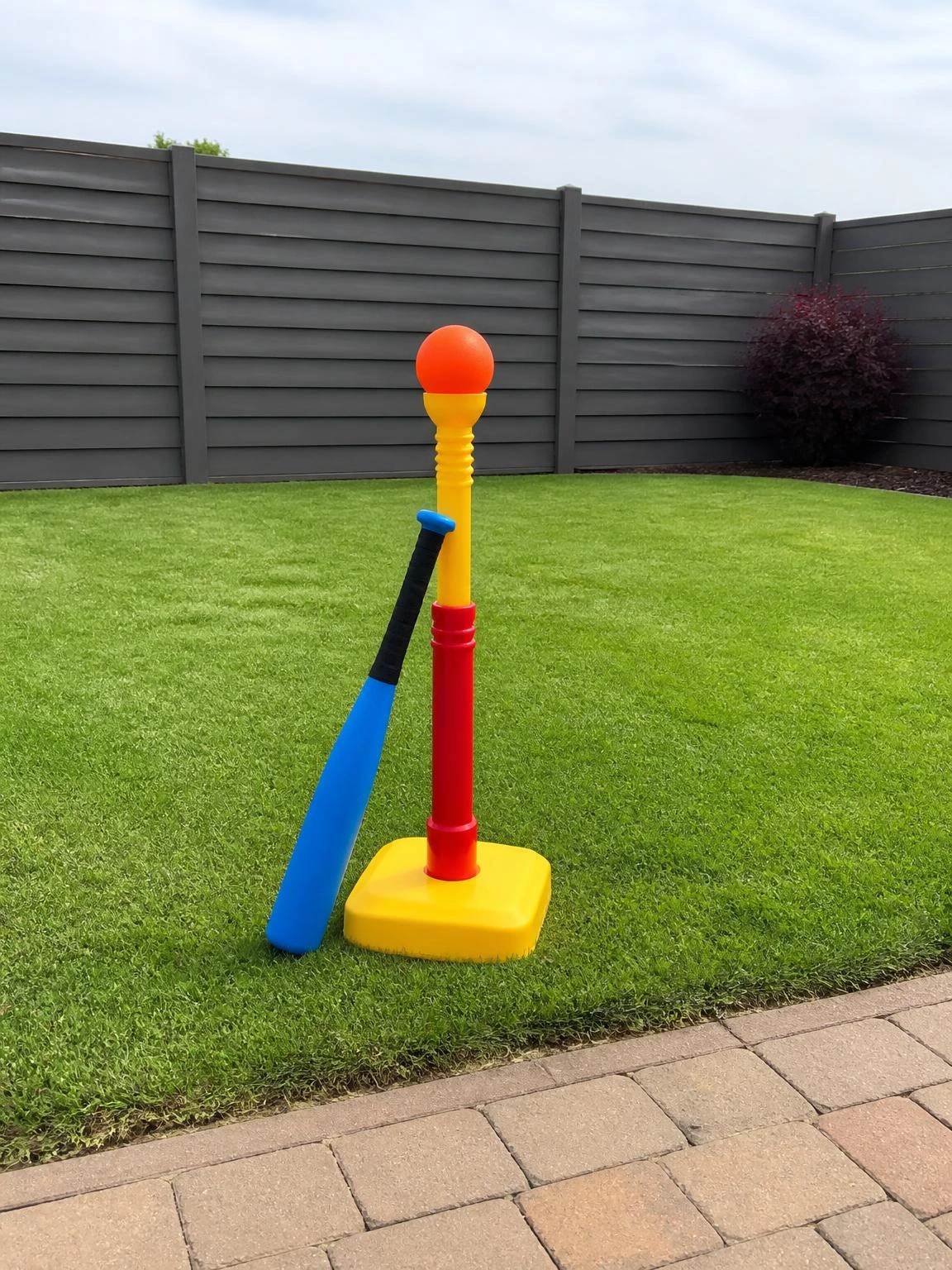
An adjustable plastic tee-ball stand on a flat section of mown lawn is one of the lower-cost backyard ideas for kids that actually holds attention across multiple ages as the height setting changes.
Set the tee at hip height for the child currently using it; a ball sitting too high or too low produces a discouraging swing and the equipment gets abandoned faster.
Use a foam bat and a soft rubber training ball in any confined backyard to reduce the risk of impact against fences, windows or a sibling who wandered into the batting zone.
Keep an open lawn area extending behind the tee as the batting direction so there is a clear run of grass to field from rather than a fence two feet away.
Muted plum and stone tones in the surrounding paving and fence read quietly against the bright colors of most tee-ball equipment without clashing.
15- Backyard Climbing Wall Panel
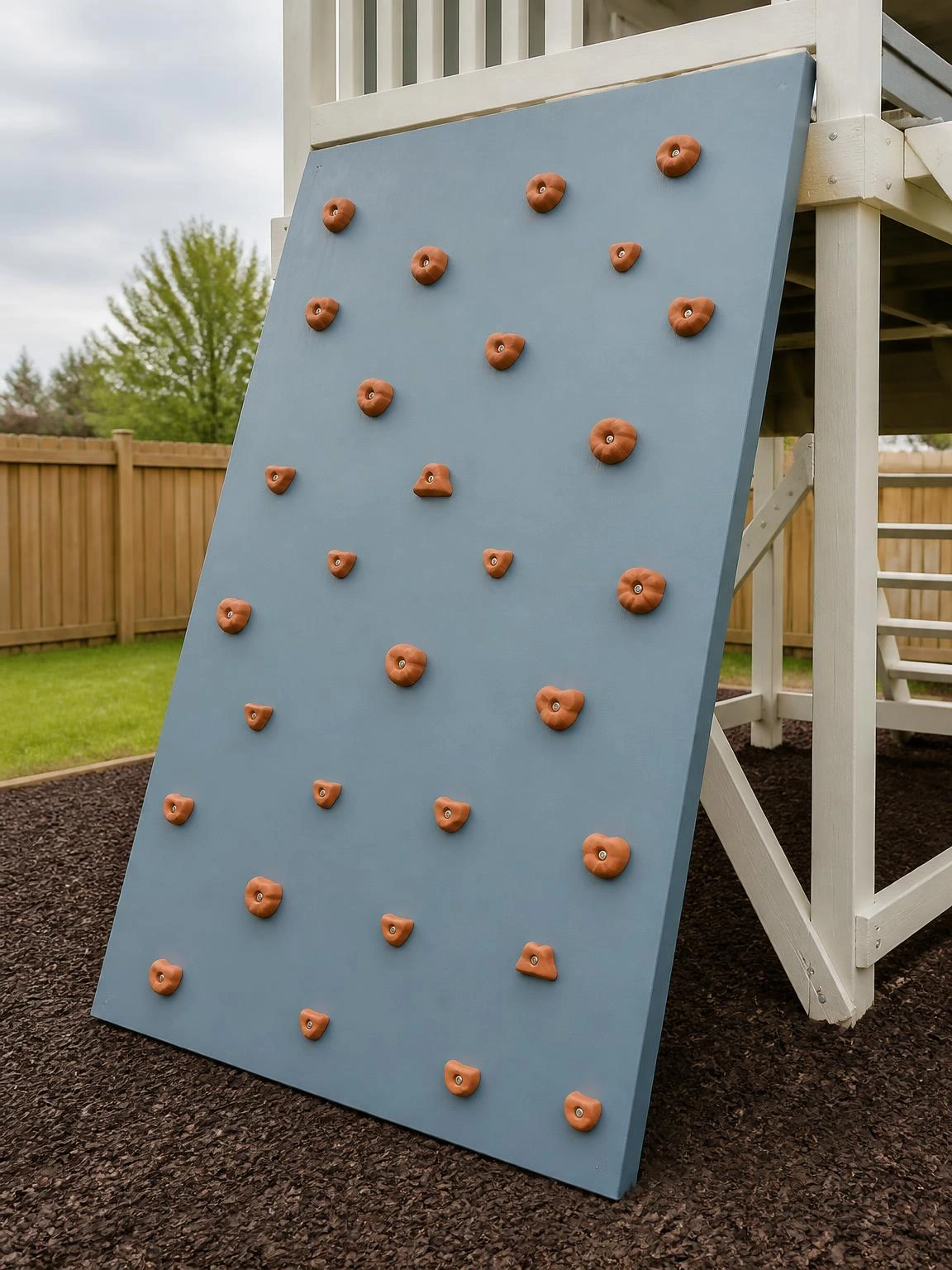
An angled exterior-grade plywood climbing wall panel attached to an existing play structure at roughly 70 degrees adds a significant physical challenge without needing a separate freestanding frame.
Bolt colorful resin climbing holds across the surface using T-nuts recessed into the back face of the panel, which allows holds to be rearranged into new configurations without drilling additional holes each time.
Paint the panel in dusty blue exterior paint and use terracotta-toned holds for a color combination that looks intentional rather than purely functional.
Lay rubber mulch across the full ground area beneath the panel before installation, since the most common landing zone is directly at the base of the wall.
Before fitting the panel, confirm the supporting play structure frame is rated for the additional lateral load a climbing wall creates, since the force on the frame during climbing is different from swing or slide use.
16- Backyard Outdoor Cinema Screen
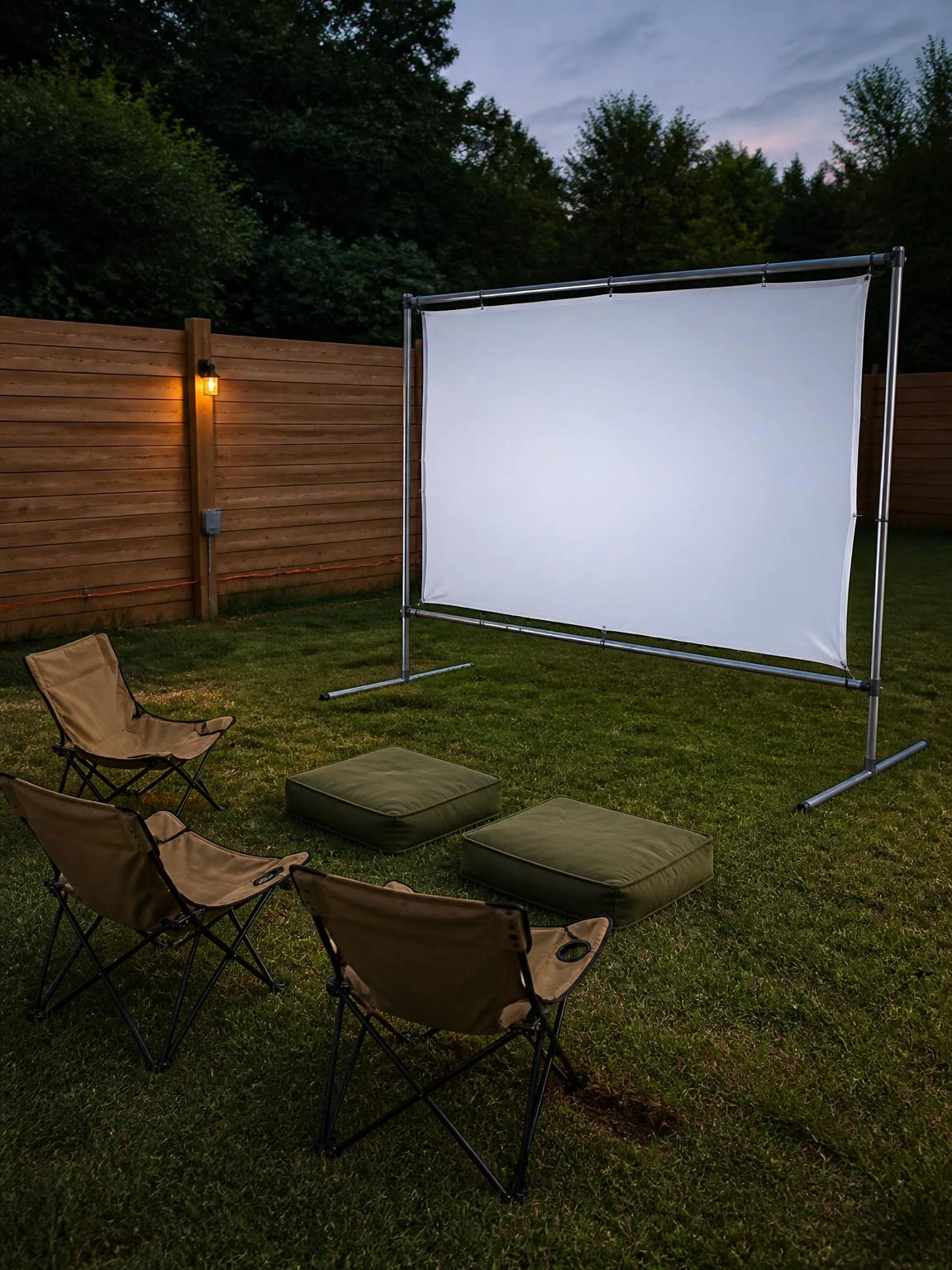
A freestanding portable white fabric projection screen on a steel frame set up on the lawn at dusk turns a standard summer evening into something children request repeatedly.
Face the screen toward low outdoor seating arranged on the lawn or patio, with enough distance between them to include several rows of cushions or camping chairs.
Run the extension cord neatly along the fence line to the nearest covered outdoor outlet using cable clips to keep it clear of the ground and foot traffic.
Use only GFCI-protected outdoor-rated extension cords for any backyard electrical equipment; this applies to both the projector and any speakers or lights added to the setup.
Confirm the projector is rated for outdoor use, since standard indoor projectors can overheat in humid summer air and the warranty rarely covers that kind of failure.
17- Backyard Raised Garden Bed For Kids
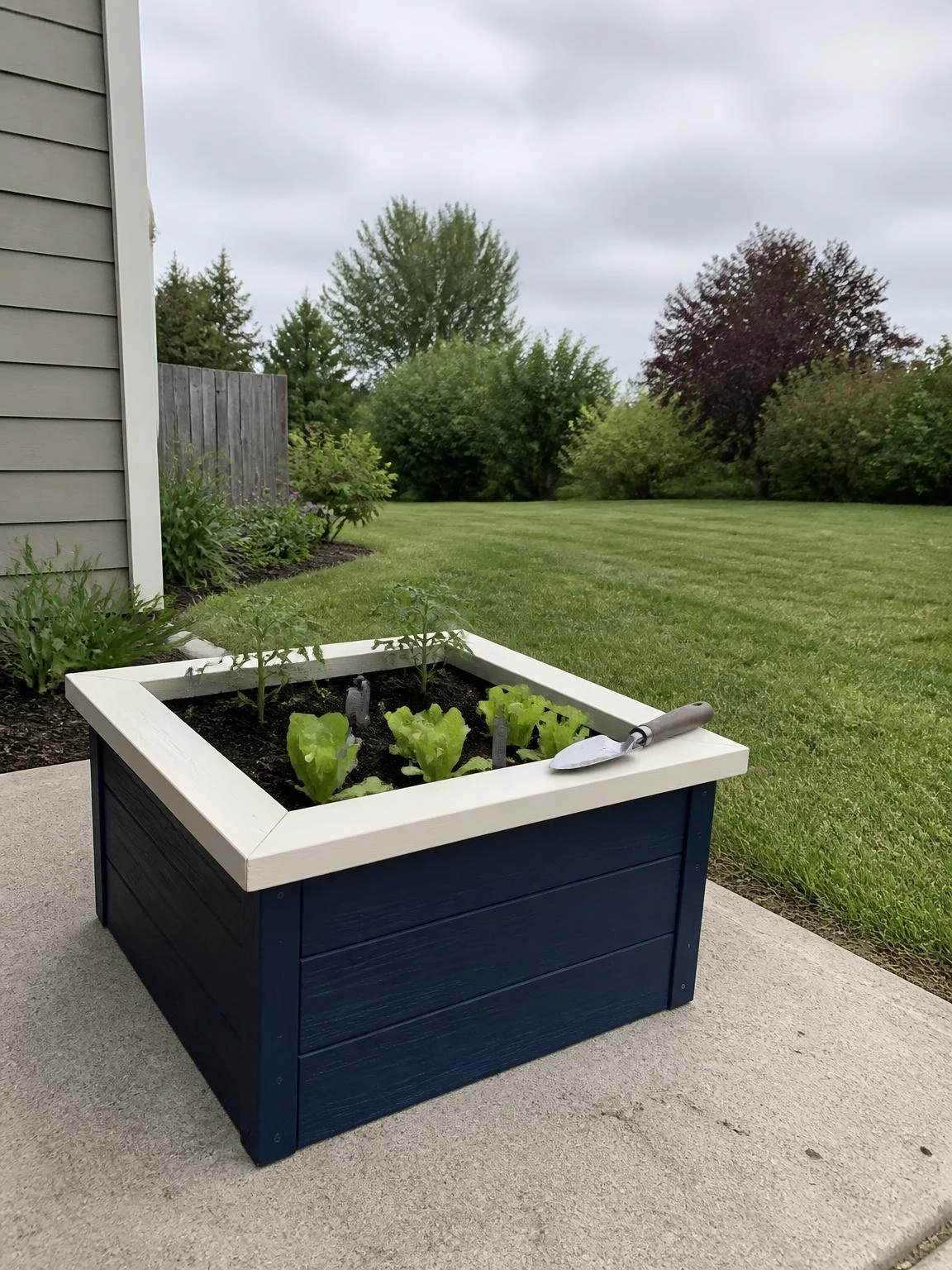
A painted timber raised garden bed built to roughly 24 inches tall with a wide flat top rail gives children a planting surface they can work at without kneeling in dirt or bending uncomfortably.
Keep the bed no wider than 24 inches so a child can reach the center from either side without climbing in, which protects both the child and the soil structure.
Fill with a good growing soil mix and use metal plant markers so children can track what they planted where, which is a small detail that keeps them invested across the growing season.
Paint the exterior in navy with ivory rail trim so the bed sits quietly against the patio edge without competing with whatever is growing inside it.
Avoid chemically treated lumber for any raised bed where children will handle the soil directly or where edibles are being grown; untreated timber painted with exterior paint is the straightforward alternative.
18- Backyard Obstacle Course With Tunnel
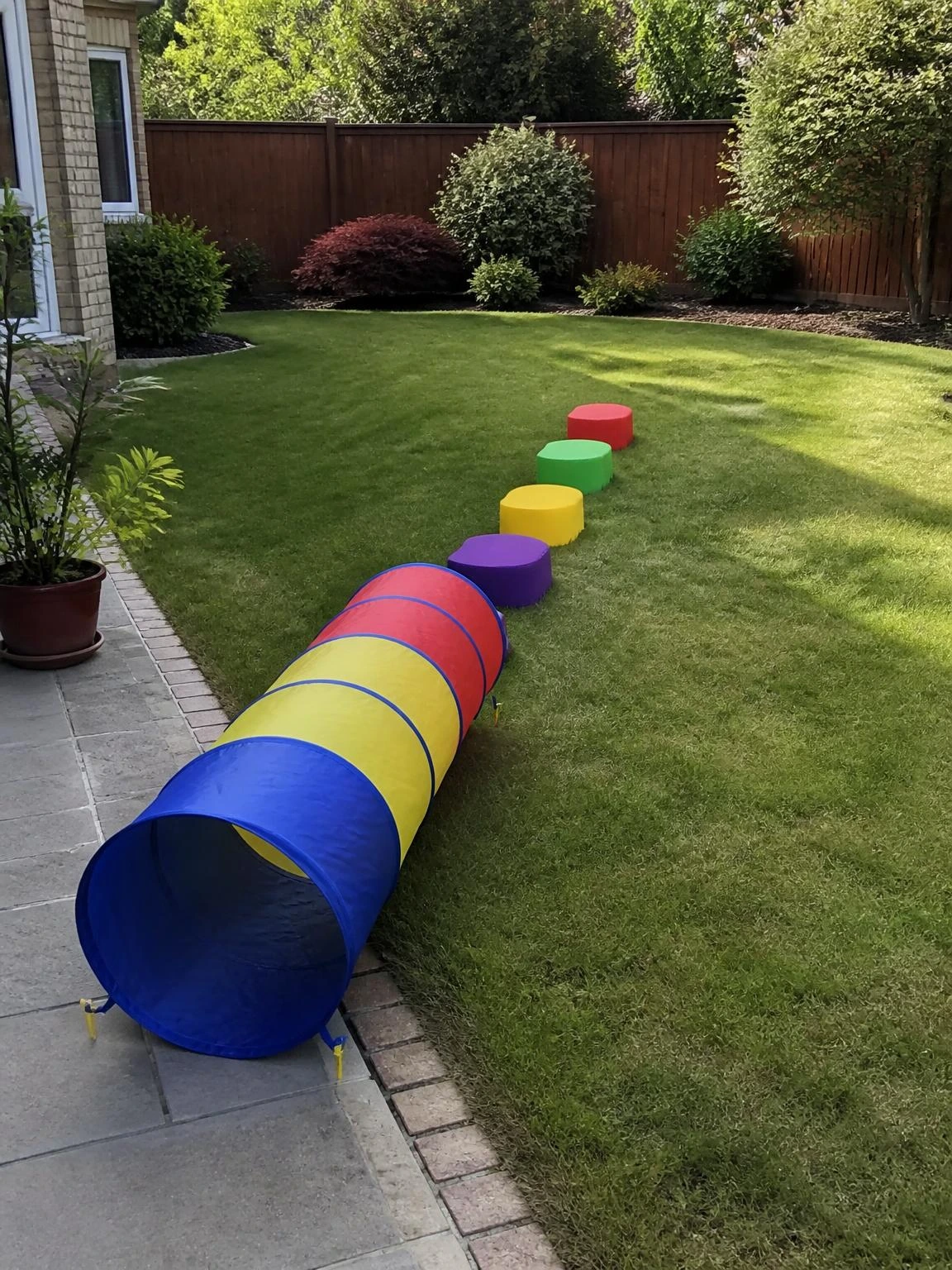
A brightly colored nylon pop-up tunnel in line with four foam stepping pods of varying heights on short mown grass is the kind of setup children redesign themselves after the first run-through.
Arrange the course starting near the patio edge and running toward the open center of the yard so there is a clear finishing zone that does not end at a fence.
Stake the tunnel base at each end with ground pegs on windy days; an unstaked pop-up tunnel rolls surprisingly fast across a lawn and the chase is more frustrating than amusing after the second time.
Foam stepping pods with non-slip bases work well on grass at the heights typically sold for children, but check that the base grip actually contacts the lawn rather than riding on long grass.
Store the tunnel indoors or in a covered bench after each use; prolonged UV and rain exposure degrades nylon fabric and the steel spring frame noticeably within a single season.
Where do you want to go next?
Explore by topic
Recently viewed
19- Backyard Shade Sail Over Play Area
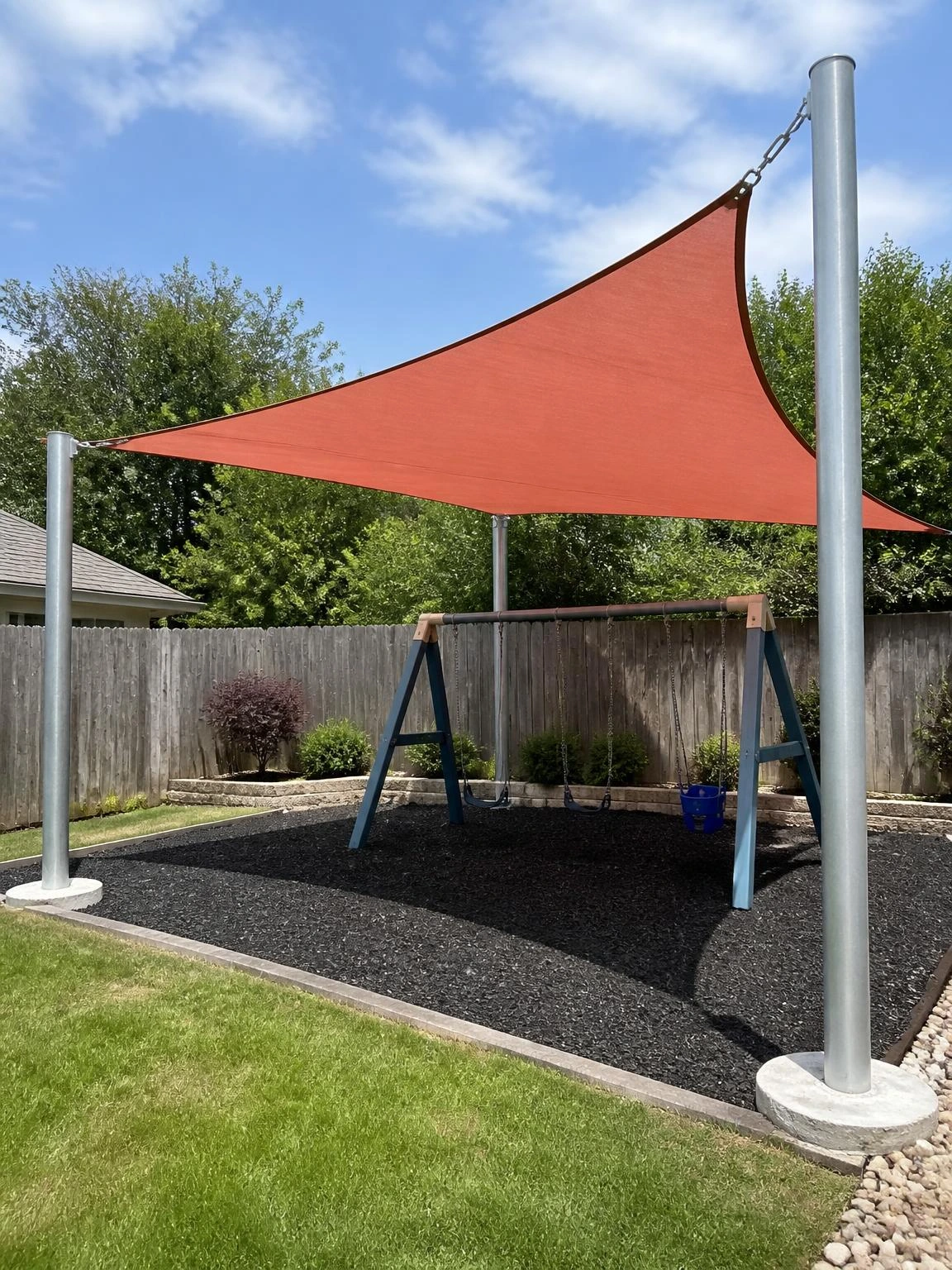
A large triangular HDPE shade sail in muted coral tensioned between three galvanized steel posts above a rubber mulch play zone extends comfortable outdoor time through the hottest part of summer afternoons.
Set the posts in concrete footings and use stainless steel turnbuckles and D-rings to tension the sail; loose installation allows the fabric to flap and pool water rather than shedding it.
Install the sail with a slight slope across its surface so rainwater runs toward one corner rather than collecting in a central sag that eventually drops on whoever is below.
Position the sail so it covers the swing set or primary play structure, since that is where children spend the most time in direct sun rather than moving through shade naturally.
Remove the sail during high winds or storms; even properly anchored sails can pull posts when gusts exceed the design limits, and the hardware damage is expensive to repair.
20- Backyard Night Play Lighting Rig
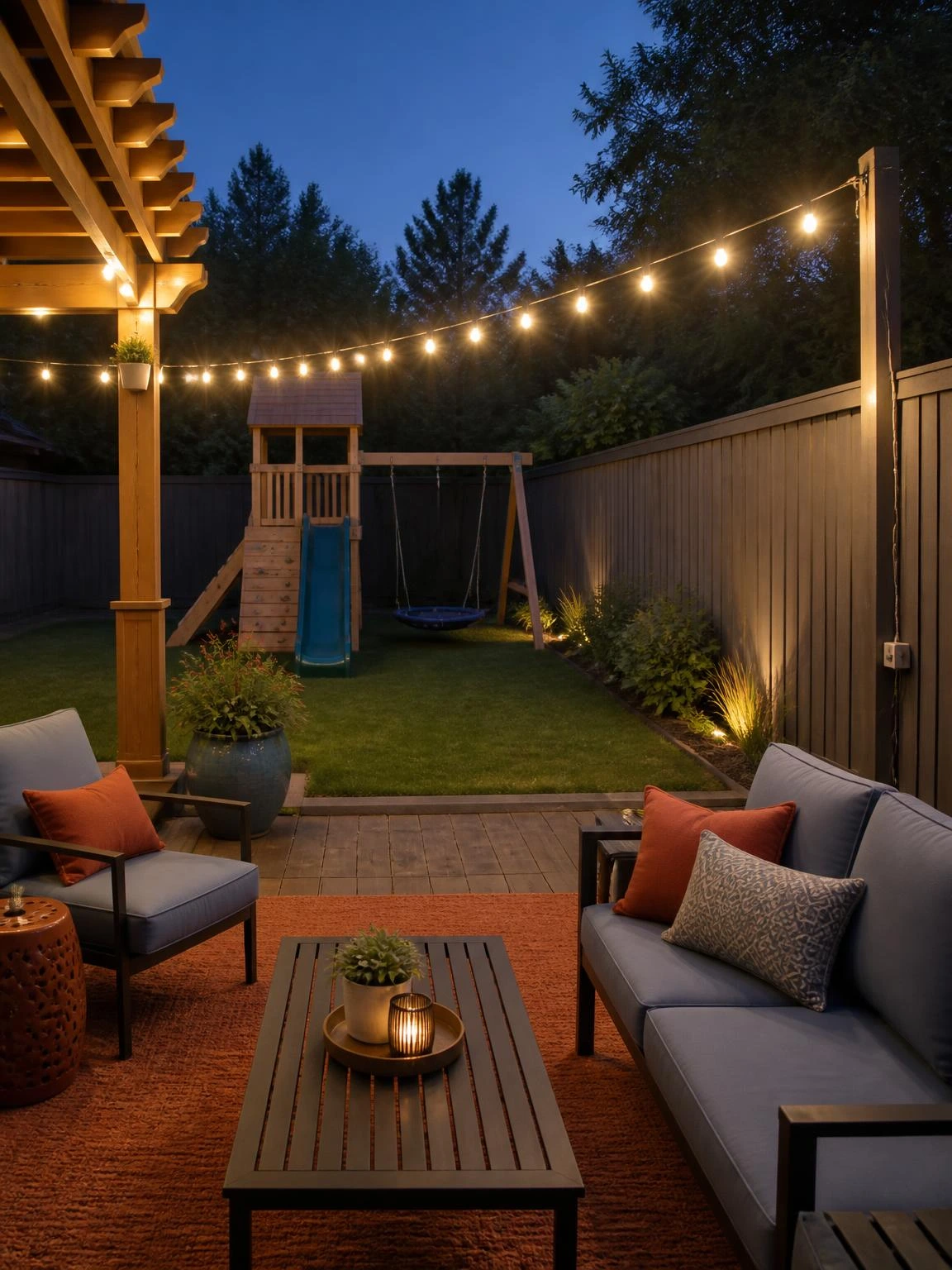
Commercial-grade outdoor LED string lights strung between a pergola beam and a fence post at roughly eight feet high extend backyard play into early evening without requiring any permanent electrical work.
Route the cord along the fence using cable clips and plug into a GFCI outdoor outlet; keeping the cord off the ground removes a trip hazard across the play area below.
The warm light cast over the play structure makes the backyard feel like an intentional space in the evening rather than a dark lawn with a shape in the corner.
Confirm that both the bulb sockets and the wire jacket are rated for wet outdoor locations; patio-only or indoor string lights corrode at the sockets within a wet season and the failure tends to be a tripped breaker rather than a gradual dimming.
A rust and soft blue color palette on surrounding furniture and fencing reads well under warm LED light in a way that bright primaries sometimes do not, which is worth considering if the lighting rig is the last addition to an already-furnished patio.
Making the Most of a Kids’ Backyard Over Time
The backyard ideas for kids that last longest are the ones with a low barrier to use, meaning no setup required and no adult needed to start the activity.
Grouping ideas by zone, a wet zone near the hose, a climbing zone on rubber mulch, a quieter zone with the hammock or easel, prevents the yard from feeling like a random scatter of equipment.
Seasonal maintenance on hardware, timber surfaces and safety surfacing takes less than an afternoon once a year and keeps everything usable rather than gradually unsafe.
A yard that works well for backyard kids play at age four will need a few swaps by age eight, and leaving one or two open lawn areas untouched from the start makes that transition easier.