


17 Small Rooftop Terrace Design Ideas That Actually Work
A bare rooftop slab is one of those spaces that sits empty for years because nobody quite knows where to start.
Small rooftop terrace design has its own set of rules, mostly because wind, weight and waterproofing are all working against you at once.
The membrane under your feet is doing an important job, and most of the mistakes people make come from ignoring it.
Rooftop spaces also tend to be more exposed than ground-level patios, so furniture and fixings need to be tougher than they look in the catalog photo.
The ideas here are sized and weighted for realistic urban terraces, not penthouse showrooms.
Start with the floor, the shade and the seating, and the rest follows naturally.
1- Interlocking Deck Tiles
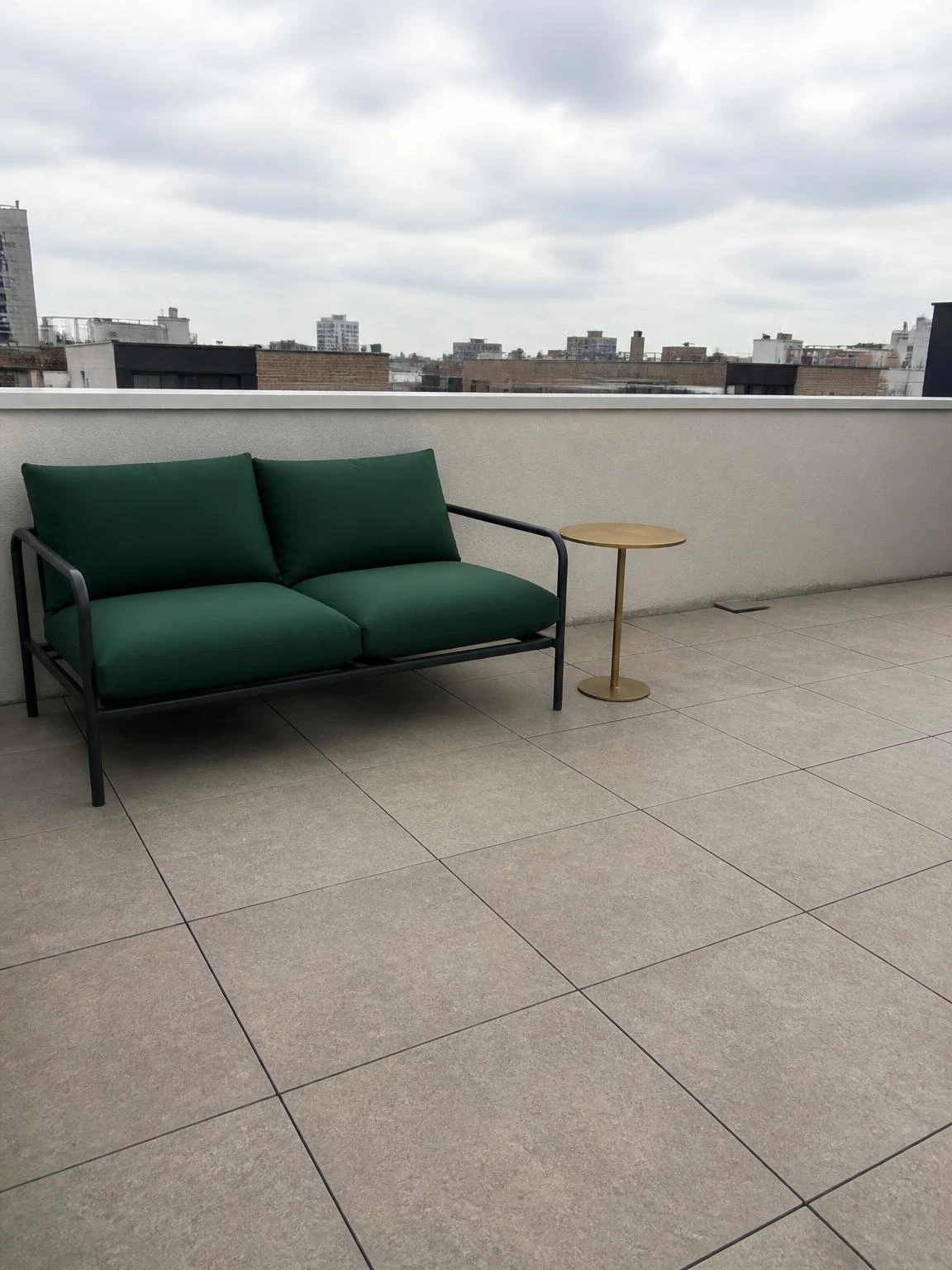
A bare concrete rooftop slab is not exactly inviting, but it is a perfectly workable base for snap-together porcelain deck tiles in a warm stone-grey.
These tiles interlock without adhesive, so they float over the waterproof membrane rather than bonding to it.
That matters enormously, because the membrane below needs periodic inspection and the tiles lift straight back up without tools.
A 12×12 inch tile size keeps the grid lines tight and the surface looking intentional rather than patchy.
A low powder-coated steel loveseat with forest green cushions reads well against that warm grey ground, and a brass-finish side table adds just enough warmth to the palette.
Before tiling the full deck, have a structural engineer confirm the roof can take the added weight across its entire area.
2- Privacy Screen Wall Panel
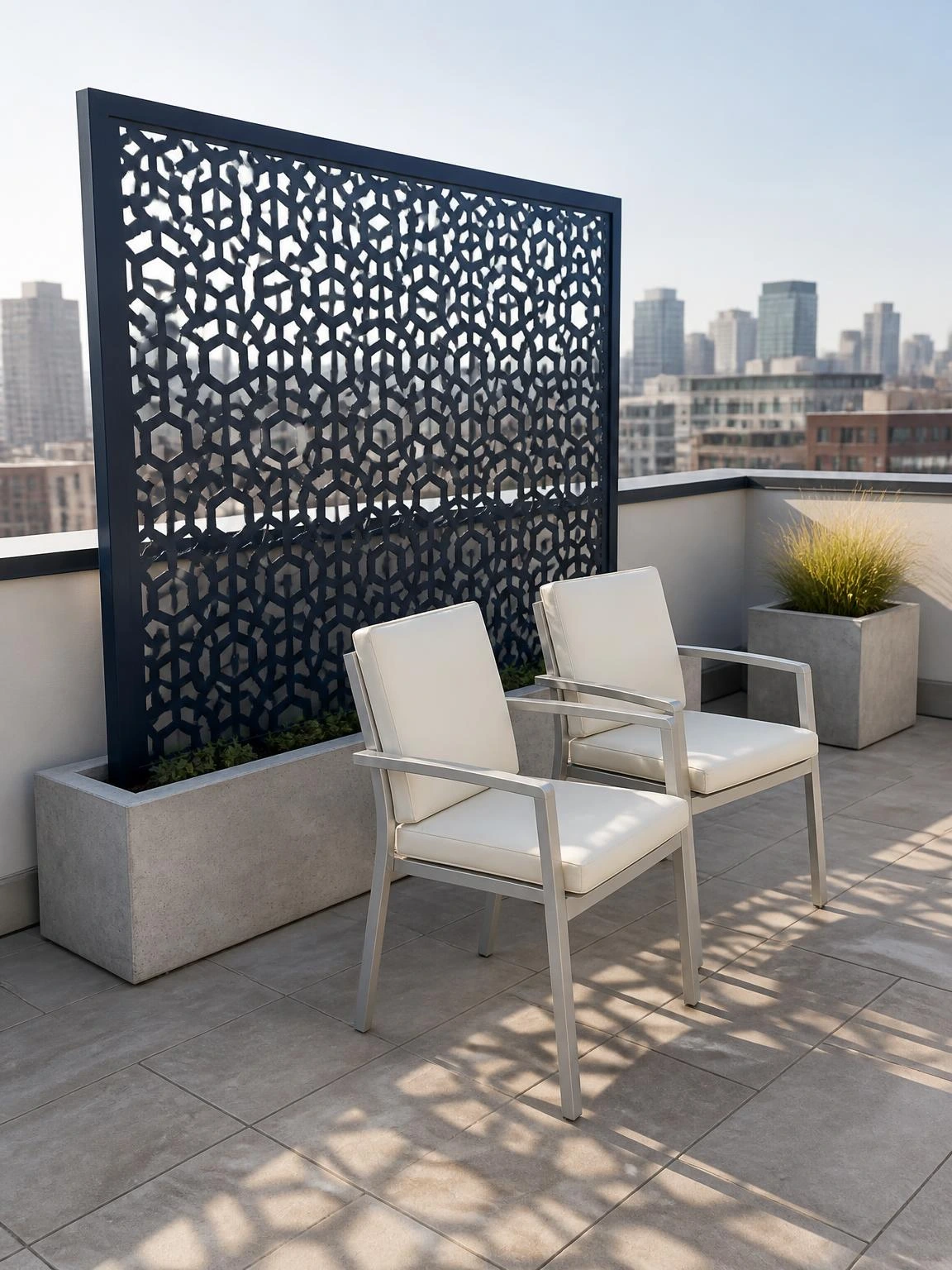
Rooftop terraces in cities are rarely actually private, and neighbors at window height can see everything.
A freestanding powder-coated steel screen in matte navy, set into a heavy concrete ballast planter along the parapet, solves this without drilling into the membrane.
The ballast planter doubles as the anchor, keeping the waterproofing intact while holding the screen firmly against normal wind.
A geometric laser-cut pattern casts soft shadow on the deck tiles through the day, which earns the panel its floor space visually.
Ivory stacking aluminium chairs work well in front of it, since the navy and ivory contrast is clean without being stark.
Tall freestanding screens catch wind like a sail, so confirm the ballast weight is rated for your local wind conditions before relying on it through a full season.
3- Compact Bistro Dining Set
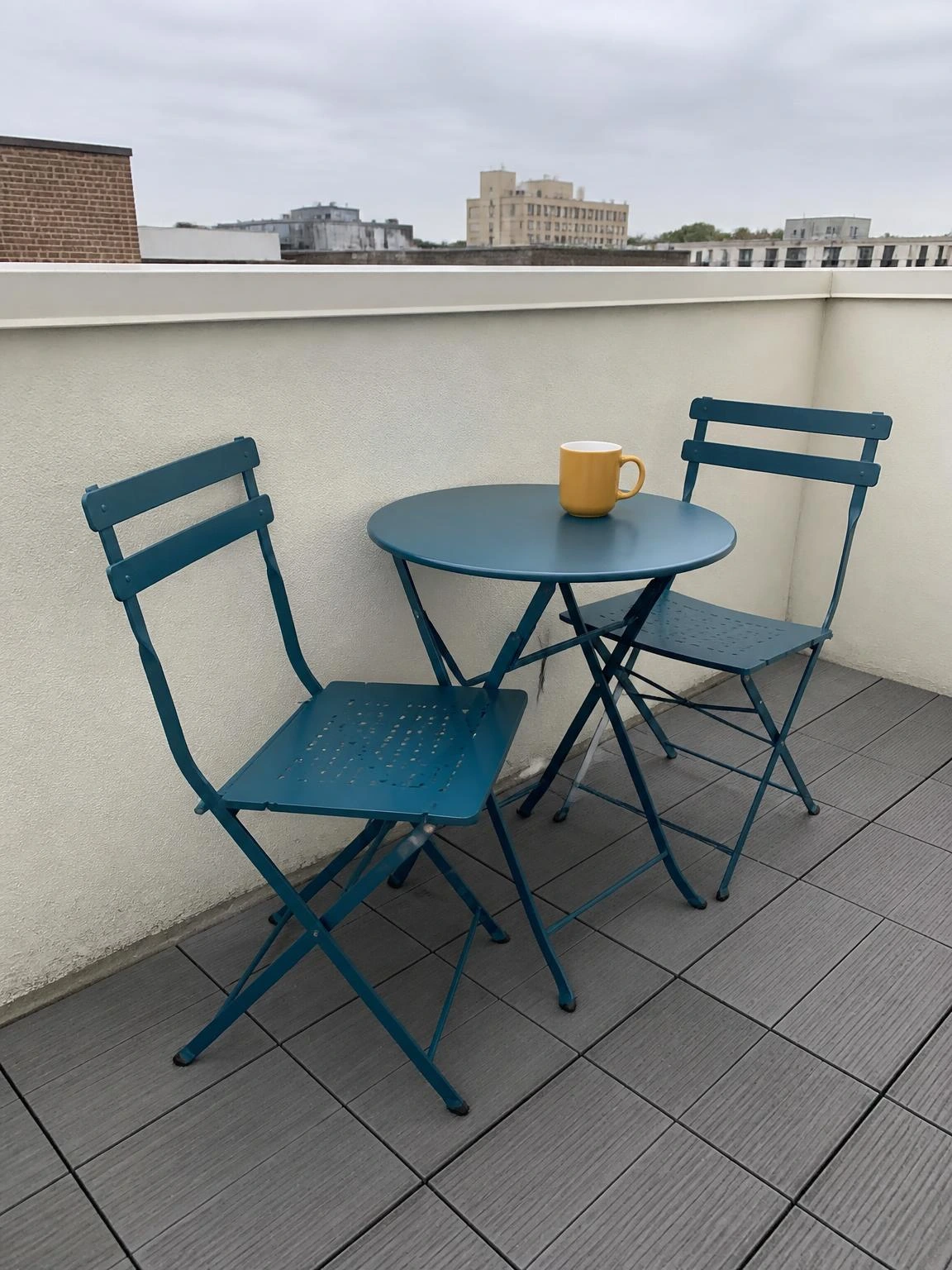
Two people can eat breakfast on a rooftop terrace with nothing more than a 60 cm round bistro table and two folding chairs.
A deep teal powder-coated steel set against a warm white parapet wall is one of those combinations that photographs well and also just looks good in person.
The 60 cm diameter gives both people elbow room and still leaves enough clear deck around the chairs to pull them back without scraping the parapet.
Perforated seat pans on the chairs let rainwater drain rather than pooling, which extends the life of the finish.
A narrow terrace as tight as 2.4 m wide can fit this arrangement with workable circulation around it.
Check the manufacturer’s weather rating on the folding chairs before leaving them out year-round, since not all powder-coat finishes are rated for continuous UV and rain exposure.
4- Overhead String Light Canopy
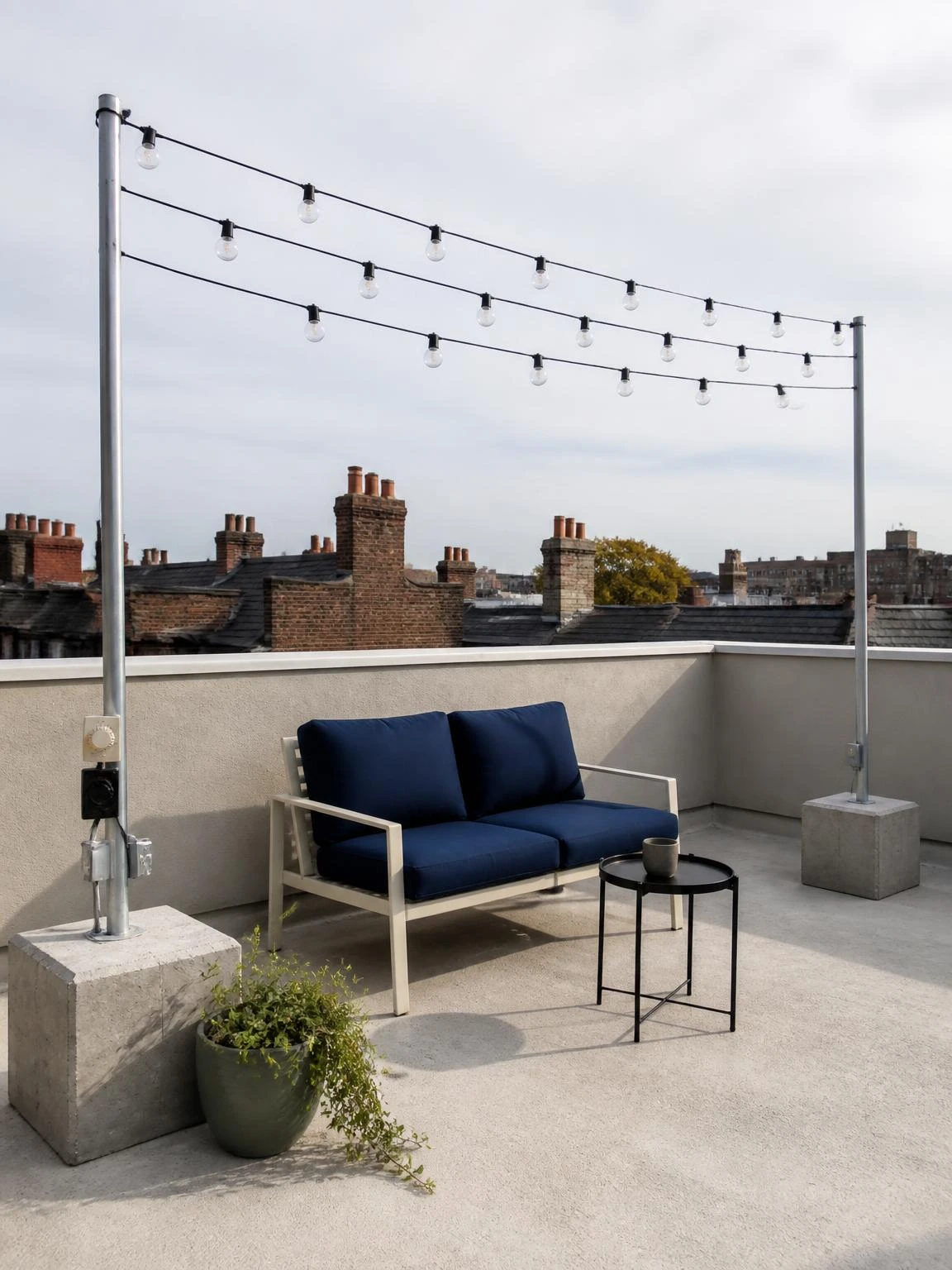
Nothing changes the mood of a rooftop terrace at dusk quite as quickly as a grid of string lights overhead.
Two slim galvanised steel poles in concrete ballast bases at opposite corners of the terrace, with three parallel runs of commercial-grade outdoor string lights between them at roughly 2.4 m height, creates a proper canopy without any wall fixing.
Commercial-grade bulbs are worth specifying here; they are weatherproofed and rated for the kind of temperature swings a rooftop sees across seasons.
A weatherproof outdoor timer connected to the circuit means the lights come on at dusk without anyone touching a switch.
The poles need to be ballasted rather than fixed, so the concrete base forms should be sized to the pole height and local wind load.
String lights must always be plugged into a GFCI-protected exterior outlet; an indoor-rated extension cord run through a window is not a safe substitute.
5- Raised Planter Box Herb Garden
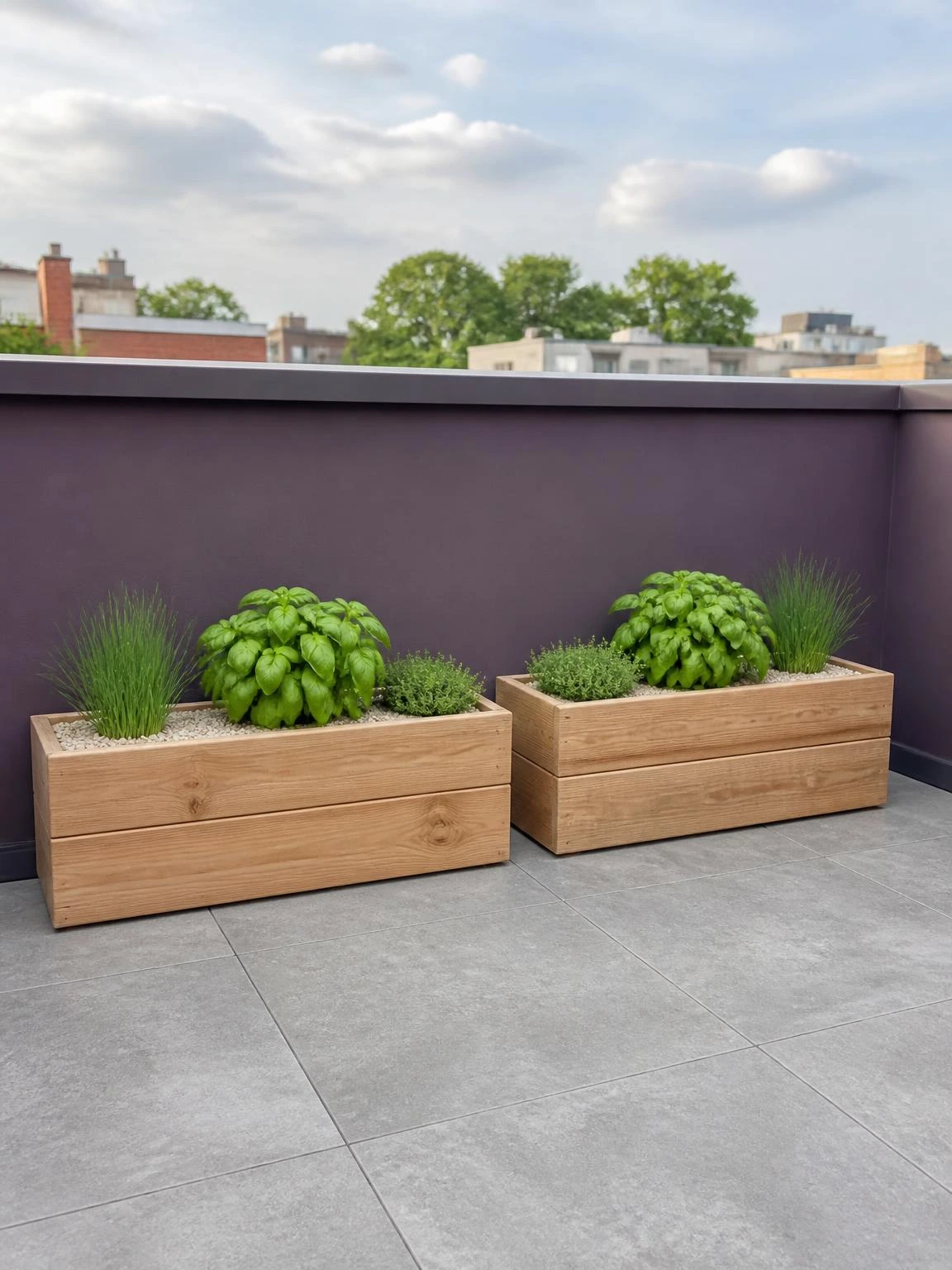
Two cedar planter boxes along the interior face of the parapet give a rooftop terrace a reason to be visited every morning.
Cedar holds up outdoors without paint or sealant, and its warm tan sits comfortably against a muted plum-painted parapet wall and the grey of porcelain deck tile.
Boxes around 90 cm long and 40 cm tall are workable for basil, thyme and chives, which stay compact enough to avoid shading each other.
Use a lightweight rooftop potting mix blended with perlite rather than standard garden soil; the weight difference when wet is roughly 30 percent less, which adds up across two full boxes.
Stone-coloured gravel mulch on the soil surface slows evaporation and keeps the top of the box looking tidy between waterings.
Before filling the boxes, confirm the combined weight of cedar, wet soil and plants stays within the roof’s live load allowance.
6- Weather-Resistant Outdoor Rug
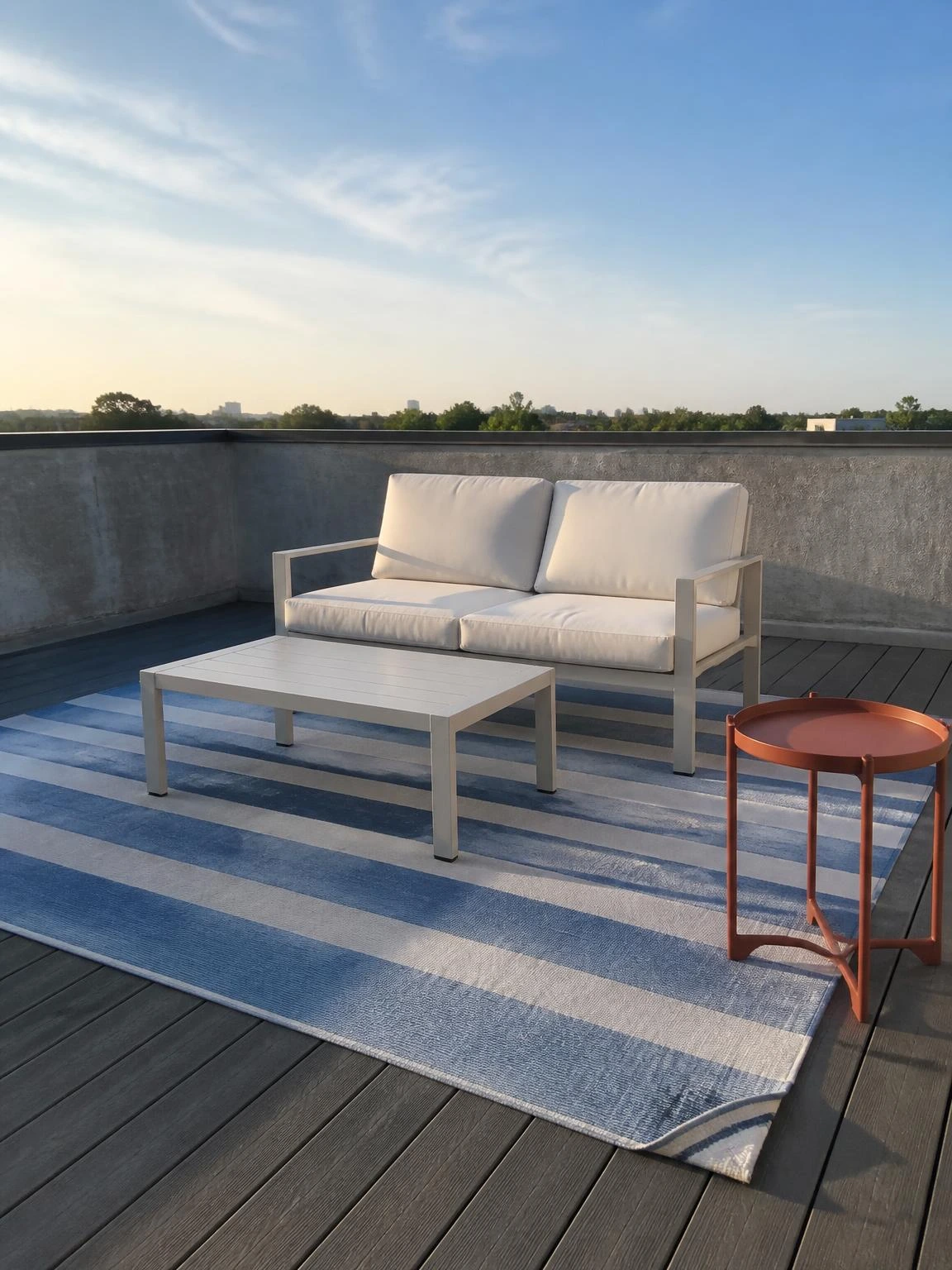
A flat-weave polypropylene outdoor rug in dusty blue and warm white, around 160×230 cm, is one of the most affordable ways to give a rooftop seating zone a defined floor.
It anchors the sofa and coffee table visually, so the furniture reads as a room rather than objects scattered on a slab.
A terracotta metal side table at the edge of the rug adds the third colour the palette needs without overcomplicating things.
Lift and dry the rug weekly during summer; moisture trapped between the backing and the tile can degrade the deck membrane over time without anyone noticing.
Choose a low-pile version with a non-slip backing rated for outdoor use, because polypropylene can become genuinely slippery when wet.
Flat-weave construction also drains faster than looped pile, which matters on a surface that can get rained on and then baked in full sun within the same afternoon.
7- Shade Sail on Rooftop
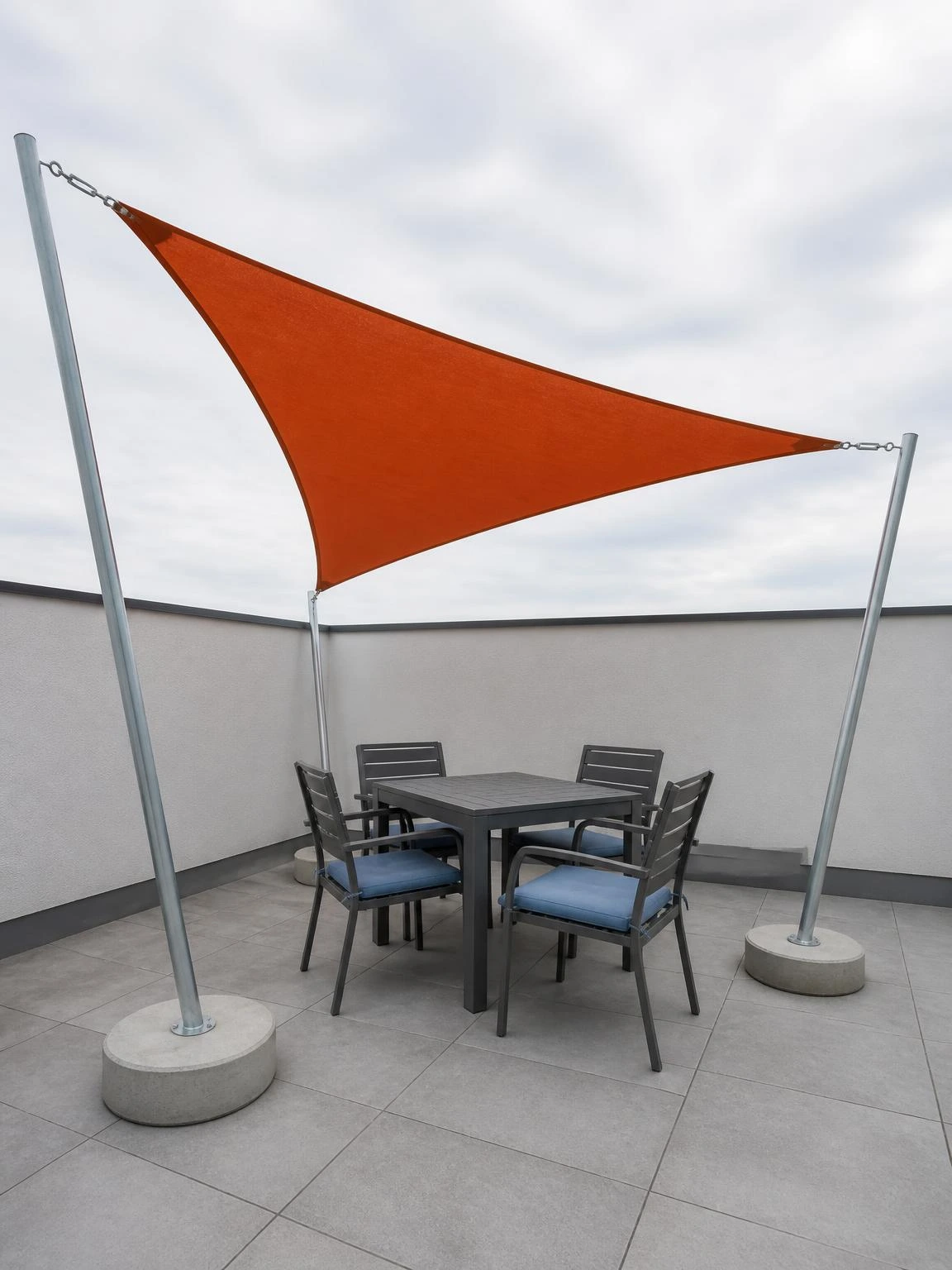
A triangular HDPE shade sail in rust-orange covers roughly two-thirds of a small rooftop terrace and makes the space usable through a summer afternoon.
Three slim galvanised steel poles in concrete ballast bases form the attachment points, keeping the whole system membrane-safe and removable.
Stainless steel turnbuckle tensioners at each corner let the sail be re-tightened each spring after winter storage, which keeps the fabric taut and the geometry looking intentional rather than saggy.
Soft blue seat pads on the dining set below the sail hold the palette together without competing with the rust overhead.
The sail needs to come down in high winds or sustained storms; it is not engineered as a permanent all-weather structure and the fixings will fail if treated as one.
Taking it down at the end of summer and storing it flat also extends the fabric life by several seasons.
8- Modular Foam Outdoor Sofa
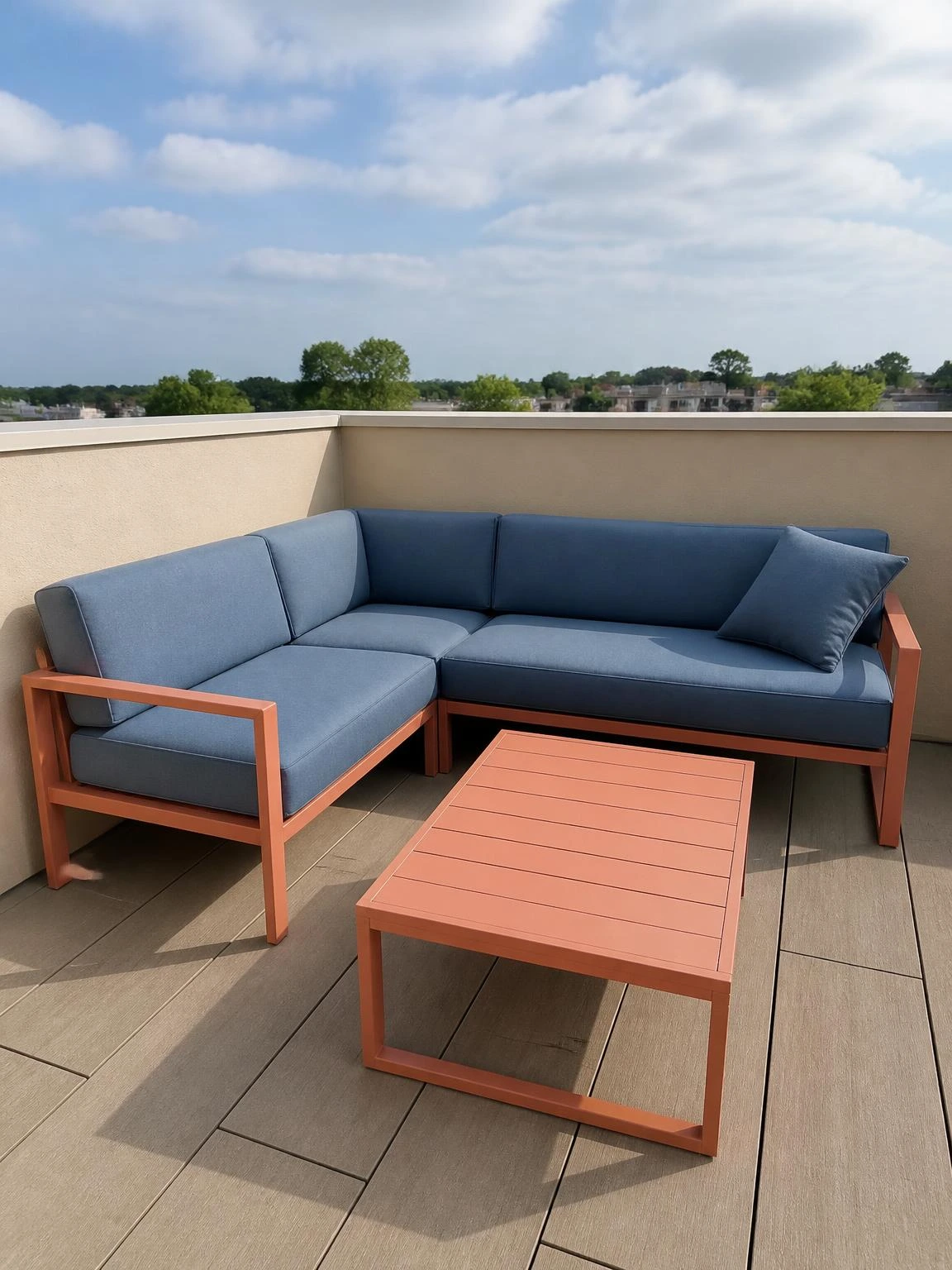
An L-shaped modular outdoor sofa configured into a rooftop corner is the most efficient use of a tight perimeter.
Soft coral powder-coated aluminium frames with muted blue solution-dyed acrylic cushions sit comfortably against stone-painted parapet walls without the palette feeling either too bright or too flat.
Modular sections mean the configuration can be adjusted if the space gets used differently across seasons, which is genuinely useful on a rooftop where shade and wind patterns shift throughout the year.
Solution-dyed acrylic foam dries faster than standard upholstery foam and holds its colour through at least three seasons with nothing more than a periodic rinse.
A low rectangular aluminium coffee table centred in the L keeps the arrangement grounded and provides a useful surface that does not add significant weight to the deck.
Even outdoor-rated cushions last longer with a cover or indoor storage during extended wet weather.
9- Vertical Wall-Mounted Planters
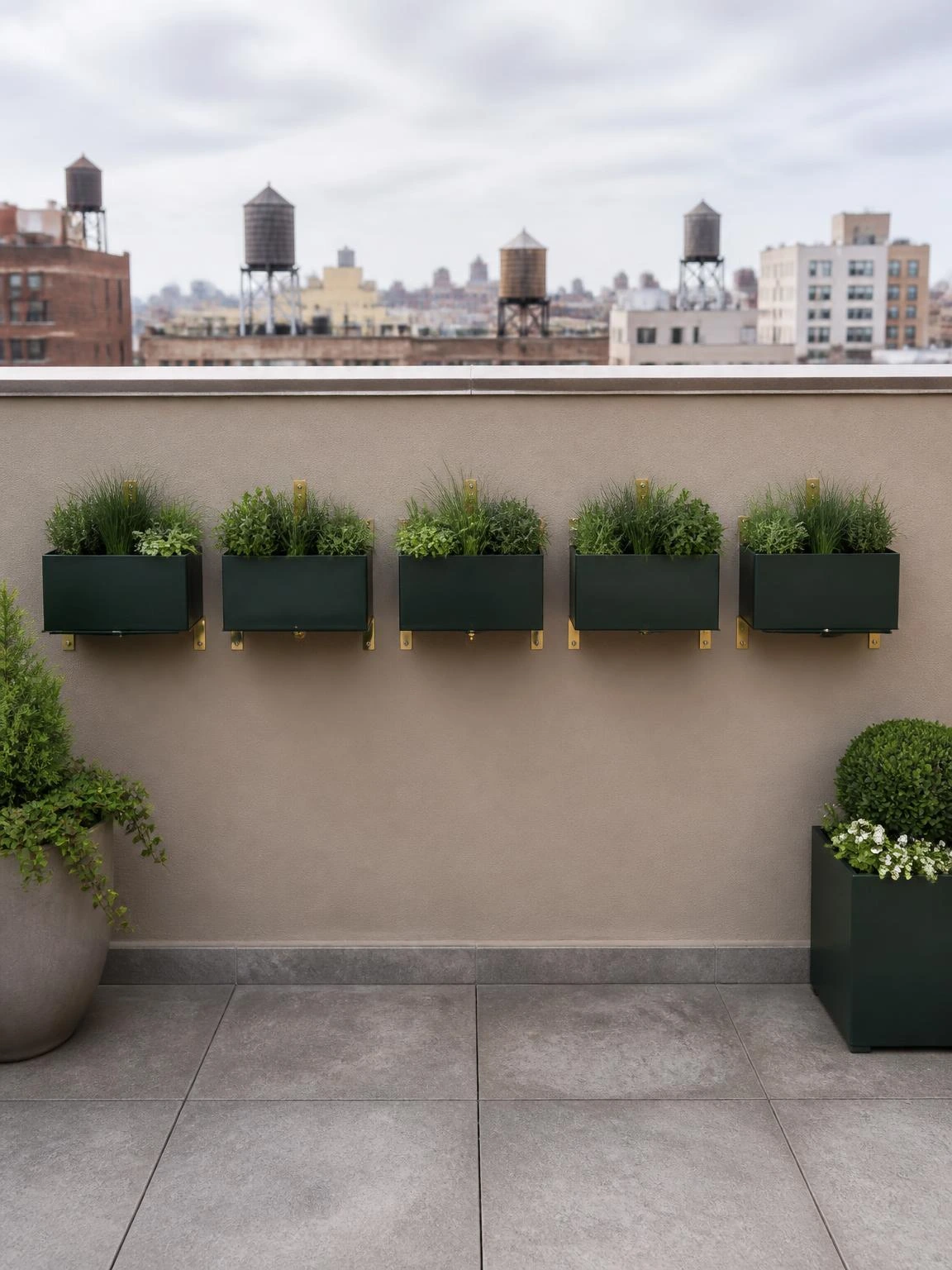
Five powder-coated steel wall planter pockets bolted in a horizontal row at chest height along the interior parapet face add greenery without taking any floor space.
Forest green foliage against a warm neutral parapet paint is a combination that works in morning light and in the softer afternoon hours equally well.
Brass-finish wall brackets at this scale are visible enough to count as a design detail rather than disappearing behind the planter bodies.
Drip-tray inserts inside each pocket catch runoff before it stains the parapet wall face, which is especially important on painted masonry.
Lightweight perlite-blend potting mix keeps the wall loading manageable, and compact ornamental grasses or herbs stay within the planter depth without needing constant trimming.
Fix the brackets into masonry anchors rated for outdoor use; adhesive fixings alone are not reliable against the combined weight and wind loading a rooftop planter sees.
10- Solar Post Cap Lights
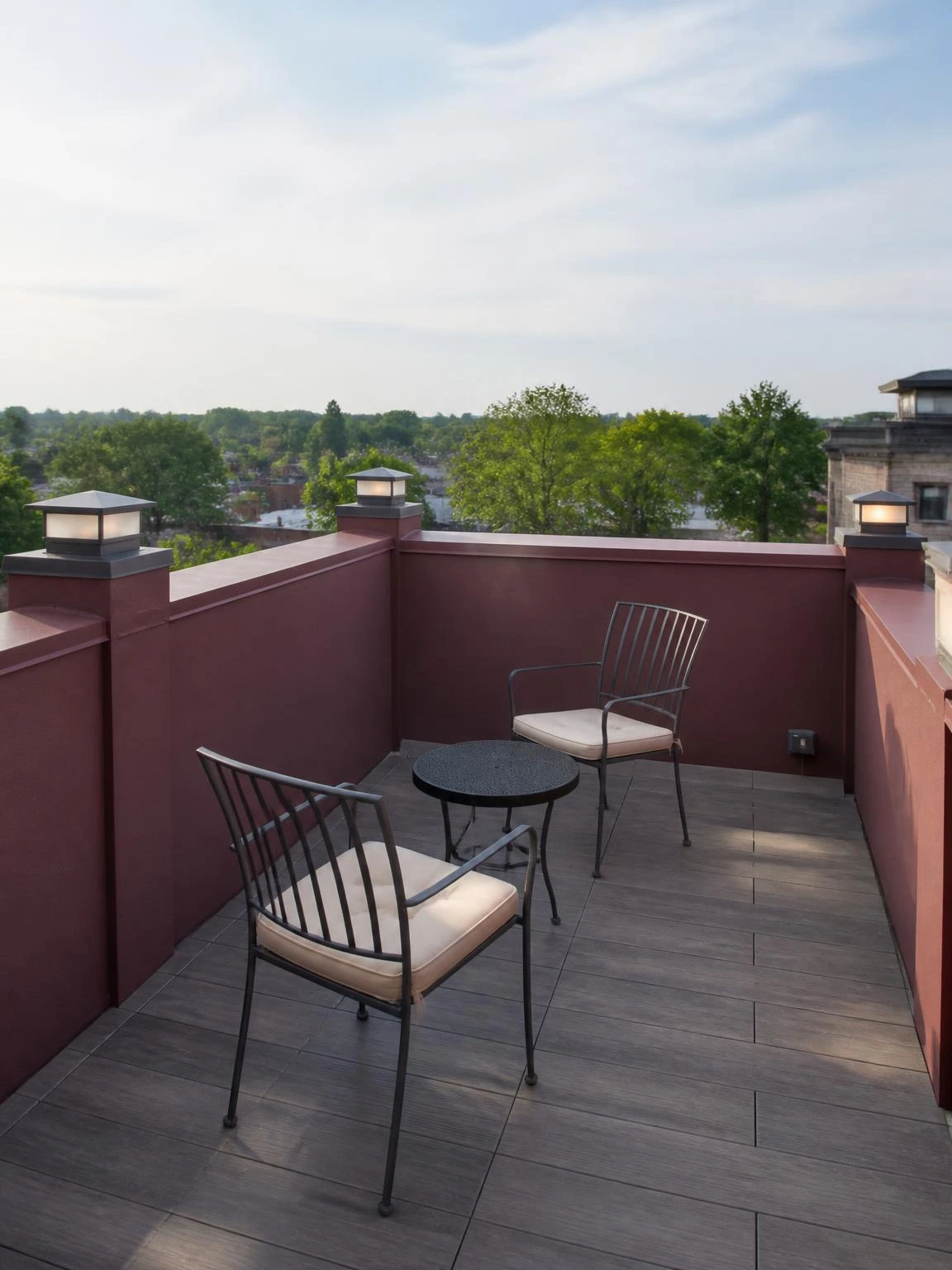
Solar post cap lights in matte gunmetal on evenly spaced parapet cap posts are the lowest-effort way to get perimeter lighting on a rooftop terrace.
Frosted polycarbonate diffuser panels spread the light softly rather than producing a hard spot, which suits the scale of a small terrace better than a bright point source.
A burgundy-tinted plastered parapet wall behind them adds enough warmth that even a modest glow reads well at night.
Most solar post caps need four to six hours of direct sun to run for six to eight hours after dark; a south-facing parapet cap is the obvious place to prioritise them.
Ivory-cushioned metal chairs below pick up the warm light without needing any additional accent lighting for casual evening use.
In extended overcast seasons solar output drops significantly, so a GFCI-protected exterior outlet for supplemental low-voltage lighting is worth having available as a backup.
11- Compact Gas Fire Bowl
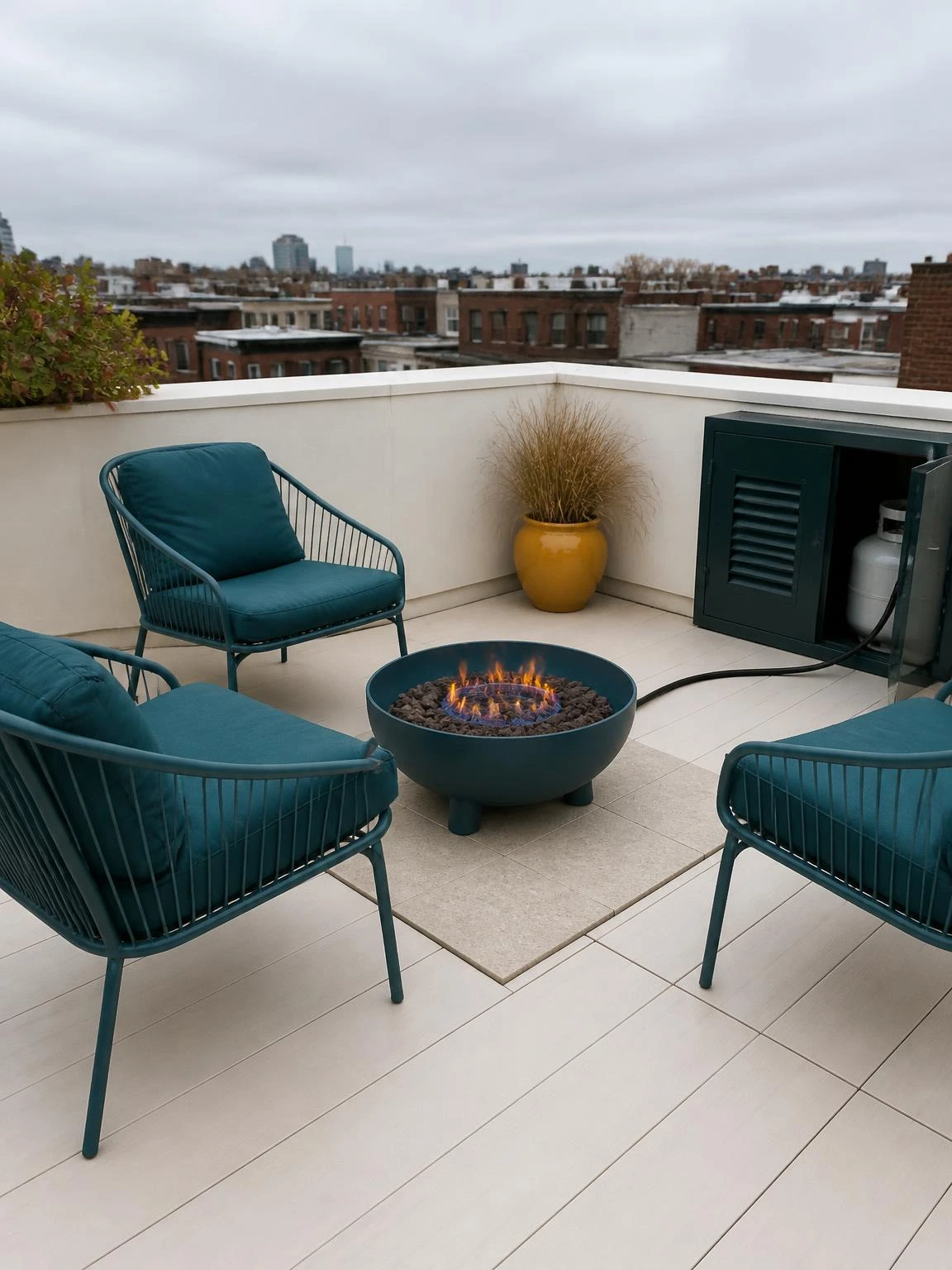
A round 60 cm powder-coated steel gas fire bowl on short legs makes a rooftop terrace usable well into autumn evenings in most North American and UK climates.
Centre it in the seating arrangement on a non-combustible porcelain tile pad at least 60 cm in diameter; the pad protects the deck membrane from radiant heat below the bowl.
A ventilated steel cabinet beside the parapet stores the LP cylinder neatly and keeps it out of direct sun.
Deep teal seating arranged around the bowl against a warm white composite tile deck creates a palette that is warm without looking like a sunset catalogue page.
The short hose connection between the bowl and the cylinder should be inspected each season for cracks or stiffening before the first use.
Check municipal codes before installing any open-flame appliance on a rooftop; some cities explicitly prohibit LP gas on elevated decks regardless of the equipment quality.
12- Windbreak Glass Panel Railing
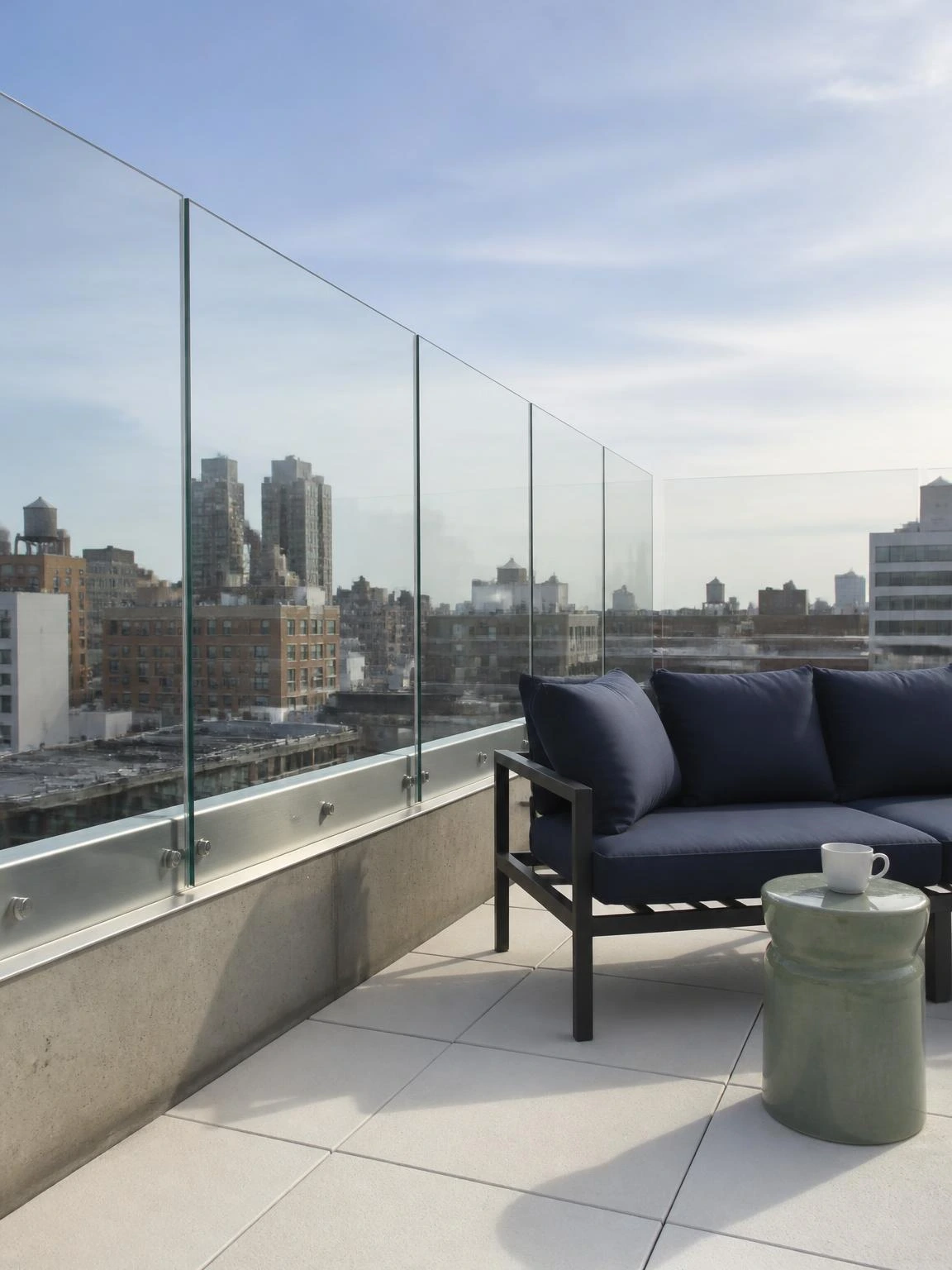
Frameless 12 mm tempered glass panels in stainless steel channel stanchions along the exposed parapet edge reduce wind speed at seat level by roughly half while keeping the city view completely open.
That view is usually the whole point of a rooftop terrace, and solid screens or tall planters along the edge trade it away to solve a problem glass handles better.
A navy cushioned sofa on ivory composite deck tiles behind the glass reads cleanly through the panels from outside, which matters in tighter urban settings where the terrace is visible from neighboring buildings.
A muted green ceramic side table provides the accent the navy and ivory palette needs without adding visual clutter at the railing line.
Glass panels kept clean also reflect less glare back into the seating zone than many people expect, especially with a low-iron tempered specification.
This is not a DIY installation; glass railing systems on rooftop terraces require engineered fixings and a licensed contractor regardless of how straightforward the base channel looks.
13- Folding Side-Table Tray
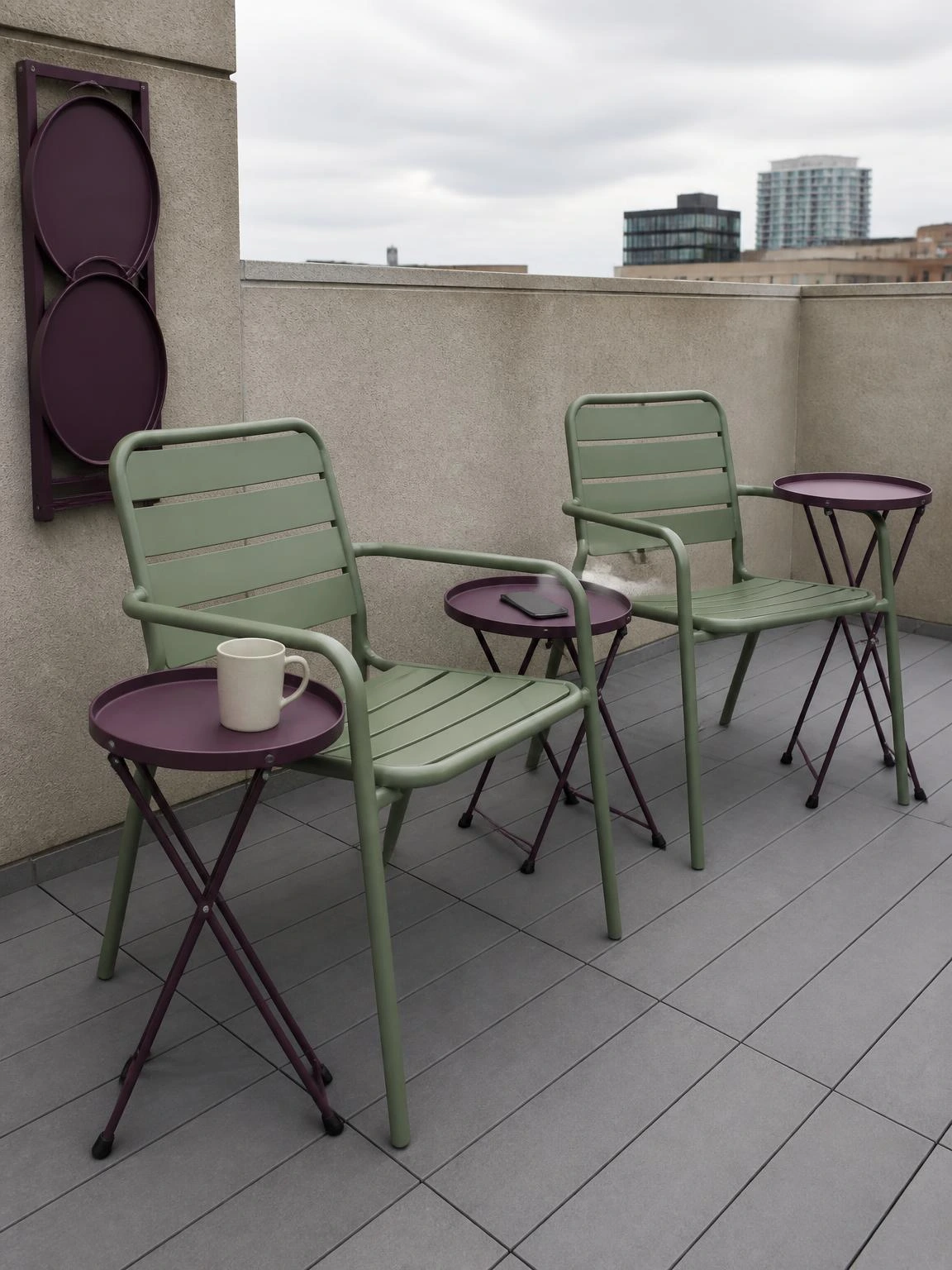
Three powder-coated steel folding tray tables in muted plum, deployed at varied heights beside and between chairs, solve the surface problem on a small rooftop terrace without committing to fixed furniture.
Each tray holds exactly what it needs to at that moment, a ceramic mug, a phone, and nothing more, which keeps the deck from feeling cluttered.
Non-slip rubber foot pads on the legs protect the deck tile surface and stop the tables from skating across composite tile on a breezy morning.
Soft green metal chairs provide enough contrast against the muted plum that the arrangement looks considered rather than accidental.
When not in use the trays nest flat in a vertical wall-mounted rack, which frees the full deck surface for other uses.
Clip or hook lightweight folding tables to chair arms when they are not actively holding something, because even a moderate gust can tip an empty tray on an exposed rooftop.
14- Painted Parapet Accent Wall
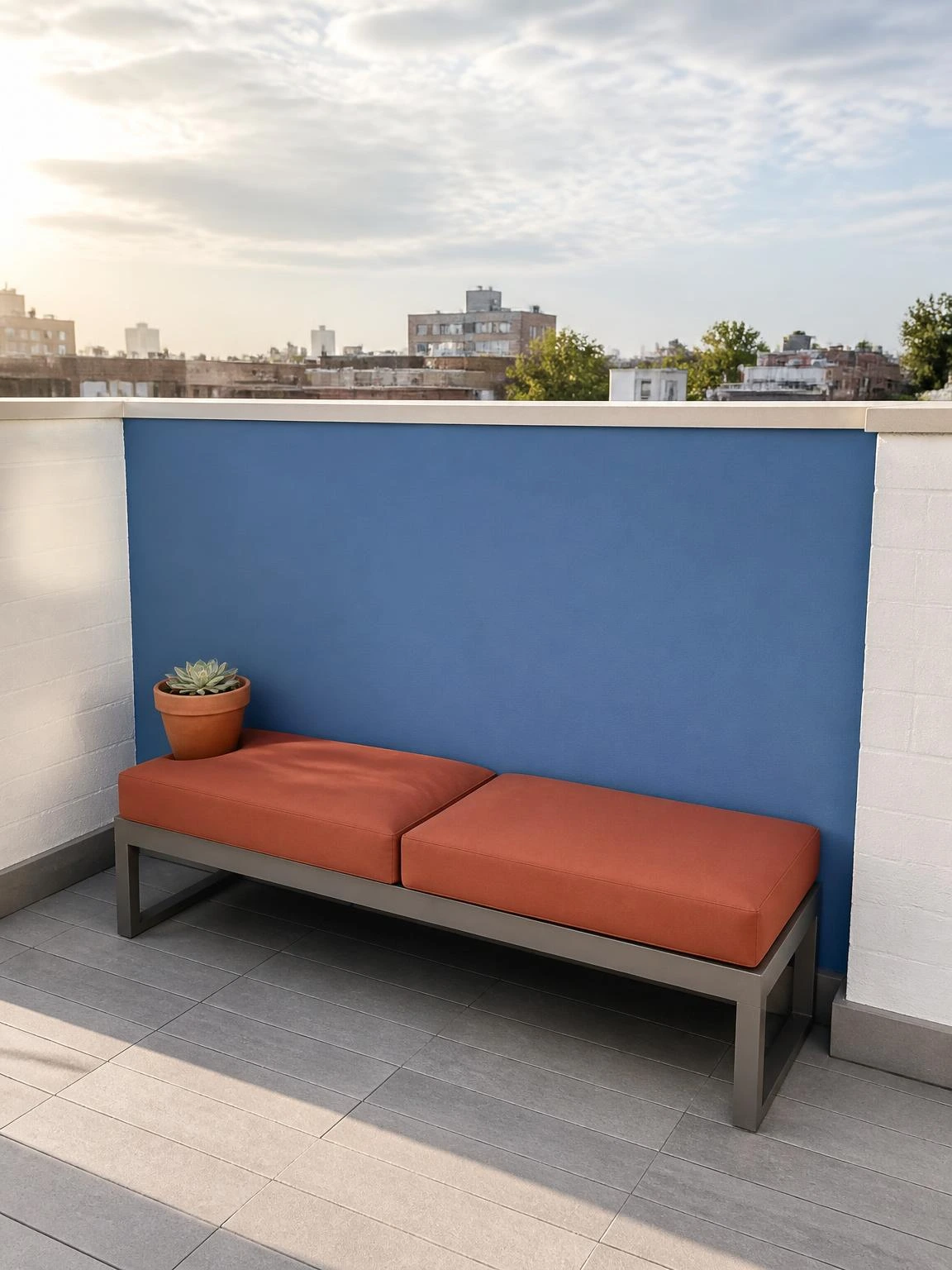
Painting one interior parapet face in dusty blue masonry paint while leaving the remaining walls warm white gives the terrace a focal point that costs almost nothing.
The single accent wall approach works particularly well on a rooftop because it creates directionality in a space that is otherwise bounded equally on all sides.
A low aluminium bench with terracotta-coloured cushions placed against the blue wall reinforces the focal point and gives the colour somewhere to land.
Light grey porcelain tile underfoot keeps the ground neutral so the wall reads as the intentional element rather than one of several competing surfaces.
Masonry-specific exterior paint rated for direct weather exposure is the only appropriate product here; standard interior emulsion will begin peeling within a single wet season outdoors.
If the parapet belongs to a shared building, permission from the building owner or management company is required before painting any exterior surface.
15- Weatherproof Storage Box Bench
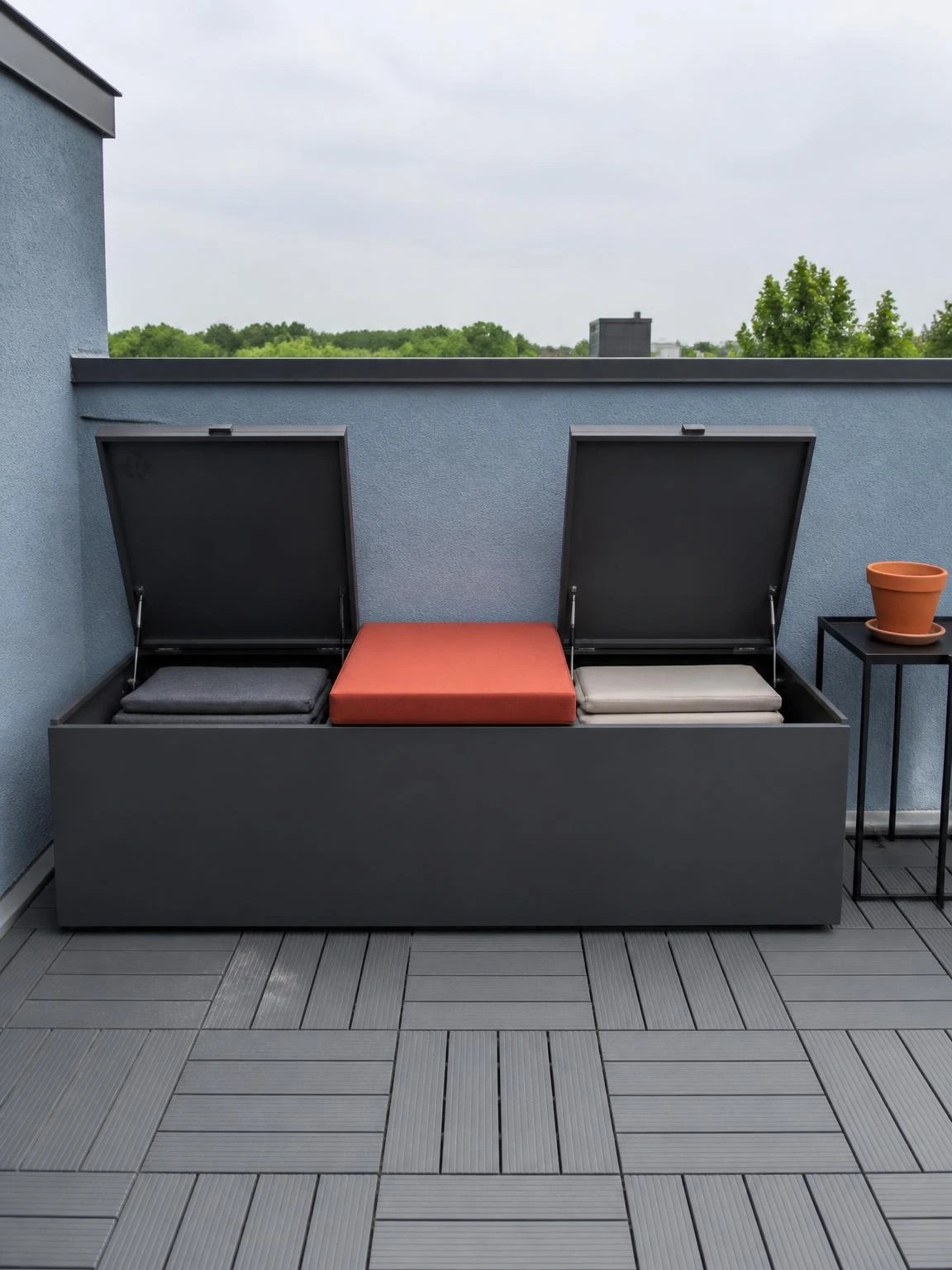
A 120 cm wide powder-coated steel weatherproof storage box along the interior parapet wall is simultaneously a bench, a cushion store and a tidying solution for a small rooftop terrace.
At 45 cm tall it sits at a comfortable bench height, and a rust-coloured seat pad on top means it functions as seating without any modification.
Gas-strut lid hinges let the lid be opened one-handed and held there while retrieving folded cushions stored inside, which sounds minor until the terrace is being set up in a hurry.
A soft blue parapet wall behind it and a small metal side table to the right keep the corner from feeling like a utility zone despite the storage function.
Even boxes marketed as fully waterproof should have drainage holes or a raised interior tray, because condensation alone can damage stored acrylic cushions over a full winter.
Grey composite deck tile underfoot completes a palette that is restrained enough to let the rust seat pad do its job as the accent.
Where do you want to go next?
Explore by topic
Recently viewed
16- Outdoor Projector Screen Setup
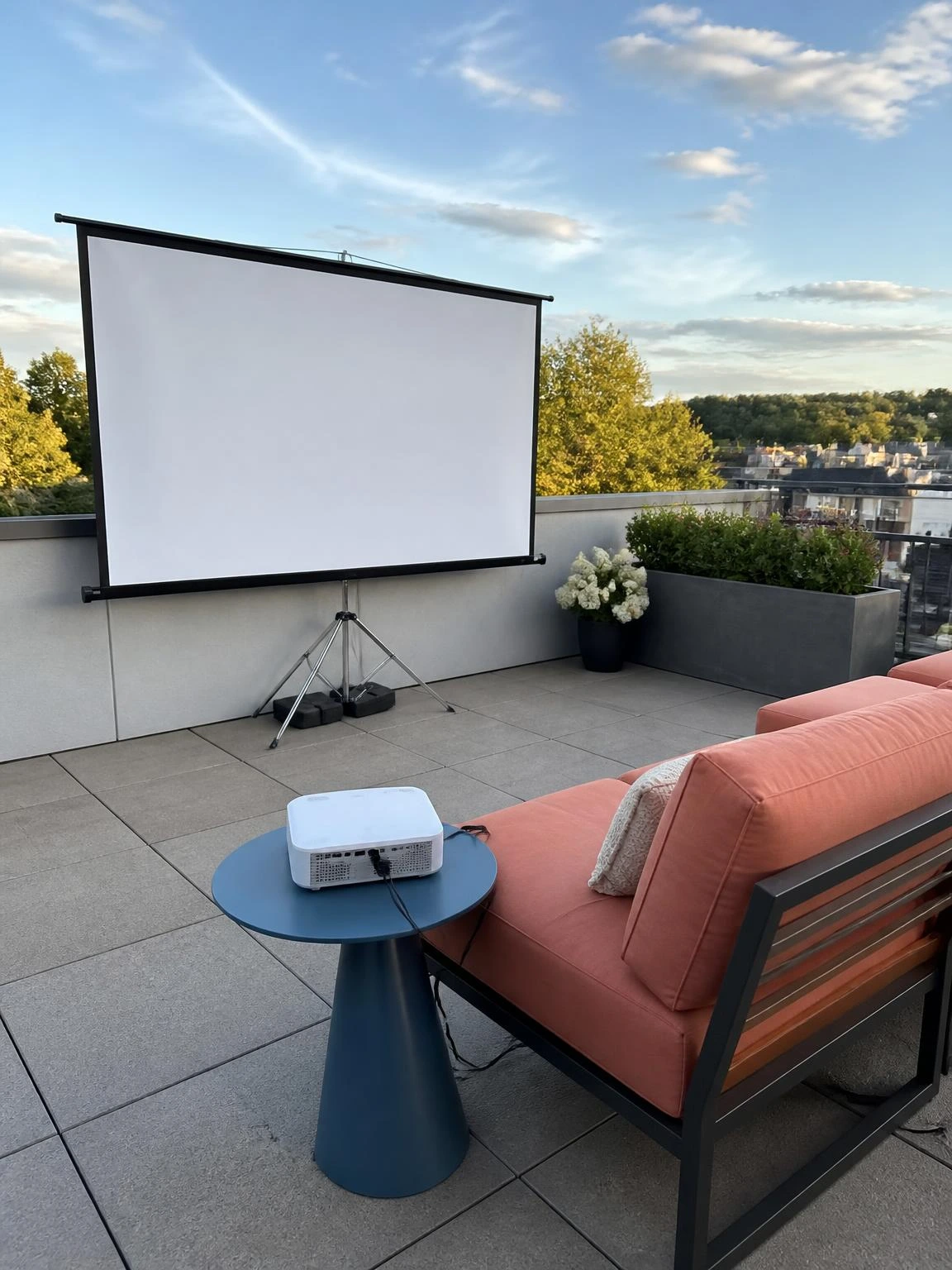
A freestanding 100-inch pull-up projector screen on a weighted aluminium tripod stand turns a rooftop terrace into a genuinely good outdoor viewing space without any permanent installation.
The screen deploys against the parapet wall, the tripod base adds ballast, and the whole setup packs into a 120 cm carry bag for off-season storage in a cupboard or hallway.
A compact outdoor-rated projector on a muted blue side table between the sofa and the screen keeps the cable run short and the setup tidy.
Soft coral cushions on a low aluminium sofa facing the screen are a good choice because they recede in low light rather than competing with the image.
Stone composite deck tiles underfoot absorb rather than reflect ambient light, which helps image contrast without requiring a fully blacked-out space.
At northern latitudes in midsummer, full dusk does not arrive until close to 10 pm, which is worth factoring in before planning an early evening film night in June or July.
17- Zoned Lighting with Low-Voltage Track
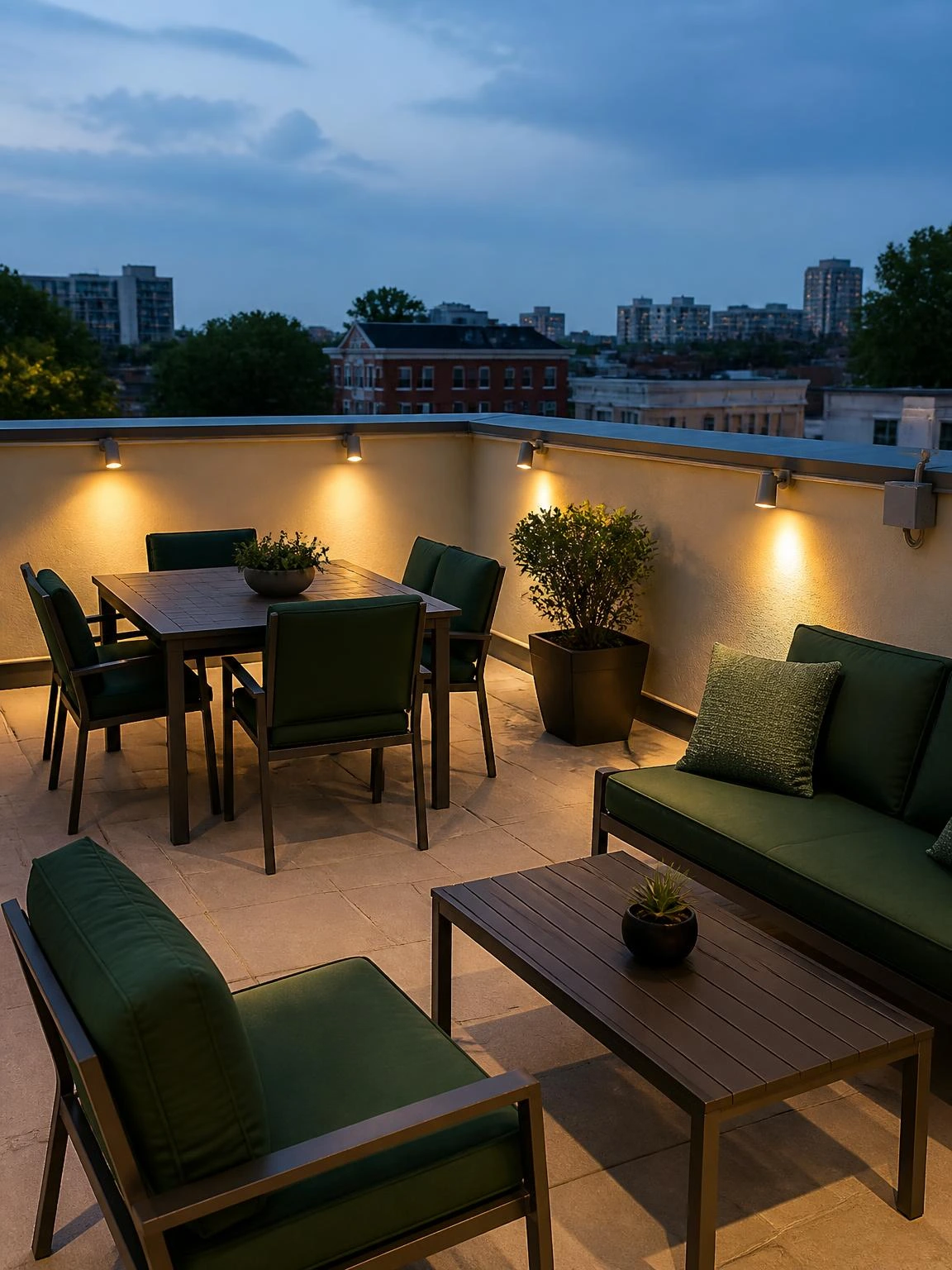
A slim powder-coated aluminium low-voltage track rail surface-mounted along the top inner edge of the parapet is one of the tidiest ways to light a rooftop terrace properly.
Four adjustable spot heads in matte brass angled down from the rail illuminate the dining zone and seating zone as separate pools rather than flooding the entire terrace evenly.
Dividing the track into two switched circuits means the dining zone can run alone while guests are eating, then be switched off in favour of the lounge zone for the rest of the evening.
Forest green cushions on aluminium chairs glow well under directed brass-toned light, and the warm neutral parapet reflects just enough fill light to soften the shadows.
The track cable runs neatly along the parapet cap into a weatherproof surface-mount junction box, which keeps the wiring protected from rain and frost without any conduit buried in the masonry.
All exterior low-voltage wiring connections must be made by a qualified electrician on a GFCI-protected circuit; splicing outdoor track wiring yourself is not a safe option regardless of the voltage.
Making the Most of a Small Rooftop Terrace
The ideas above share a common thread: they avoid permanent fixings wherever possible, which protects the membrane, respects rental agreements and keeps future changes affordable.
Weight and wind are the two constraints that come back in almost every category, and both are worth resolving in the planning stage rather than after furniture has been delivered to the roof.
A small rooftop terrace design does not need all seventeen elements; four or five that address the floor, the seating, the shade and the light will make the space genuinely liveable.
The goal is a terrace that gets used on a Tuesday morning, not just photographed on a Saturday afternoon.