


19 Backyard Privacy Ideas Without a Fence for a More Comfortable Outdoor Space
A neighbor’s window can make a sunny patio feel surprisingly exposed. Backyard privacy without a fence works best when one seating area, route, or sightline gets attention instead of the whole yard.
These ideas use screens, plants, fabric, and furniture to create useful privacy while keeping daylight and airflow moving.
1- Freestanding Slatted Privacy Screen
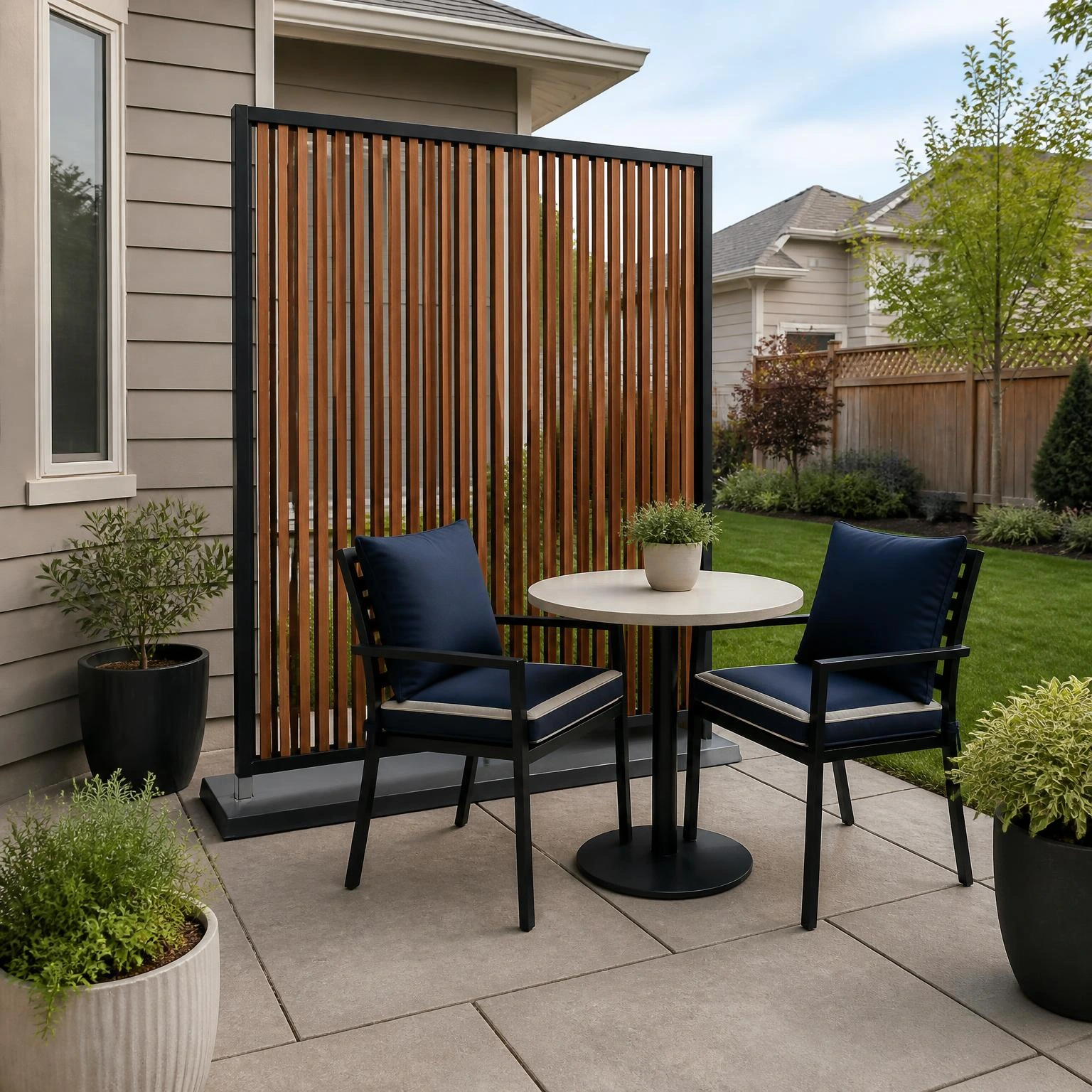
A cedar-toned slatted screen can sit behind a two-seat dining set on concrete pavers, giving the patio a defined backdrop without closing the yard.
Use exterior-rated timber slats in a metal frame, with navy cushions and muted green planting nearby for contrast. Place it beside the seating zone, leaving one side open for access and air movement.
A freestanding screen needs a stable, weather-resistant base and may need seasonal repositioning in strong winds.
2- Outdoor Curtain Track
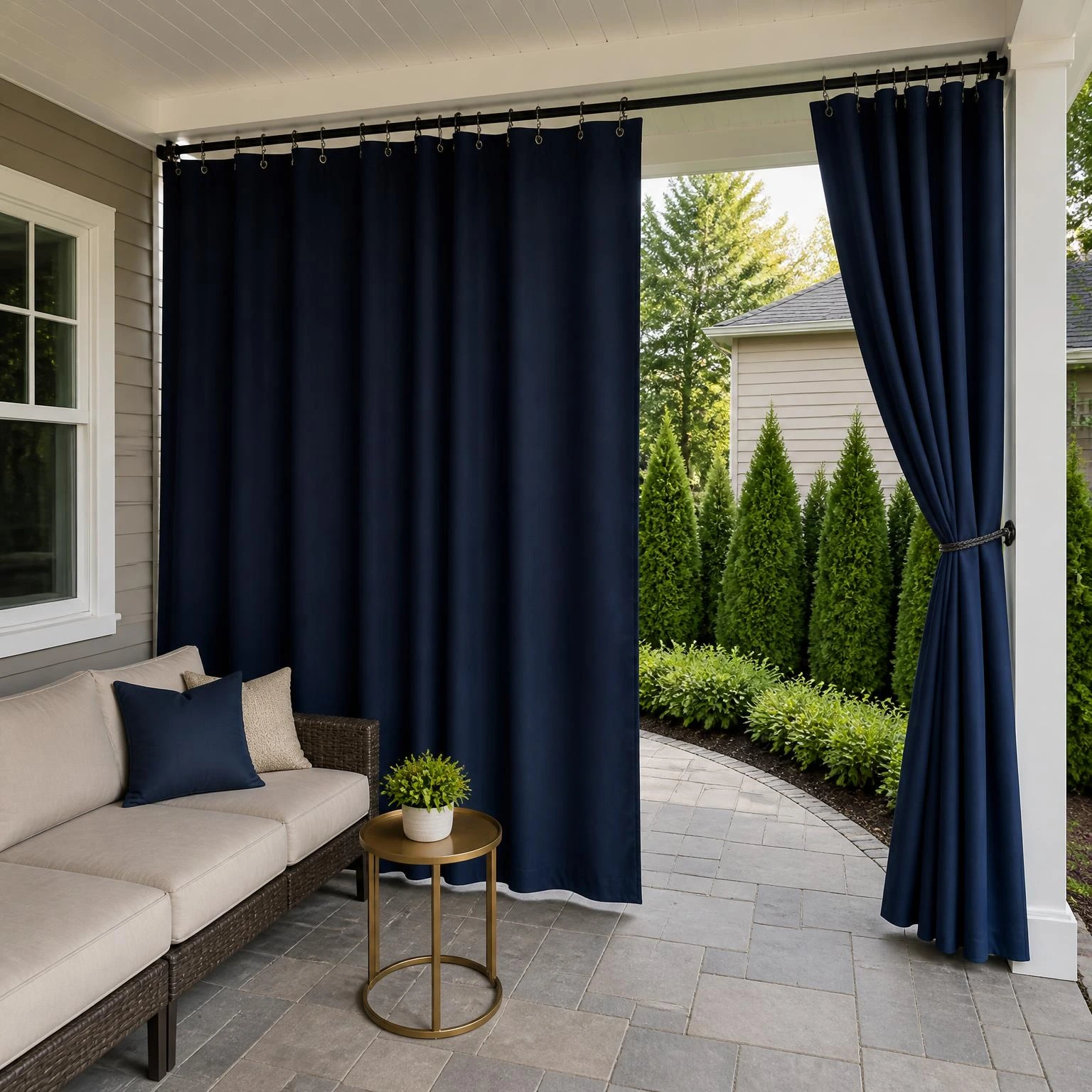
Navy outdoor curtains can screen a covered patio from a neighboring view while keeping the seating area open on warmer days.
Install a slim powder-coated track beneath the porch roof, using separate solution-dyed fabric panels and stainless steel hardware. Pull only the panels nearest the seated area, rather than closing the entire patio.
Secure the track properly, and tie back or remove the curtains during severe weather.
3- Pergola Privacy Trellis
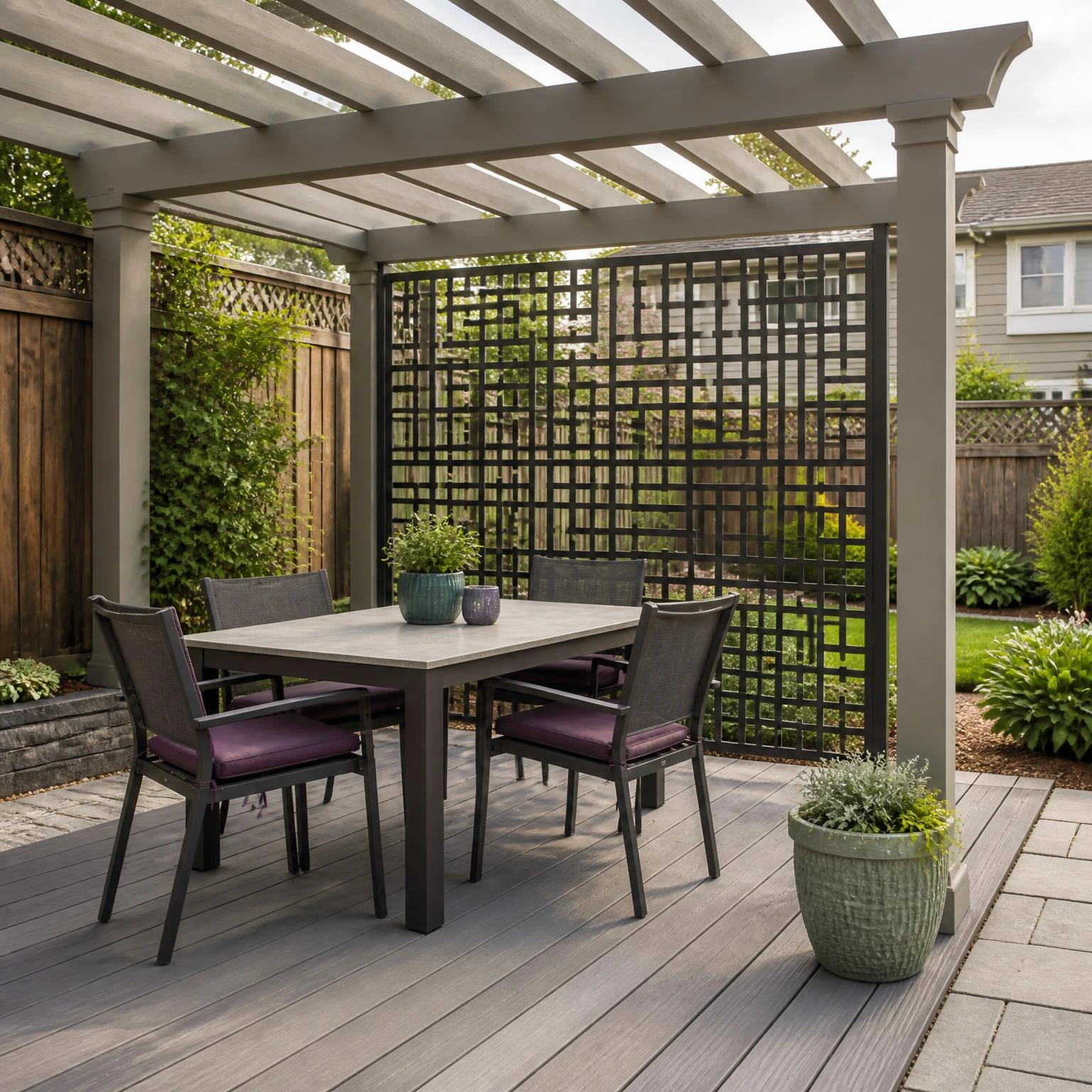
A pergola trellis adds partial screening to a dining patio without turning the structure into a dark enclosure.
Fit a geometric powder-coated steel panel to the neighbor-facing side of a painted timber pergola, using muted plum, stone, and soft green around the space. Position it across the main sightline instead of enclosing all four sides.
A trellis filters views rather than blocking them completely, especially during winter or from taller windows.
4- Privacy Planting Border
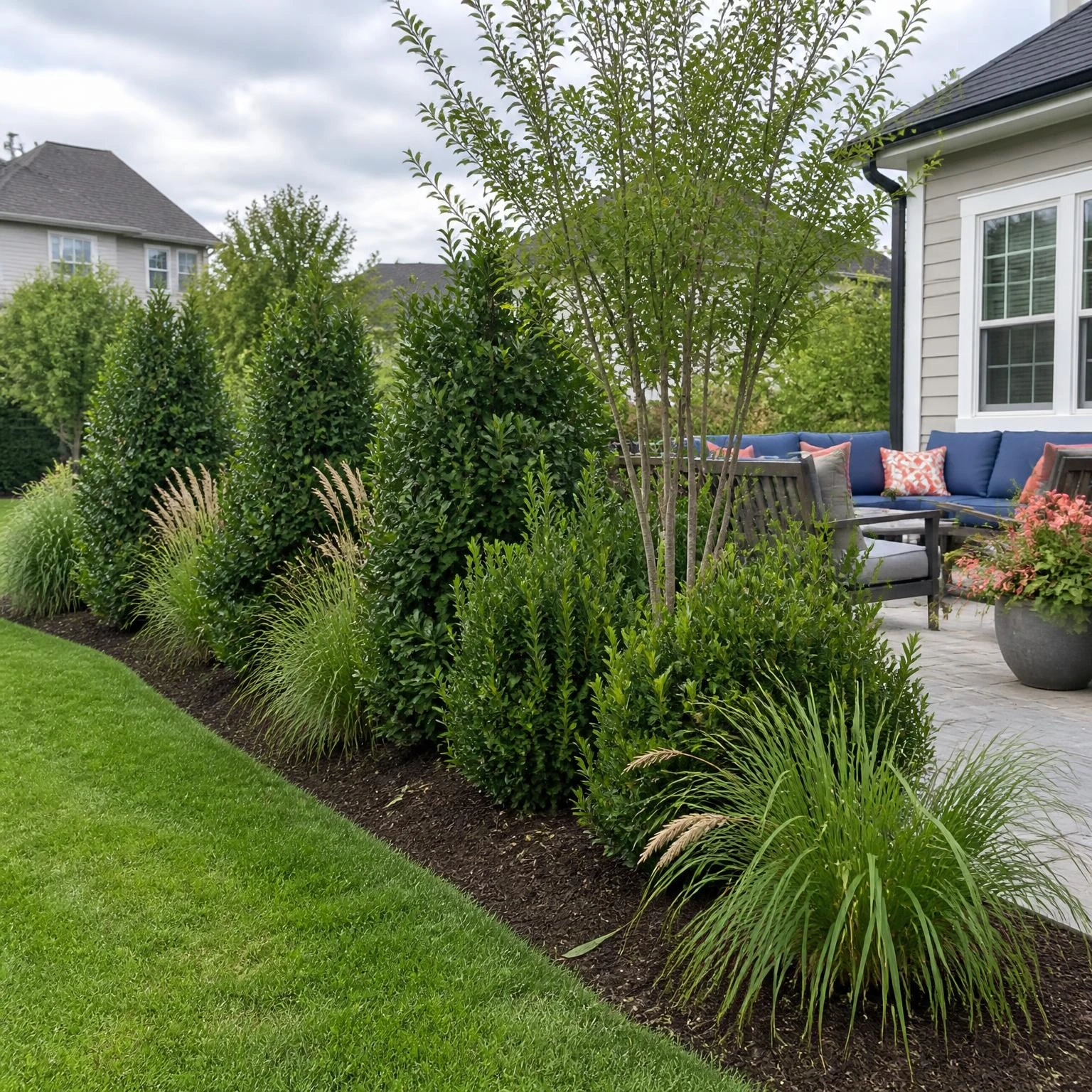
A narrow planting border can soften a patio edge while gradually screening the closest neighboring view.
Stagger evergreen shrubs, ornamental grasses, and one small multi-stem tree in two depths, with mulch covering the soil. This layered arrangement helps foliage in the second row cover gaps in the first.
Plants take time to reach useful height, so choose suitable local species and allow room for pruning.
5- Large Container Screen
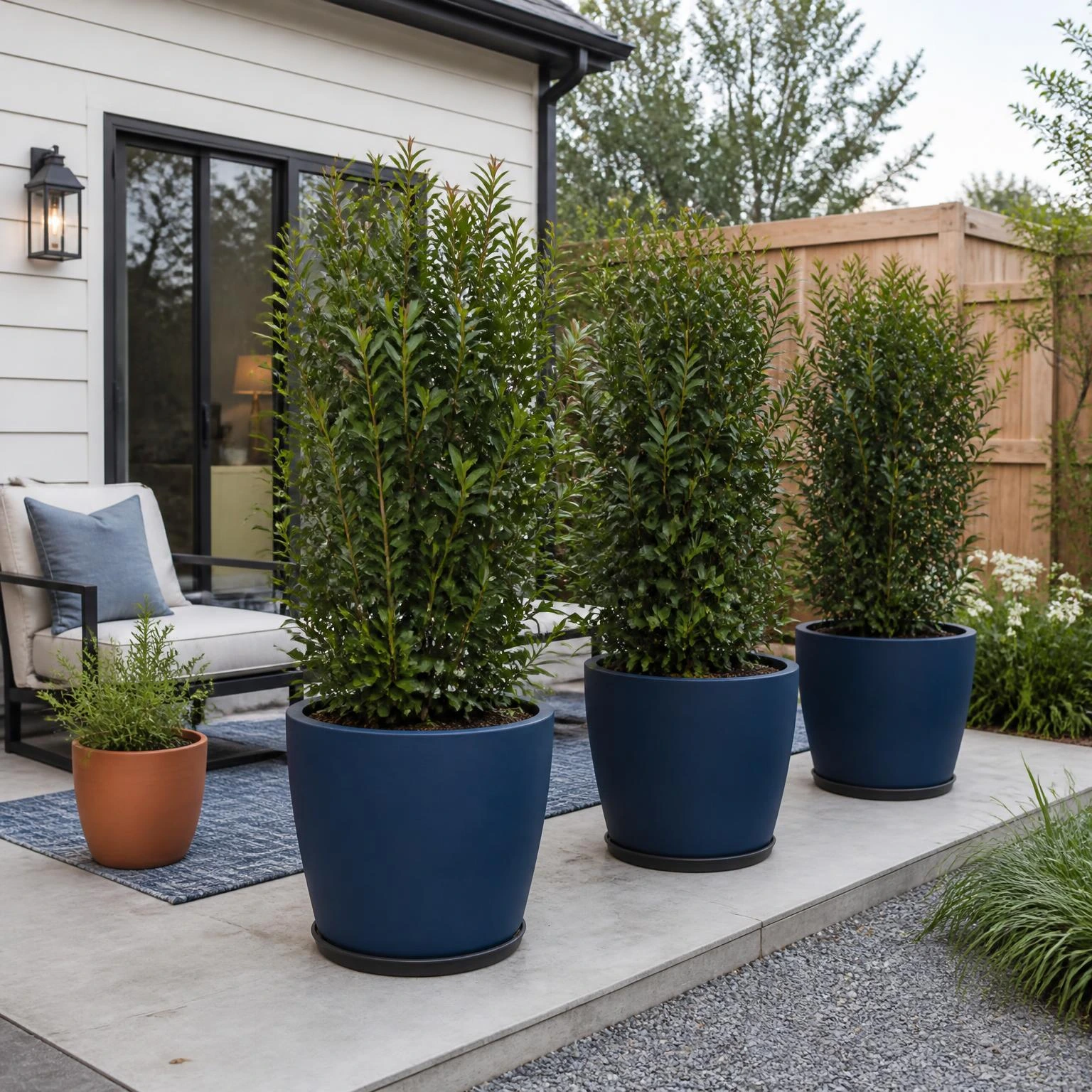
Three large dark blue planters can screen seated eye level on a compact patio without taking over the walkway.
Fill frost-resistant containers with dense screening plants and quality potting compost, arranging them in a gently offset line. Keep the patio door and main route clear, with warm white furniture or terracotta accents nearby.
Large planters become heavy when filled, so provide drainage and protect them from tipping.
6- Bamboo-Style Composite Screen
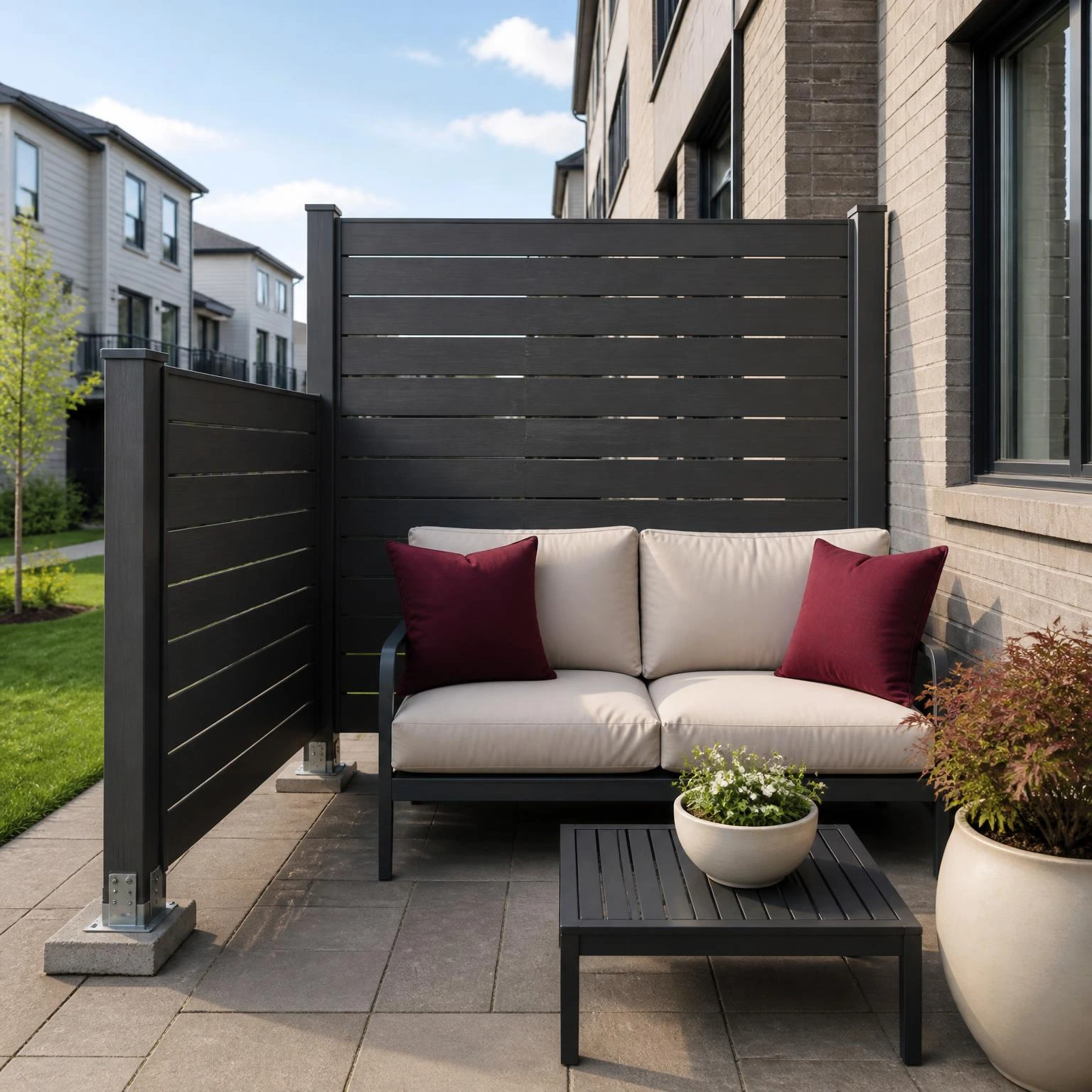
Short charcoal composite panels can give a townhouse patio a neat privacy layer while leaving space above and beside the seating.
Install the panels in a short L-shape behind a compact outdoor sofa, using aluminum posts and properly supported concrete footings. The return panel blocks a diagonal view that one straight panel would miss.
Check local planning and property rules before installing a panel system, and use compatible posts and fixings.
7- Retractable Privacy Shade
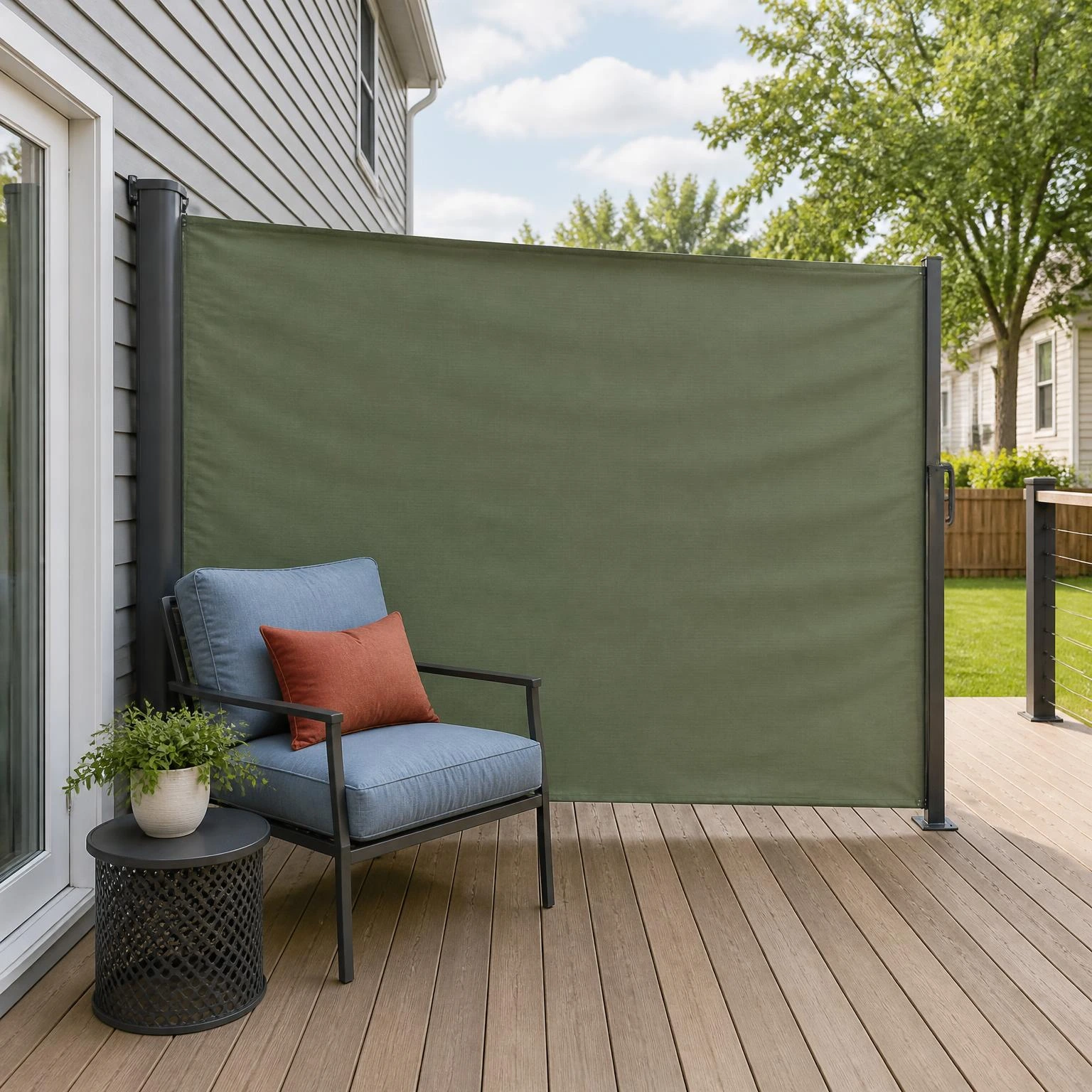
A muted green retractable shade can screen a reading chair only when privacy is needed.
Mount the cassette at the deck edge and extend the weather-resistant fabric to a slim receiving post. Keep the rest of the deck open, with rust-colored accessories and soft blue upholstery adding warmth.
Retractable shades require secure anchoring and should not remain extended in strong wind.
8- Decorative Metal Privacy Panel
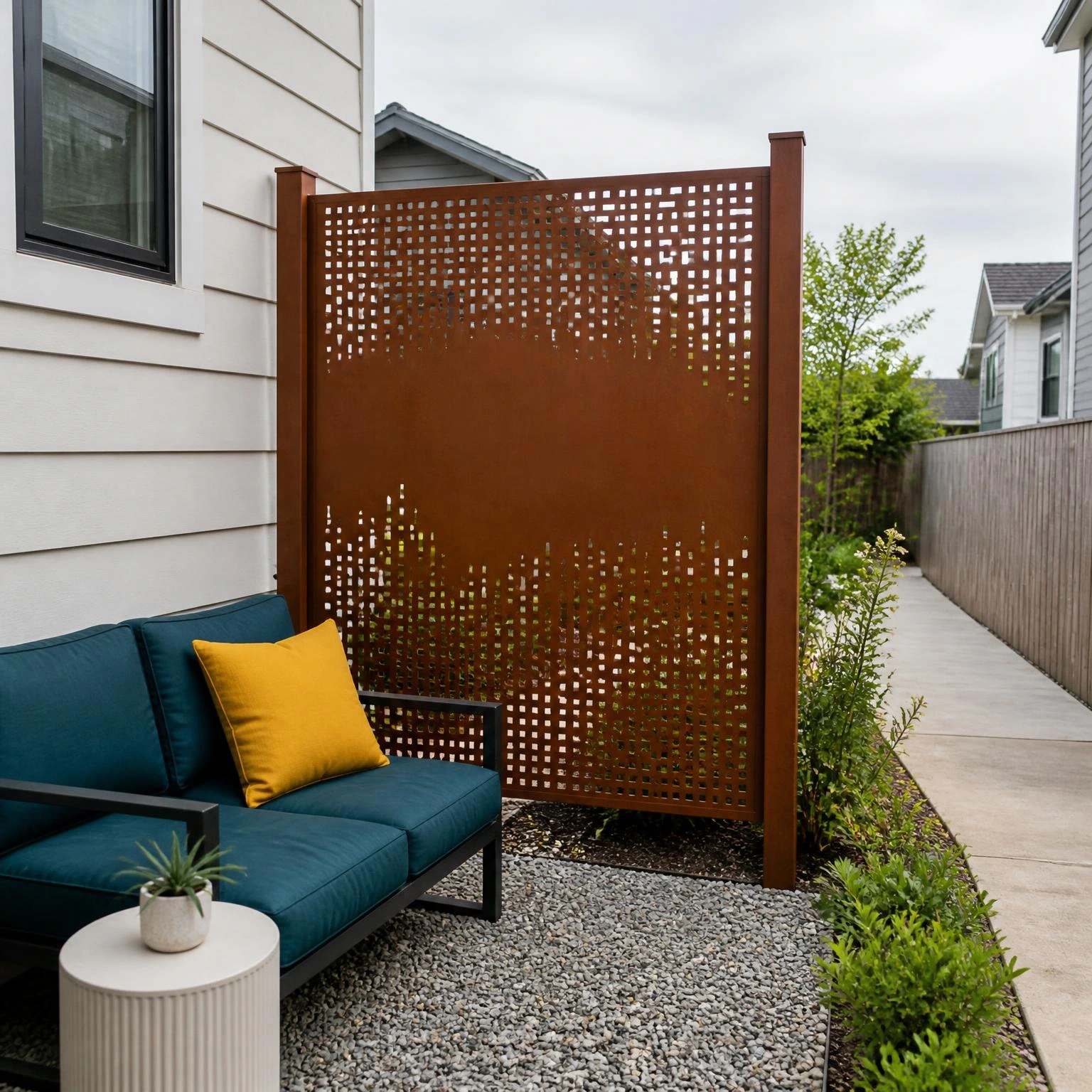
A rust-colored decorative metal panel can make a gravel seating nook feel tucked away from a neighboring path.
Mount one laser-cut powder-coated panel between steel posts, choosing a pattern with enough solid area at seated eye level. Deep teal cushions and a warm white side table can balance the stronger metal color.
Cutout patterns soften visibility but cannot provide complete privacy from every direction.
9- Privacy Screen Wall with Bench
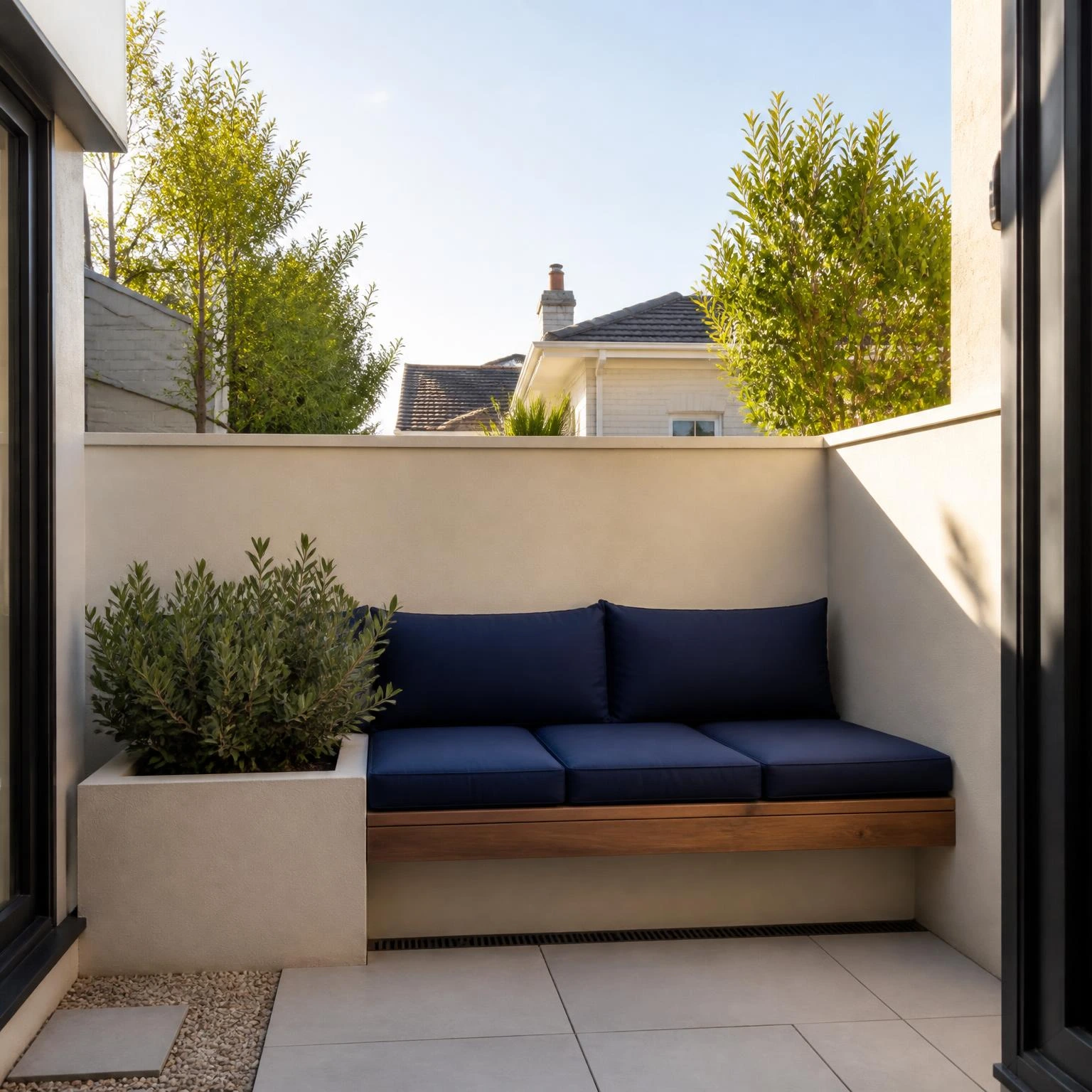
A low rendered wall can block the most intrusive seated view while creating a useful place to sit.
Build the boundary wall to focus on the lower sightline, then add an exterior timber bench with navy outdoor cushions facing into the courtyard. Keeping the upper view open preserves daylight and a less enclosed feeling.
Masonry is permanent, so check permission, drainage, and construction requirements before work begins.
10- Privacy Arbor Entry
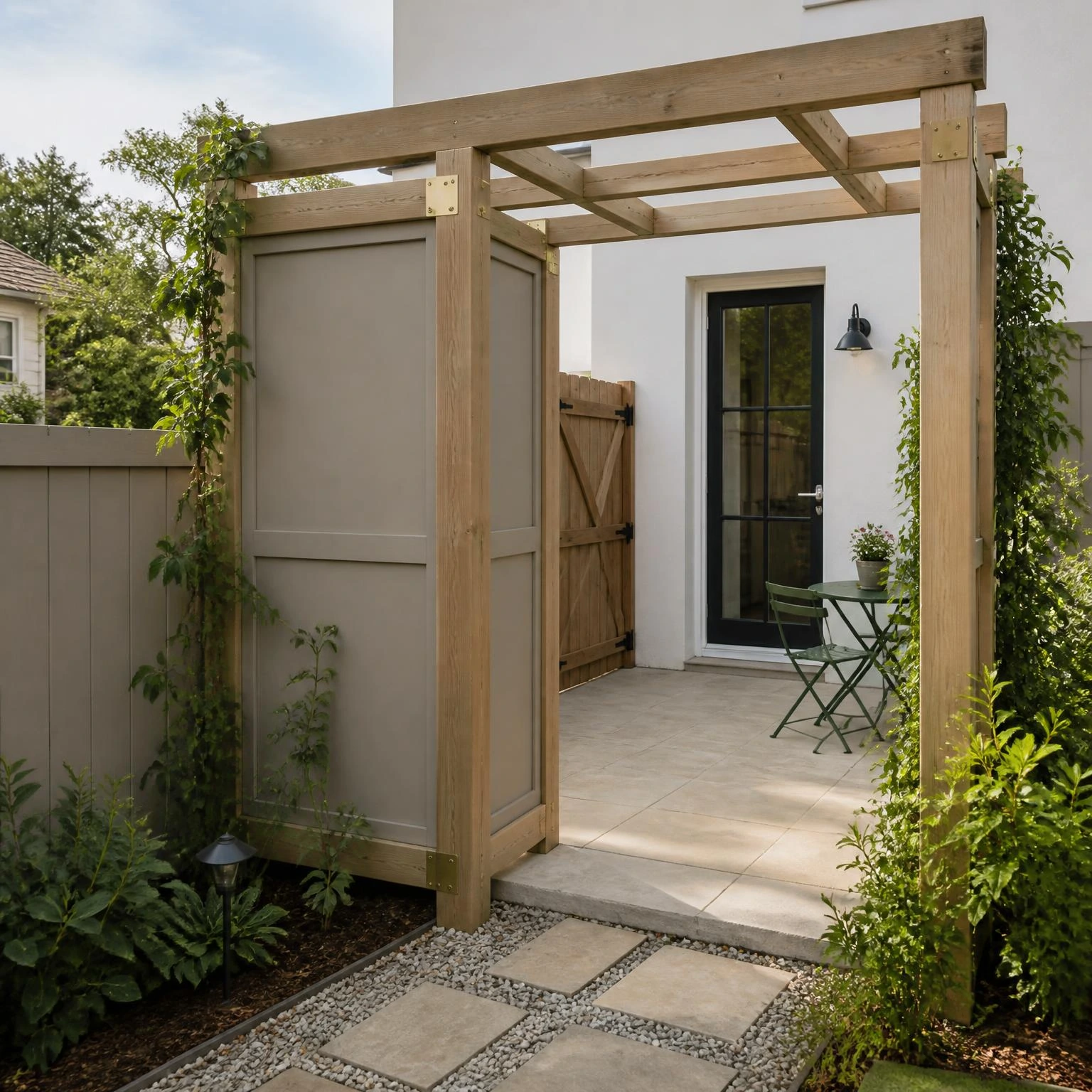
A timber arbor can make a small patio entrance feel more private without blocking the whole passage.
Use painted plywood panels on the neighbor-facing half and leave the top open for daylight. Forest green planting and warm neutral finishes help the structure feel connected to the garden.
Preserve a comfortable clear route, and avoid blocking gates, doors, or furniture movement.
11- Balcony-Style Privacy Rail
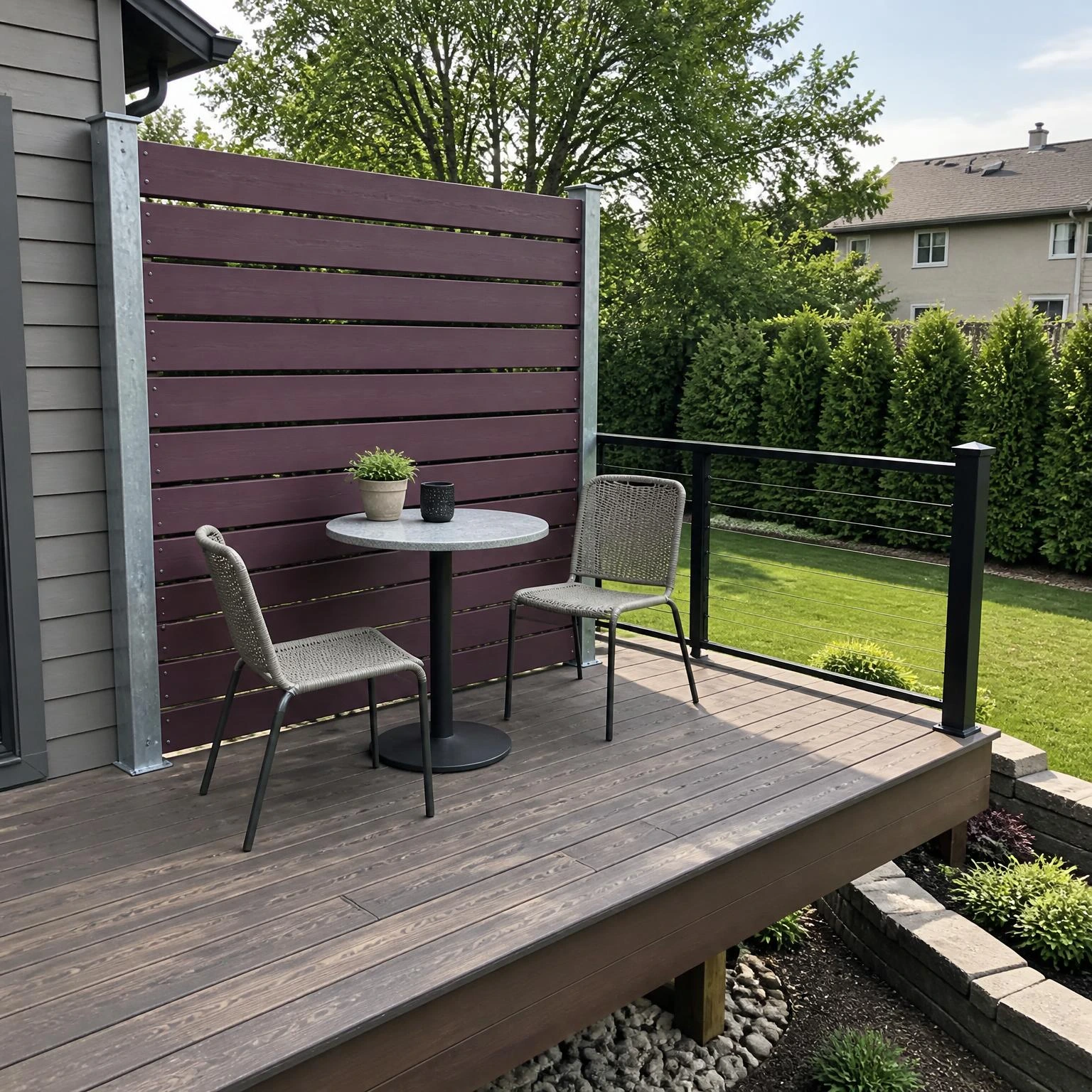
A raised deck often needs screening at one exposed end rather than along every edge.
Install a muted plum horizontal screen beside a café table, using exterior composite boards and galvanized steel posts. Keep the long side open so the main seating area retains outward views.
A raised screen needs secure engineering and should not replace a required safety railing unless designed as one compliant system.
12- Outdoor Bookcase Screen
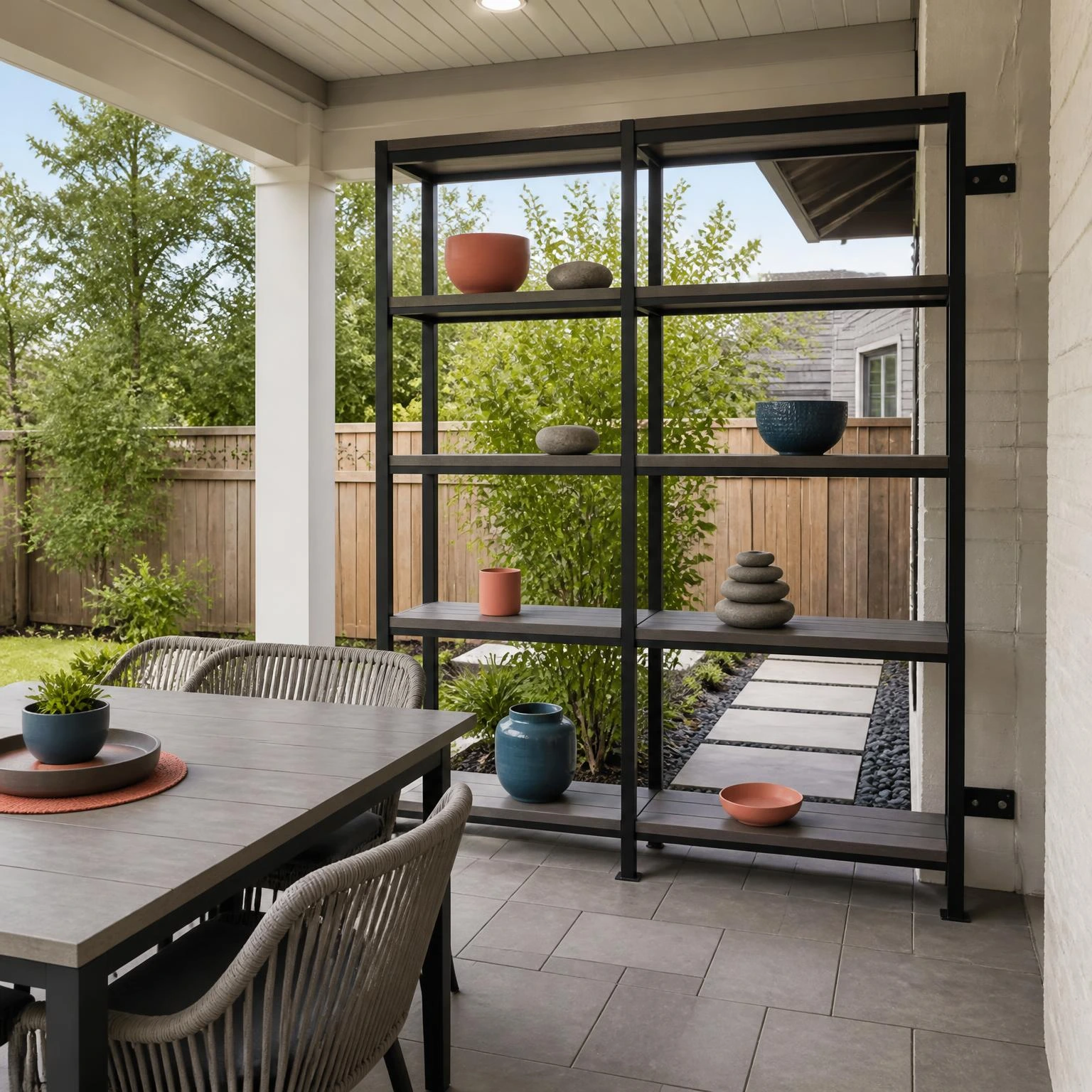
An open shelving divider can separate a dining table from a side passage while preserving light and airflow.
Place powder-coated steel shelving perpendicular to the house, with exterior composite shelves holding only stable, weather-suitable items. Soft coral, muted blue, and stone accessories can make the divider feel like part of the patio.
Anchor the unit securely and avoid heavy or unstable objects that could fall outdoors.
13- Narrow Side-Yard Screen
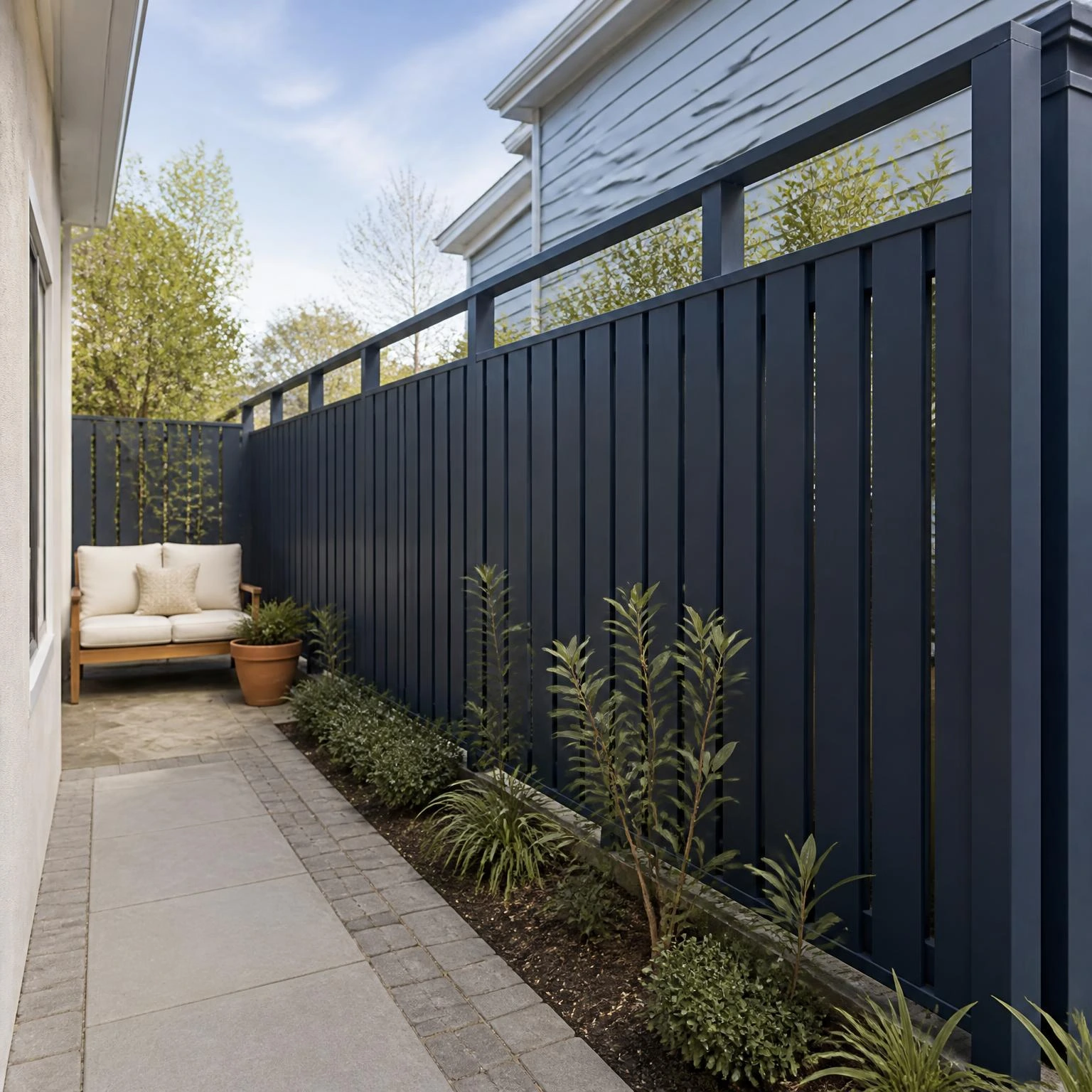
A narrow side yard may need privacy beside one route or seating spot, not along the entire boundary.
Use navy-painted vertical timber boards below a slim open gap, supported by metal posts. The gap above admits daylight while the lower section blocks the main neighbor-facing sightline.
Very tall boundary screens can affect light, drainage, and neighbor relations, so confirm local rules first.
14- Movable Privacy Panels
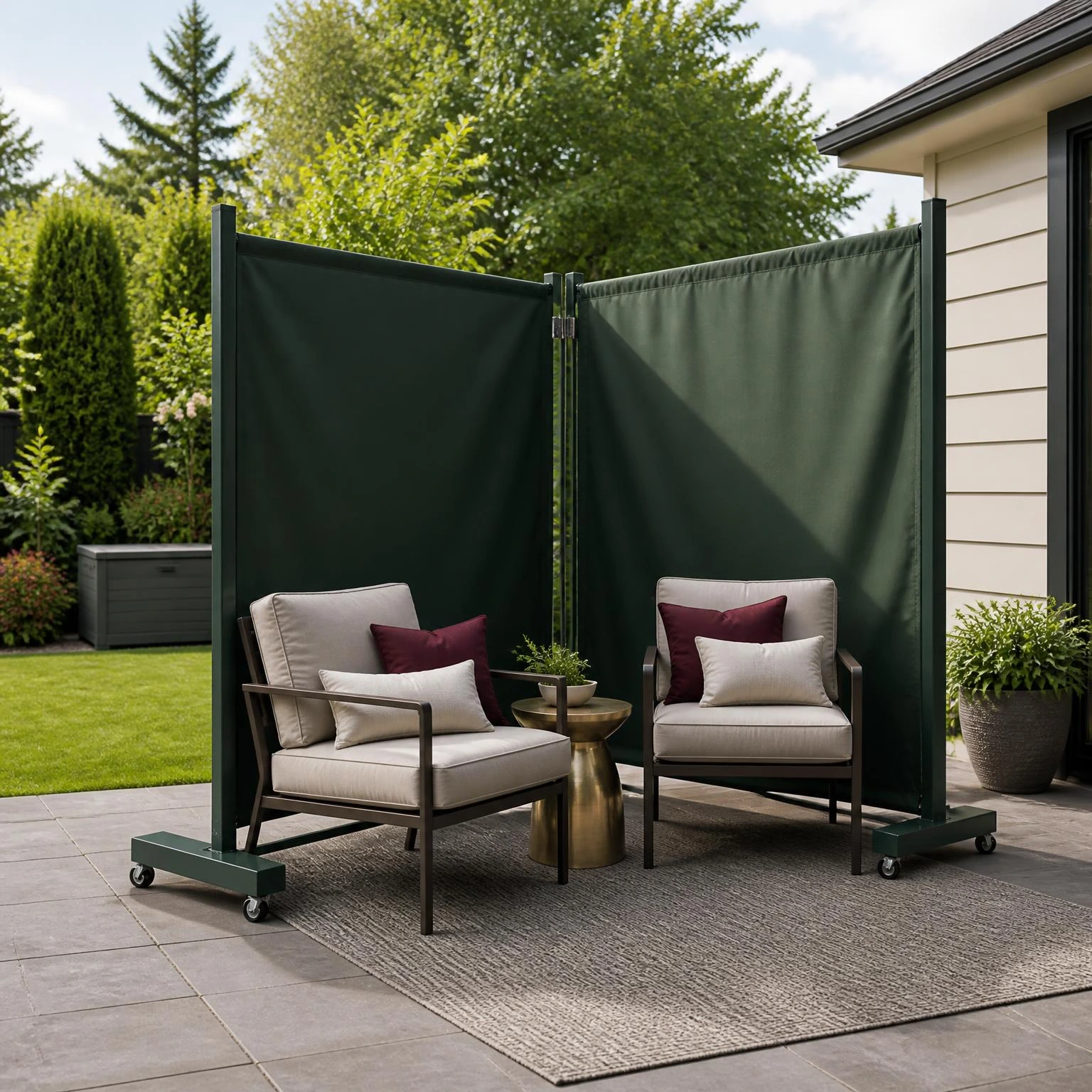
Folding panels let a lawn patio change from open garden to private lounge as needed.
Position two forest green panels in a shallow V behind lounge chairs, using weather-resistant fabric infill and broad weighted feet or lockable casters. Open the V toward the garden when a wider view is preferred.
Movable panels are less wind-resistant than fixed structures and should be secured or stored during severe weather.
15- Privacy Screen with Window Cutout
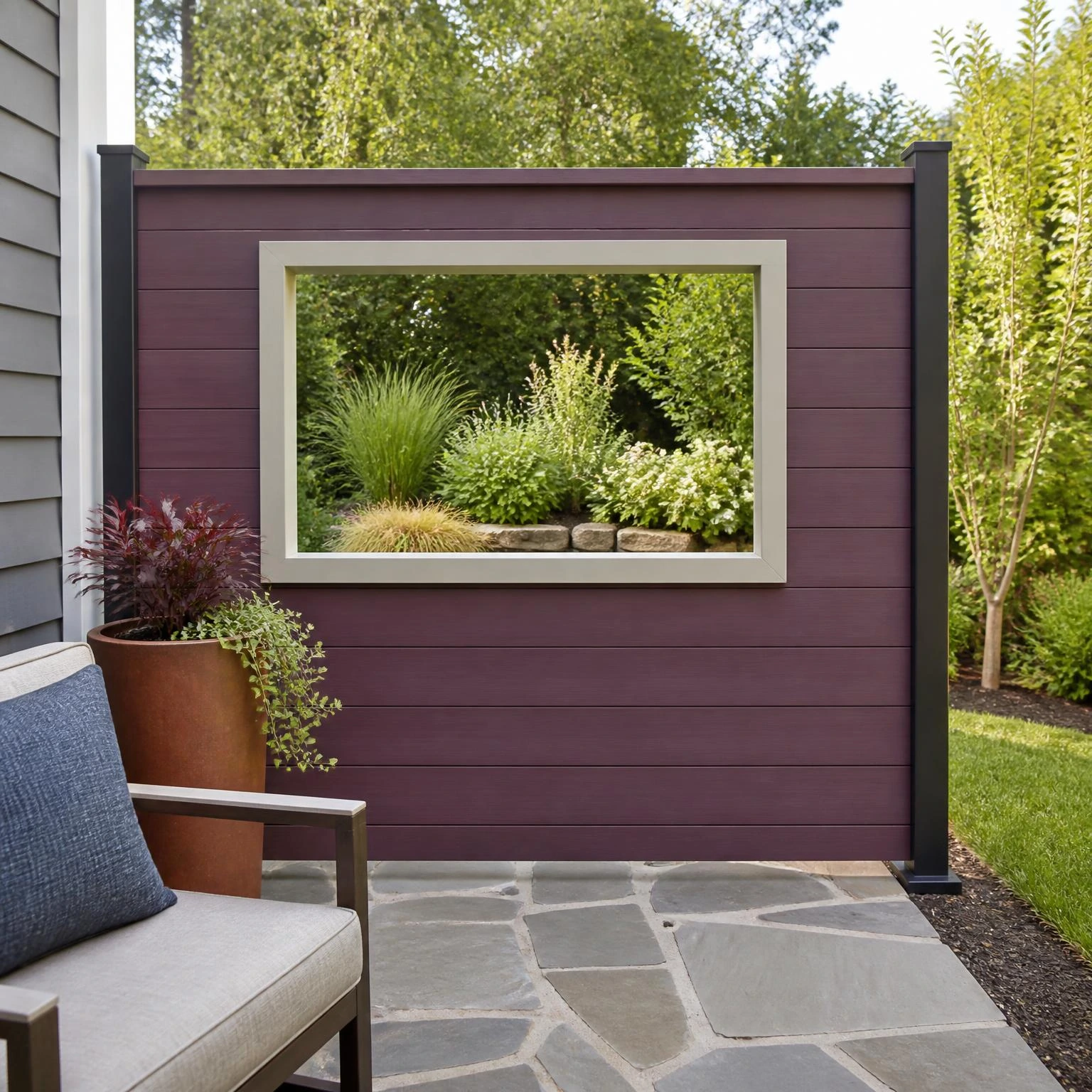
A framed opening can preserve a favorite garden view while hiding a neighboring house.
Use a muted plum composite screen with painted timber trim around one rectangular opening. Align it carefully with the planted view at standing or seated eye level, depending on how the patio is used.
A small alignment change can expose the unwanted sightline, so check the view from each usual seating position.
16- Privacy Hedge in Raised Planter
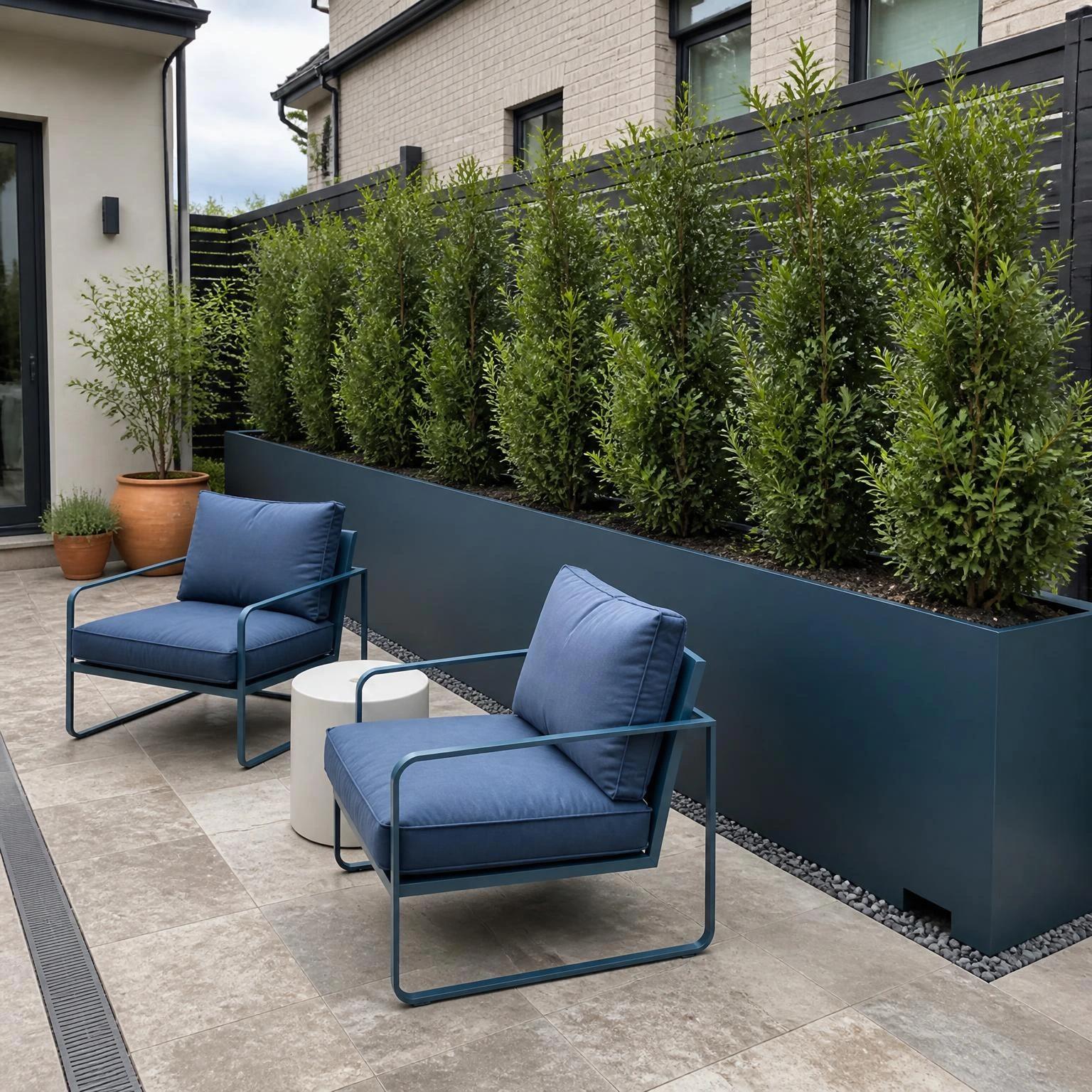
A long raised planter can create a tidy evergreen screen behind a two-chair patio.
Choose a powder-coated metal planter with enough depth for healthy roots, then space the shrubs evenly along the back edge. Dusty blue furniture and terracotta containers can keep the planting area from feeling too formal.
Raised planters add considerable weight and need proper drainage, especially on decks or near retaining structures.
17- Privacy Screen Behind Dining Area
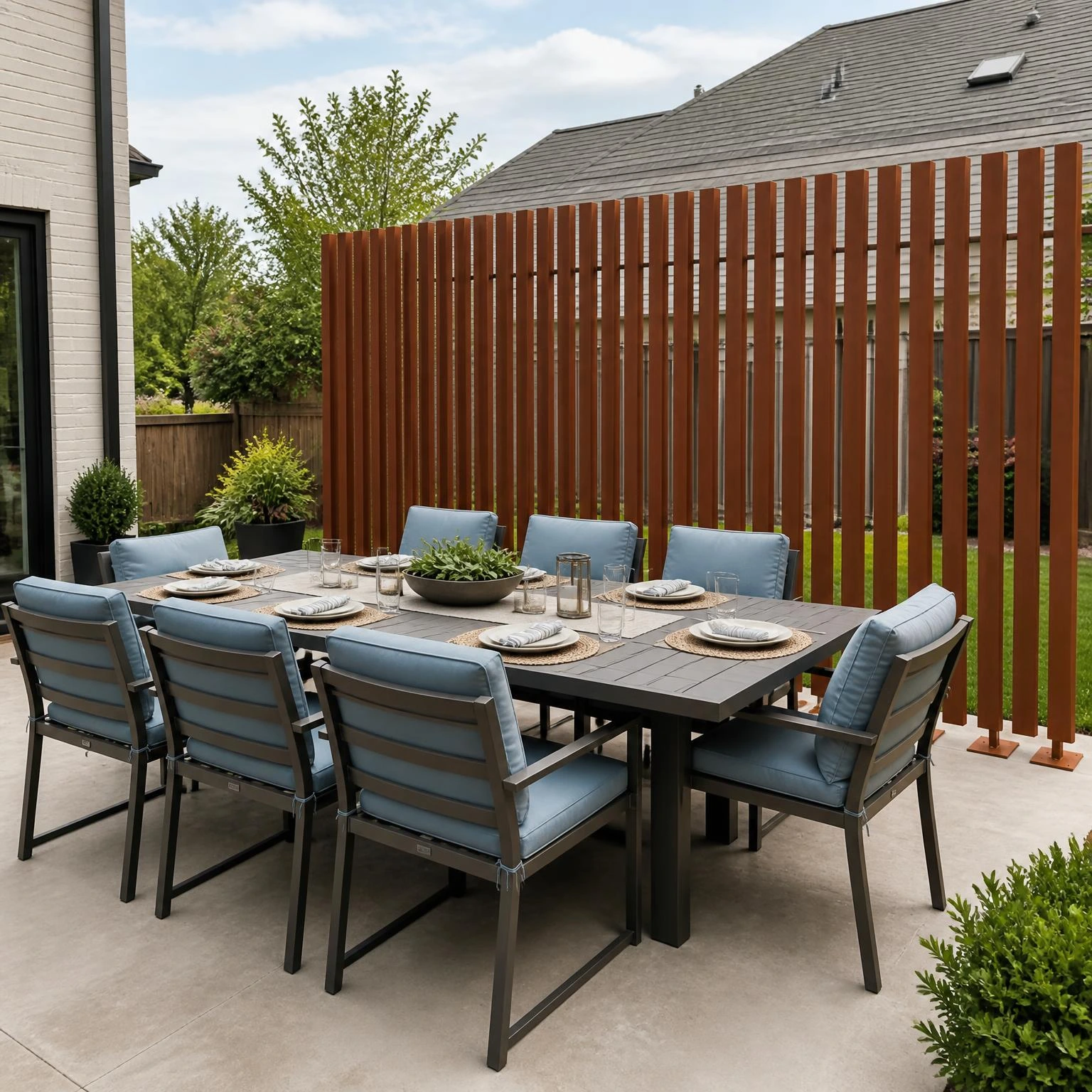
A rust-toned screen directly behind a dining table can block the closest view without closing either end of the patio.
Use vertical powder-coated aluminum slats on steel base plates, leaving enough space to pull chairs out fully. Soft blue seat cushions and neutral tableware keep the dining area comfortable rather than overly enclosed.
Measure the chair movement before placing the screen, since a few inches can affect circulation.
Where do you want to go next?
Explore by topic
Recently viewed
18- Privacy Screen Along Outdoor Kitchen
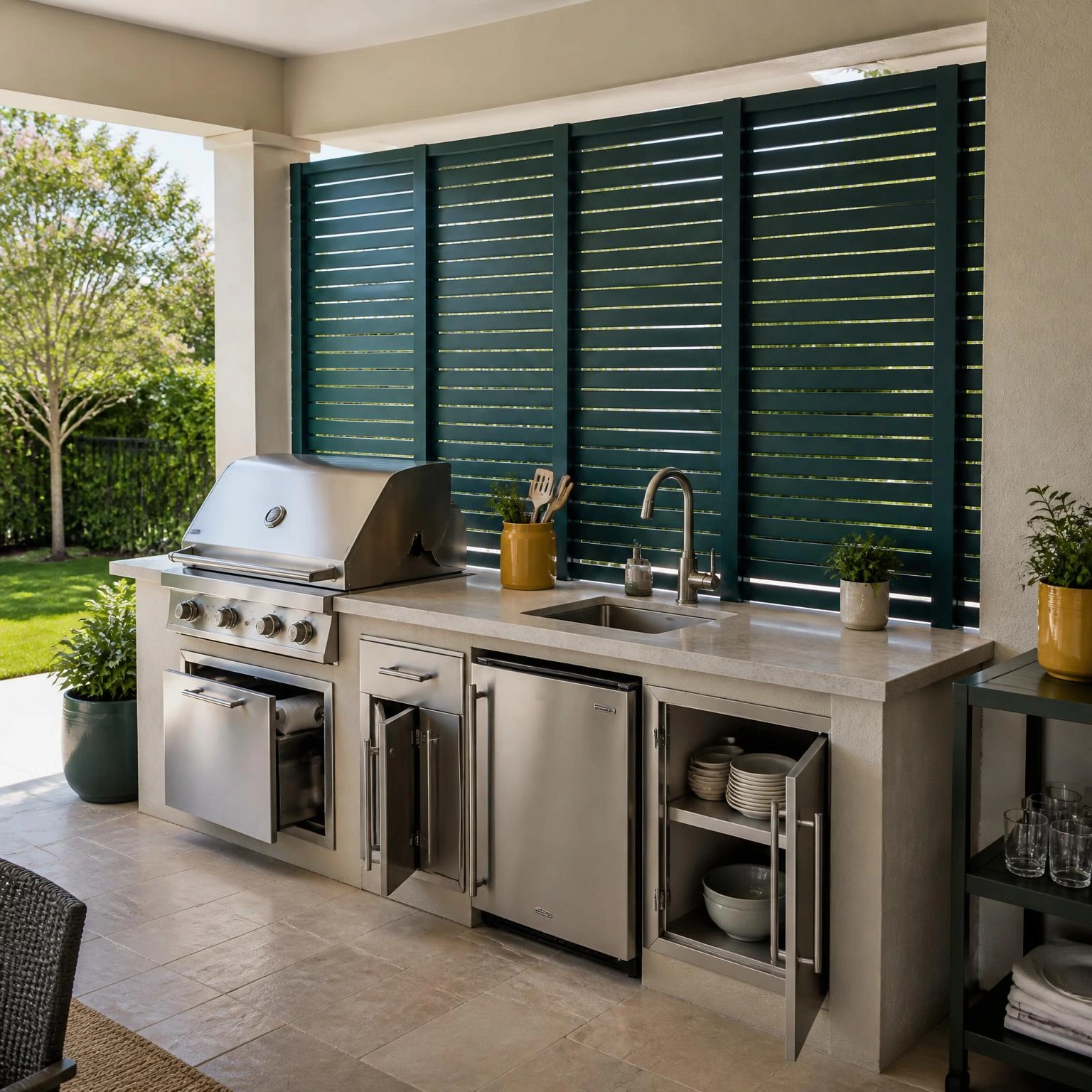
A deep teal slatted screen can hide the utility side of an outdoor kitchen while keeping the worktop easy to use.
Place it behind the counter, using an exterior-rated frame and leaving the grill, sink, and serving side accessible. Warm white surfaces and restrained mustard accessories can brighten the covered terrace.
Follow the appliance manufacturer’s required clearances and ventilation guidance, and never let the screen obstruct cooking equipment.
19- Layered Privacy Corner
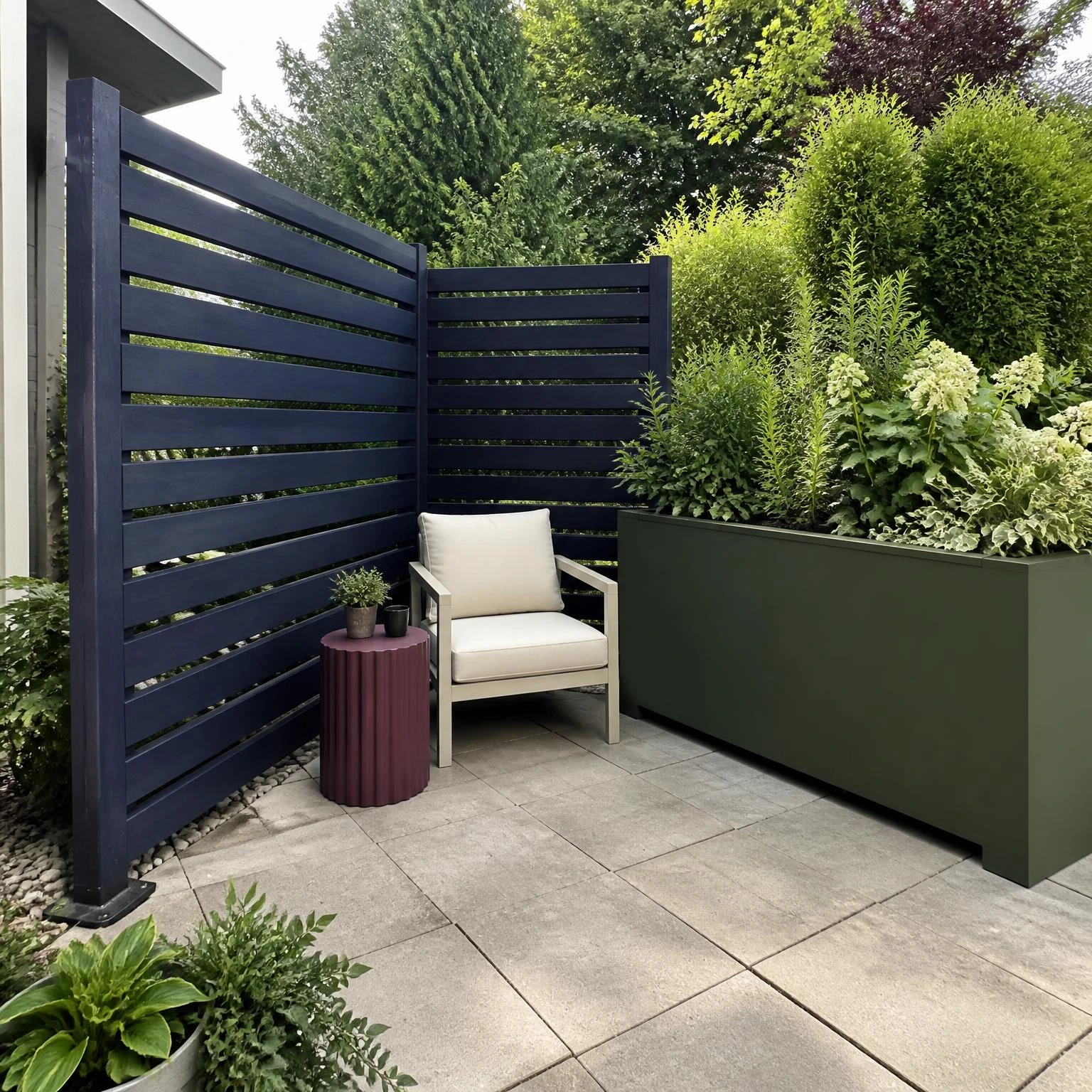
A small patio corner can feel private when two partial barriers meet at right angles.
Combine a navy slatted screen on one side with a tall forest green planter on the other, leaving the overhead edge open. Place both elements to block the main diagonal view while preserving a clear entrance across the concrete pavers.
Coordinate anchoring, drainage, and maintenance so the corner stays usable rather than becoming difficult to reach.
Making Backyard Privacy Feel Natural
Backyard privacy without a fence feels most comfortable when it follows the way the patio is actually used. Screen the chair, dining table, or outdoor kitchen first, then leave the rest open for light, movement, and a view of the garden.
A single well-placed screen beside a quiet seat can be enough to make the whole yard feel easier to enjoy.