

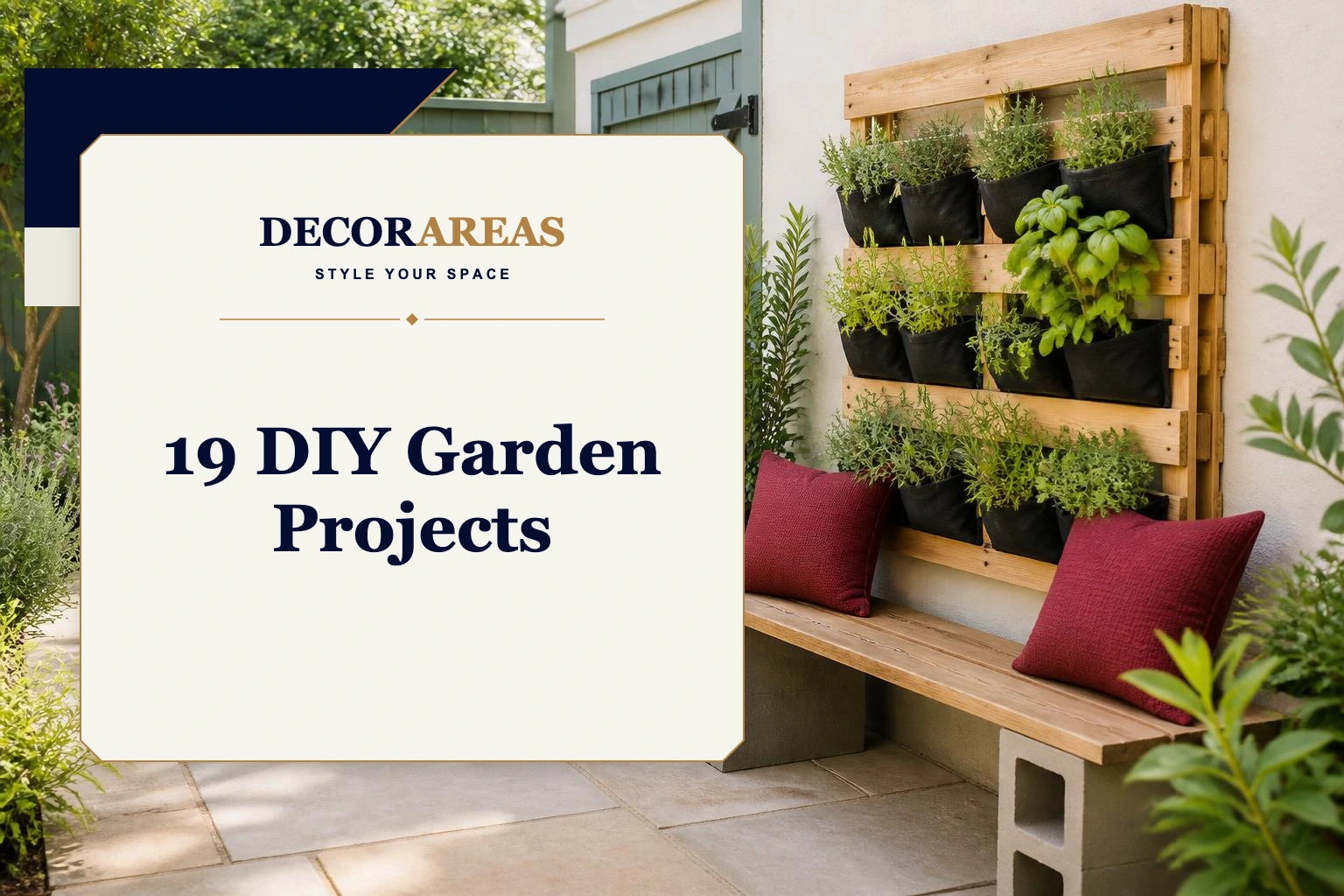
19 DIY Garden Projects for Useful Outdoor Spaces
A bare patio corner can quickly become the place where spare pots gather dust.
DIY garden projects give those awkward spaces a clear job, whether that means growing herbs or hiding a hose.
Color matters too, since one coral planter can soften a plain fence.
Small gardens still need level surfaces, safe clearances, and room for everyday movement.
These ideas use ordinary materials while keeping watering, weather, and maintenance in view.
1- Painted Tire Planter
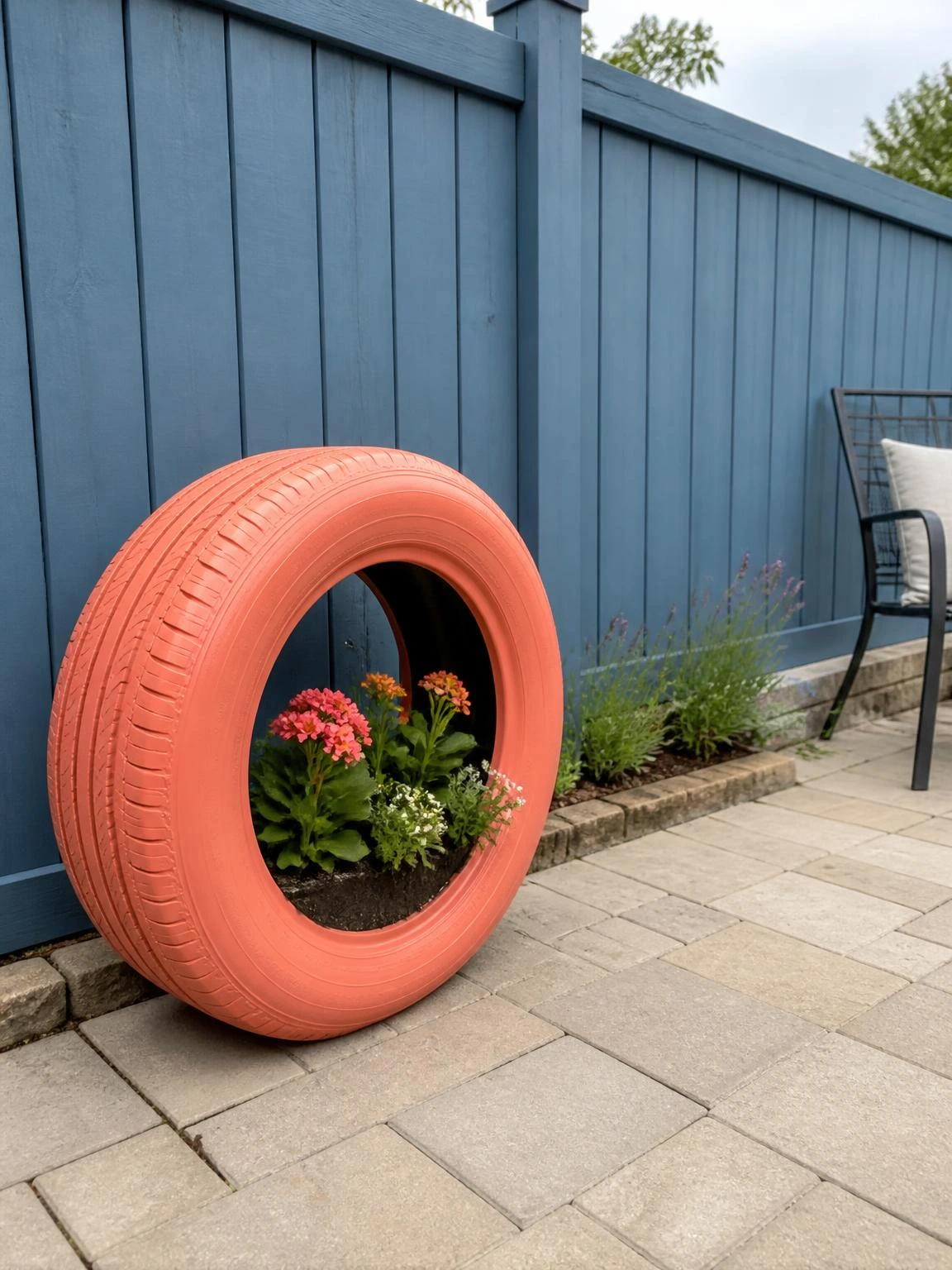
A single old tire can look surprisingly purposeful beside a sunny patio.
Paint it soft coral with exterior paint, then fill it with dark soil and compact flowering plants.
Place the tire on level paving or firm ground so it cannot roll.
Rubber becomes hot in strong sun, so choose heat-tolerant plants and avoid climbing areas.
Set against a muted blue fence, the bright planter feels cheerful without taking much space.
2- Pallet Herb Planter
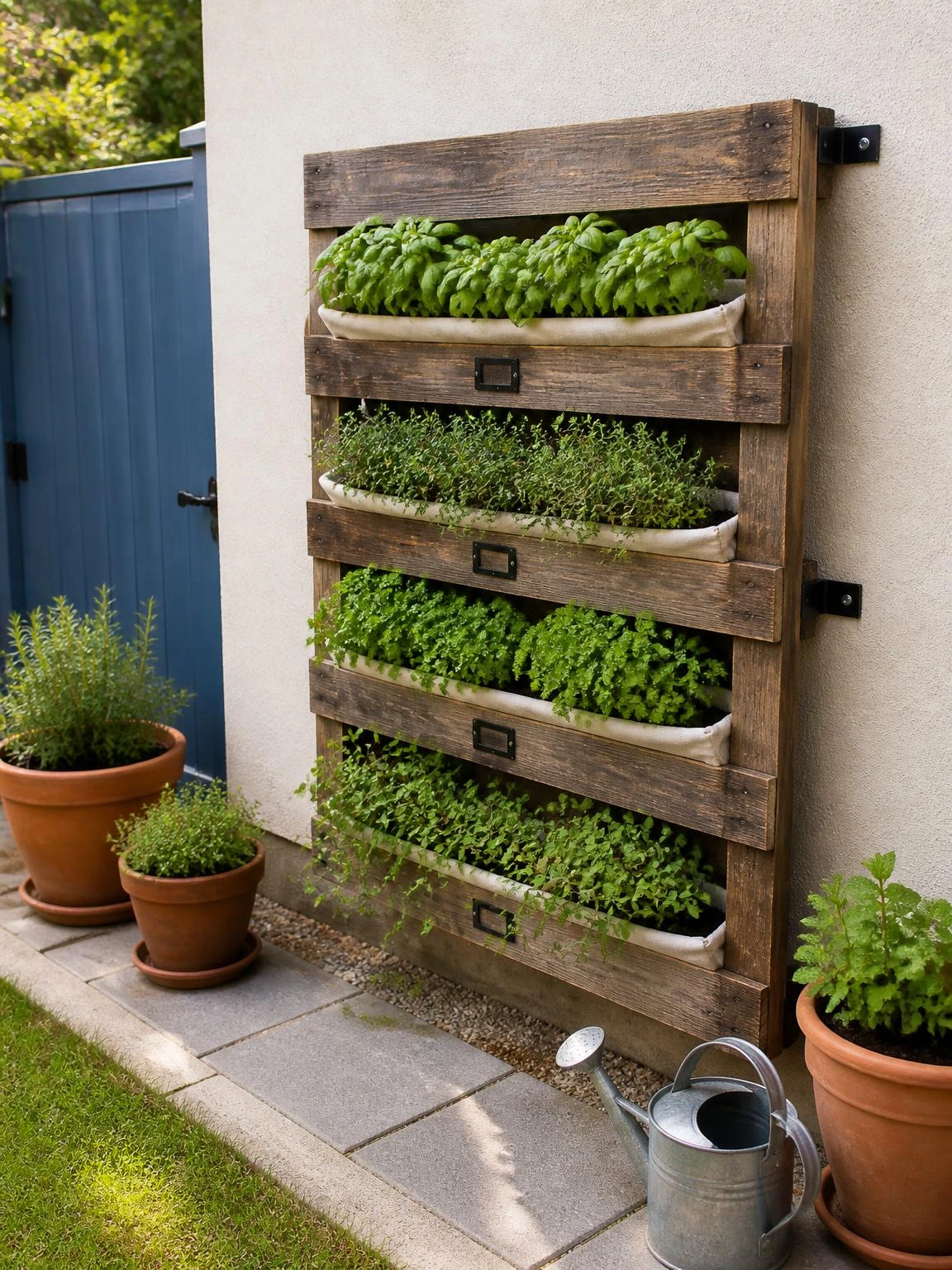
An unused wall often offers more growing room than the ground below.
Secure a heat-treated wooden pallet upright, then line its planting pockets with landscape fabric.
Fill them with potting mix and herbs, adding small labels near each rust-colored pot.
Confirm the wall can support the loaded pallet before attaching it securely.
Leave enough room around the pallet for watering and pruning.
3- Cinder Block Bench
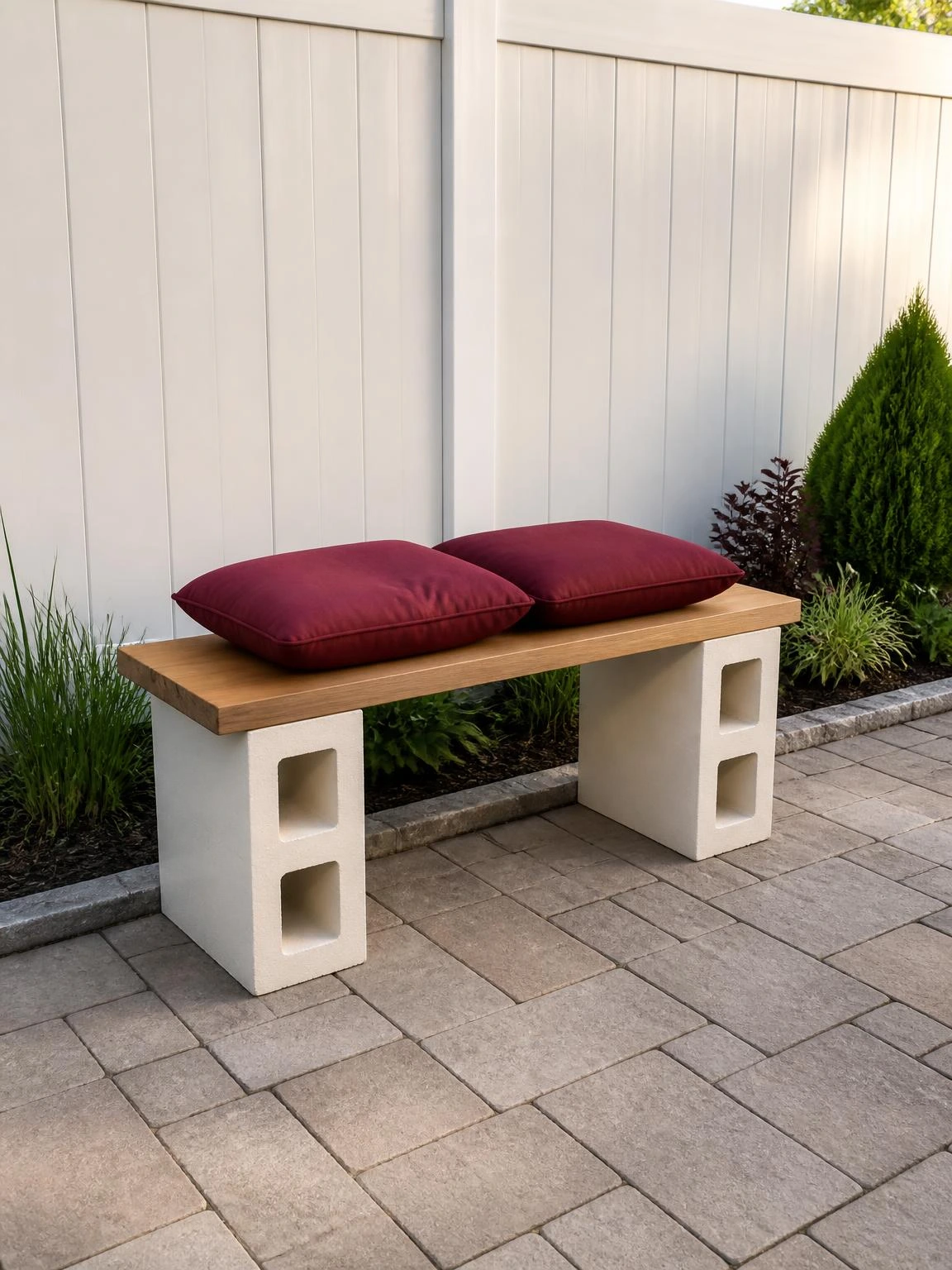
A compact bench can make a neglected patio edge useful again.
Position two painted cinder-block supports on level ground and lay a smooth treated timber board across them.
Warm-gray paving and an ivory fence keep burgundy outdoor cushions from feeling too heavy.
Test the seat for wobble before anyone sits down, especially on uneven patios.
Keep the bench outside the main walkway so legs and blocks do not catch passing feet.
4- Hanging Gutter Garden
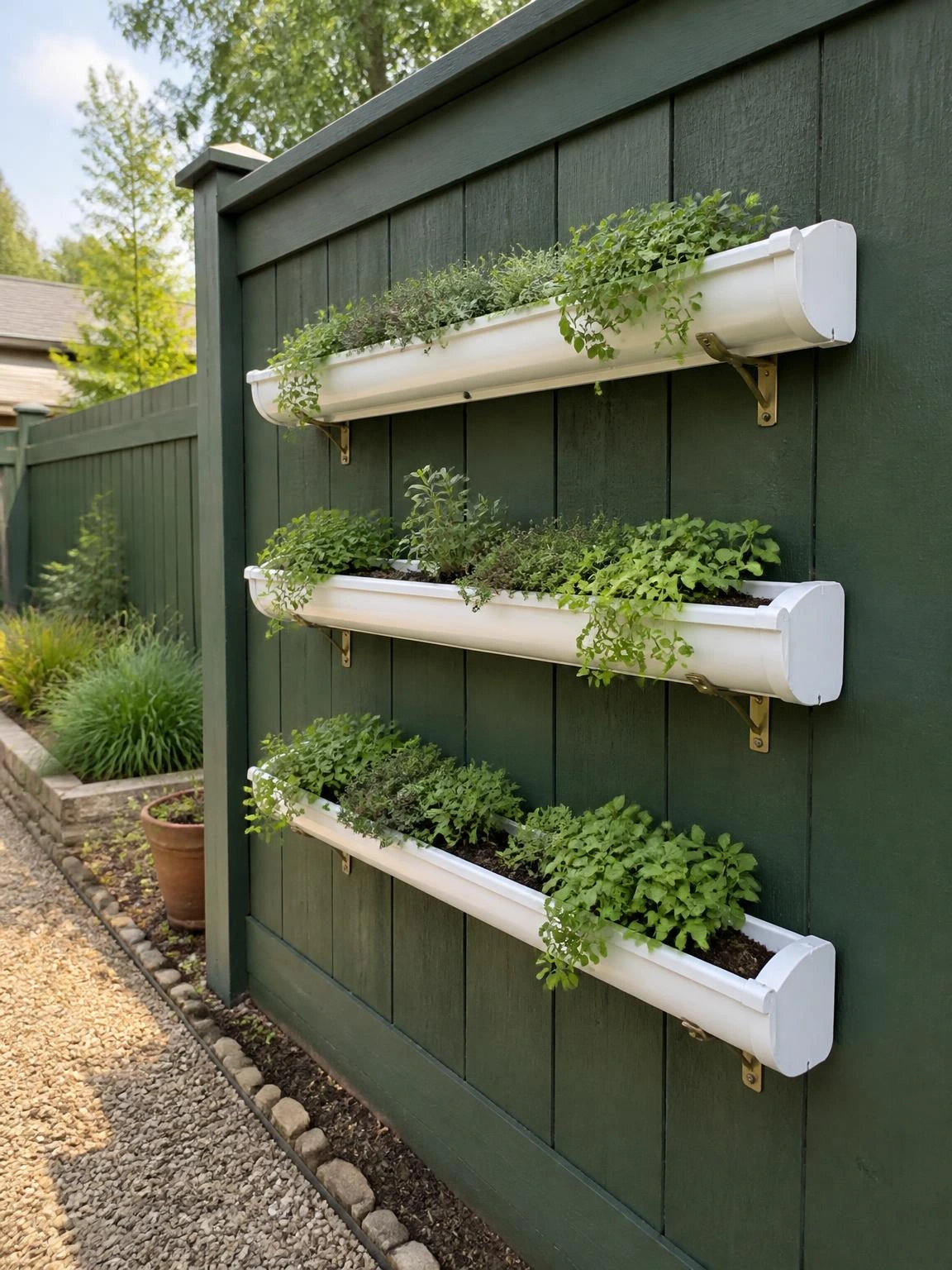
A sunny fence can hold herbs without giving up valuable floor space.
Mount three short white gutters in a stepped arrangement using restrained brass brackets.
Add end caps, drainage openings, and a slight slope so rainwater can escape.
Use new, clean gutters rather than reclaimed ones with unknown residues.
Trailing herbs will soften the forest-green fence while staying easy to reach.
5- Concrete Stepping Stones
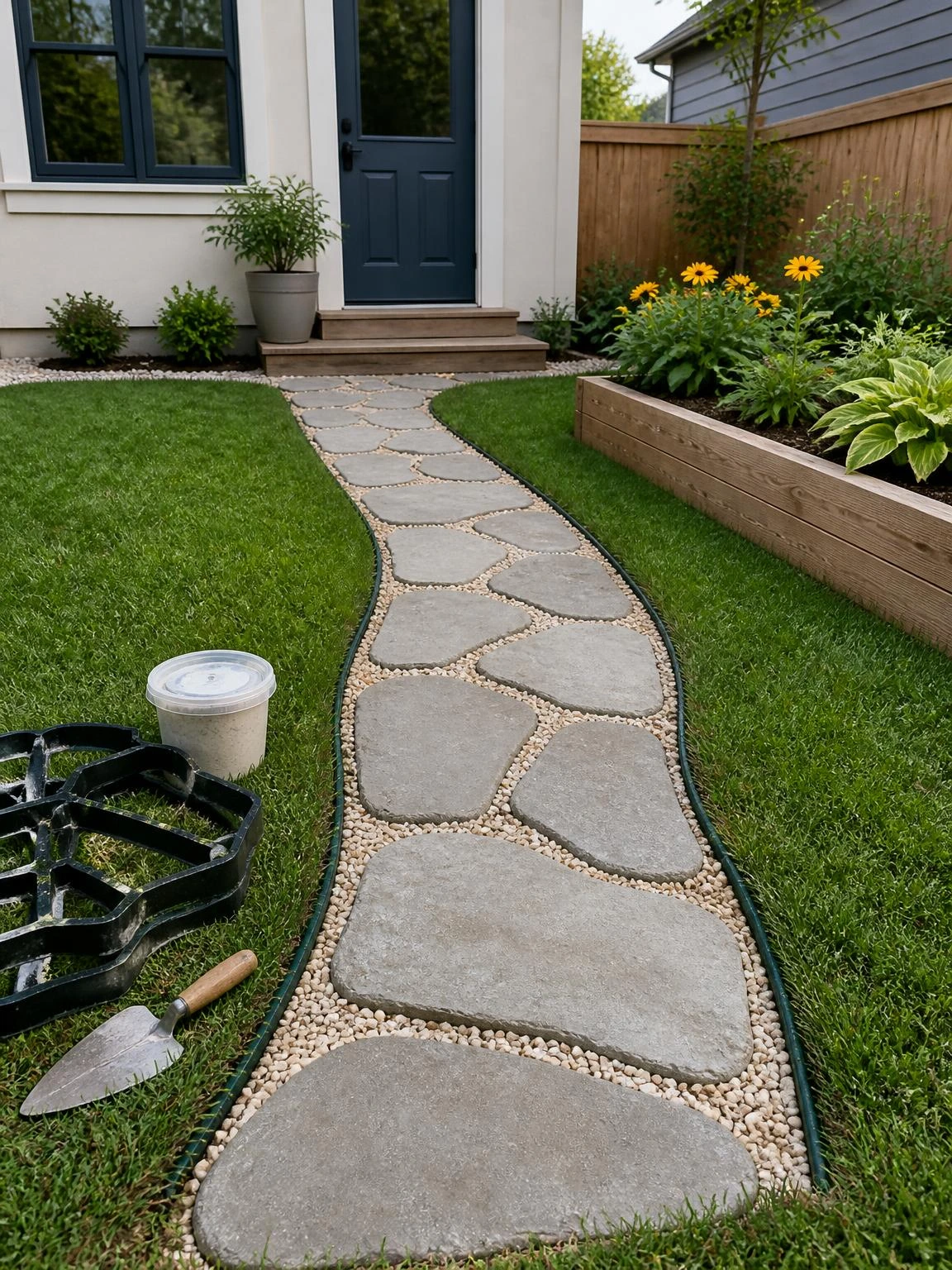
Muddy footprints often reveal where a garden path is needed.
Make irregular concrete stones with reusable molds, then arrange them from the back door toward a raised bed.
Set each stone flush with the lawn and fill the joints with warm-white gravel.
Allow the concrete to cure according to its product directions before regular use.
Deep-teal edging can define the route without making the small lawn feel crowded.
6- Painted Garden Trellis
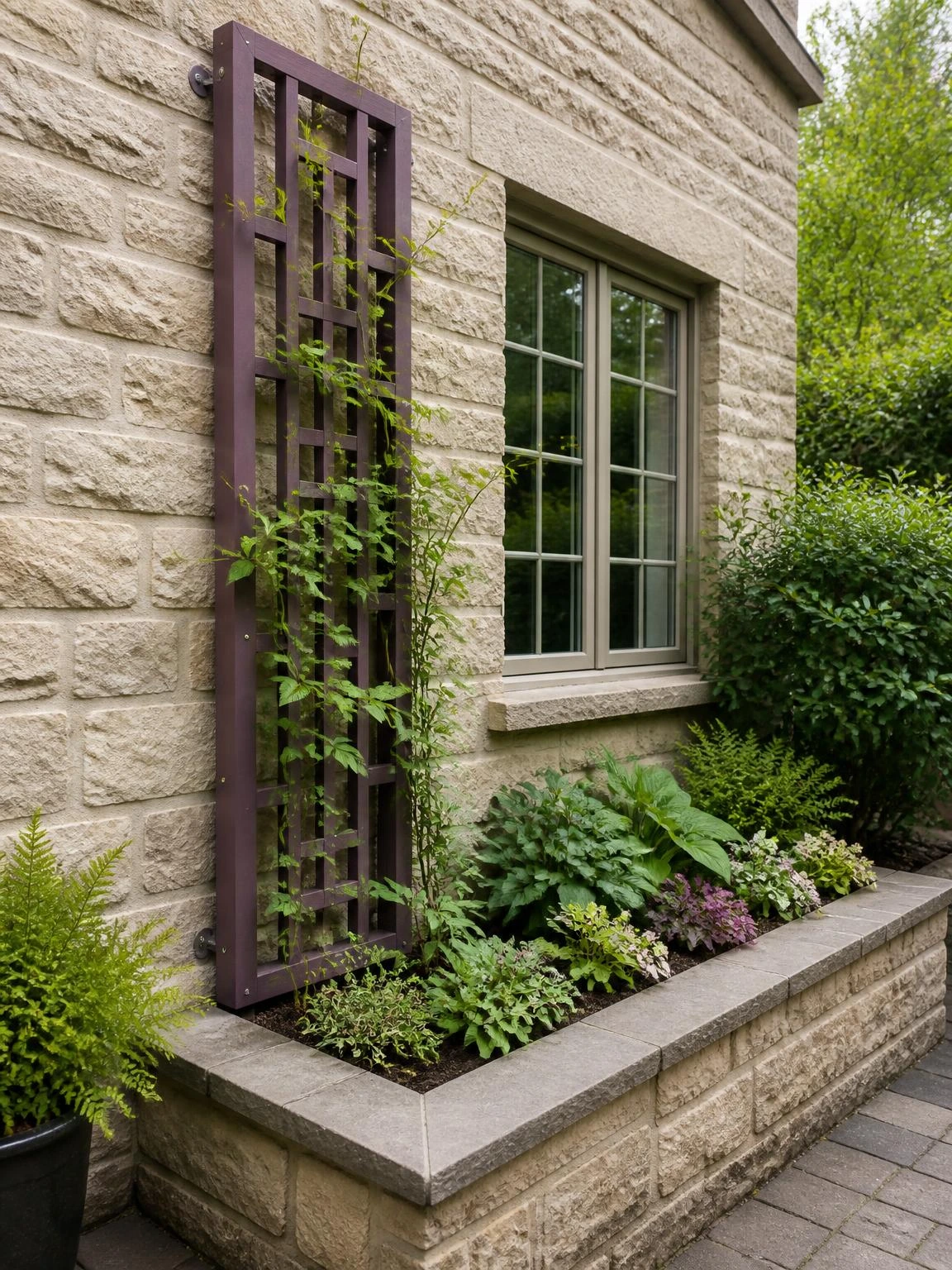
Climbing plants look tidier when they have a clear support behind them.
Build a narrow geometric trellis from exterior-grade timber strips and paint it muted plum.
Attach it with galvanized screws and suitable wall anchors, leaving a small gap behind the frame.
That gap gives stems room to grow and improves airflow near the stone patio wall.
Check mature plant height so foliage does not block a window later.
7- Mosaic Stepping Stone
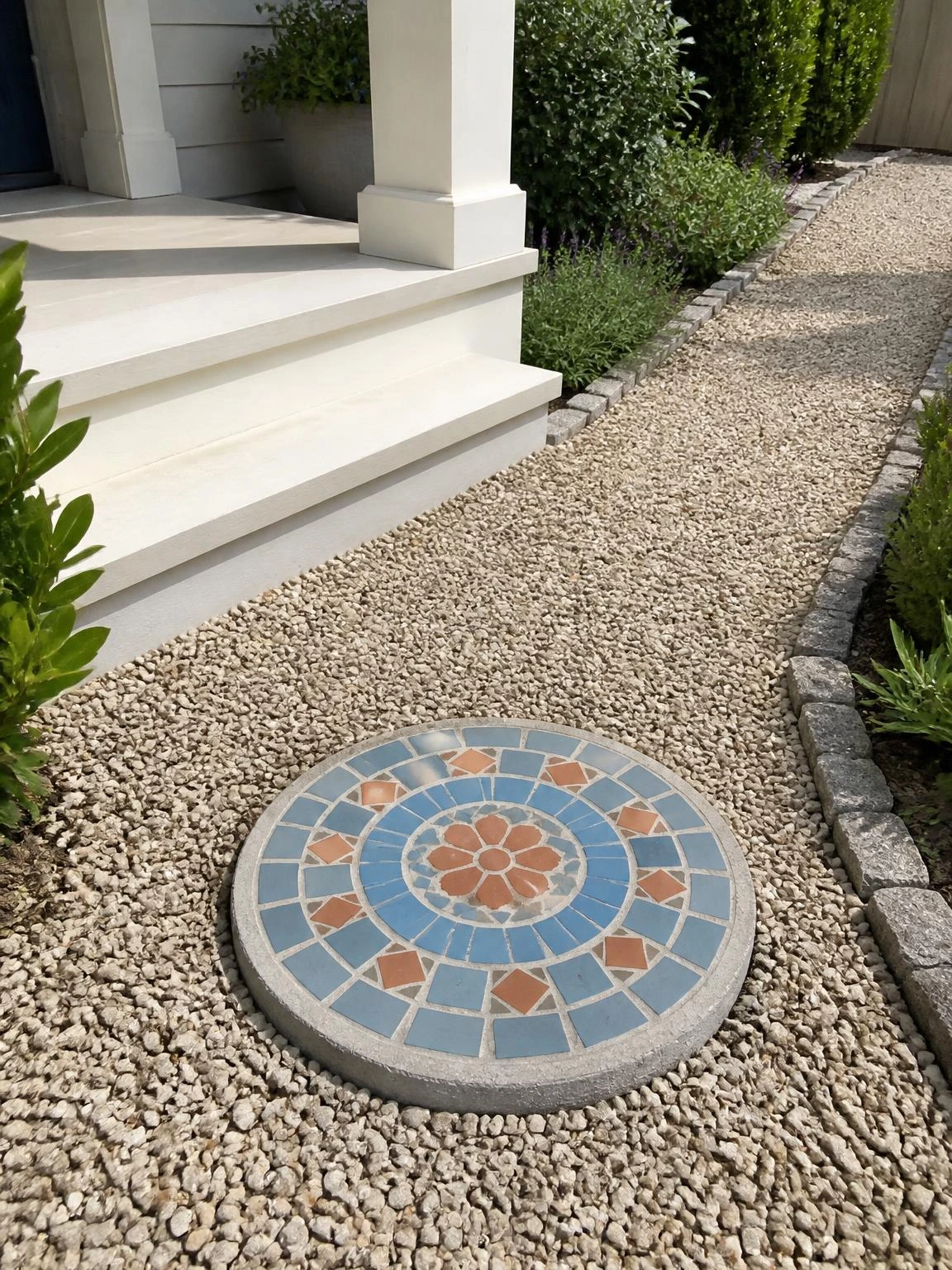
One patterned stone can give a plain gravel path a gentle focal point.
Arrange dusty-blue and terracotta tile pieces on a round precast concrete stepping stone.
Use outdoor-rated adhesive and grout, keeping the finished surface level with the surrounding path.
Inspect every edge carefully because poorly set mosaic pieces can become sharp.
Place it where the pattern can be seen without narrowing the walking route.
8- Cedar Planter Box
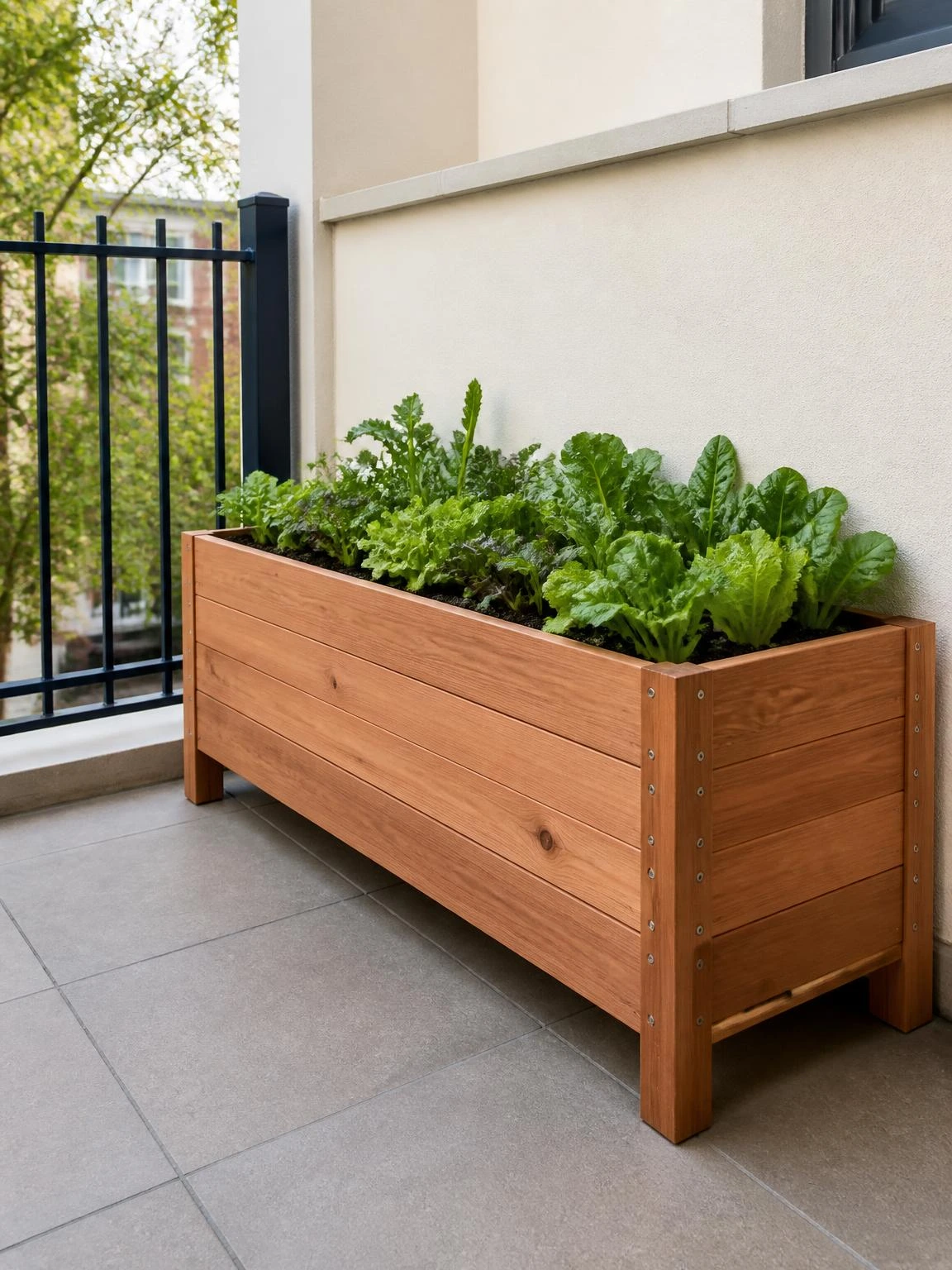
A compact balcony can still grow leafy greens with the right container.
Build a rectangular cedar box on sturdy feet, then add landscape fabric and drainage openings.
Use a waterproof liner that lets excess water exit below the soil line.
Check the balcony or terrace can carry the wet filled weight before positioning it.
Navy railings and ivory walls make the muted green planting feel settled.
9- Bottle Drip Irrigator
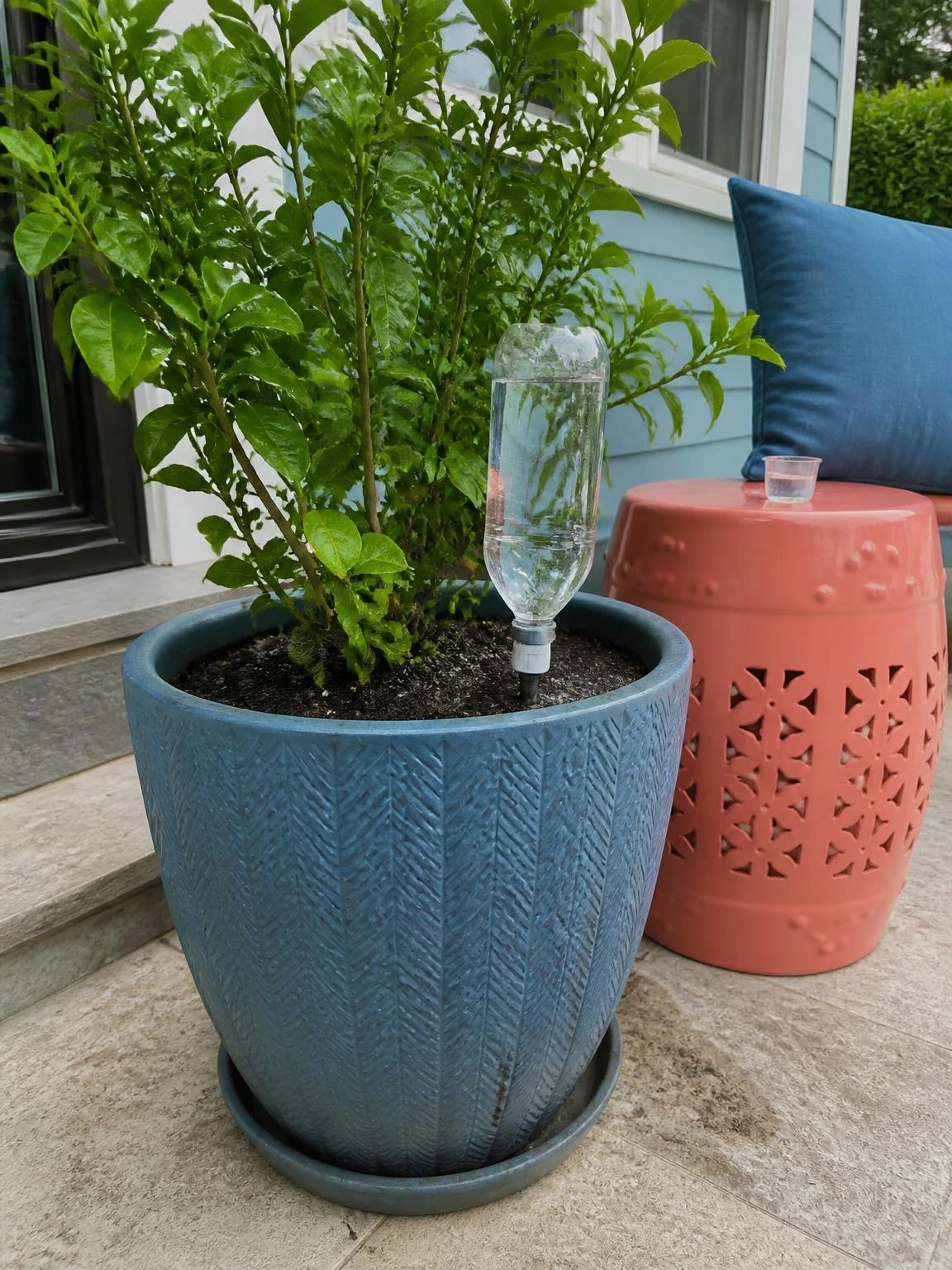
A thirsty patio container can dry out quickly during a busy week.
Fit a clean plastic bottle with a small irrigation outlet and place it visibly at the soil surface.
Test the flow for a full day before relying on it while away.
The bottle is only a short-term aid, so hot weather still calls for plant checks.
Beside a coral-painted stool, the clear container remains practical rather than decorative.
10- Garden Tool Rack
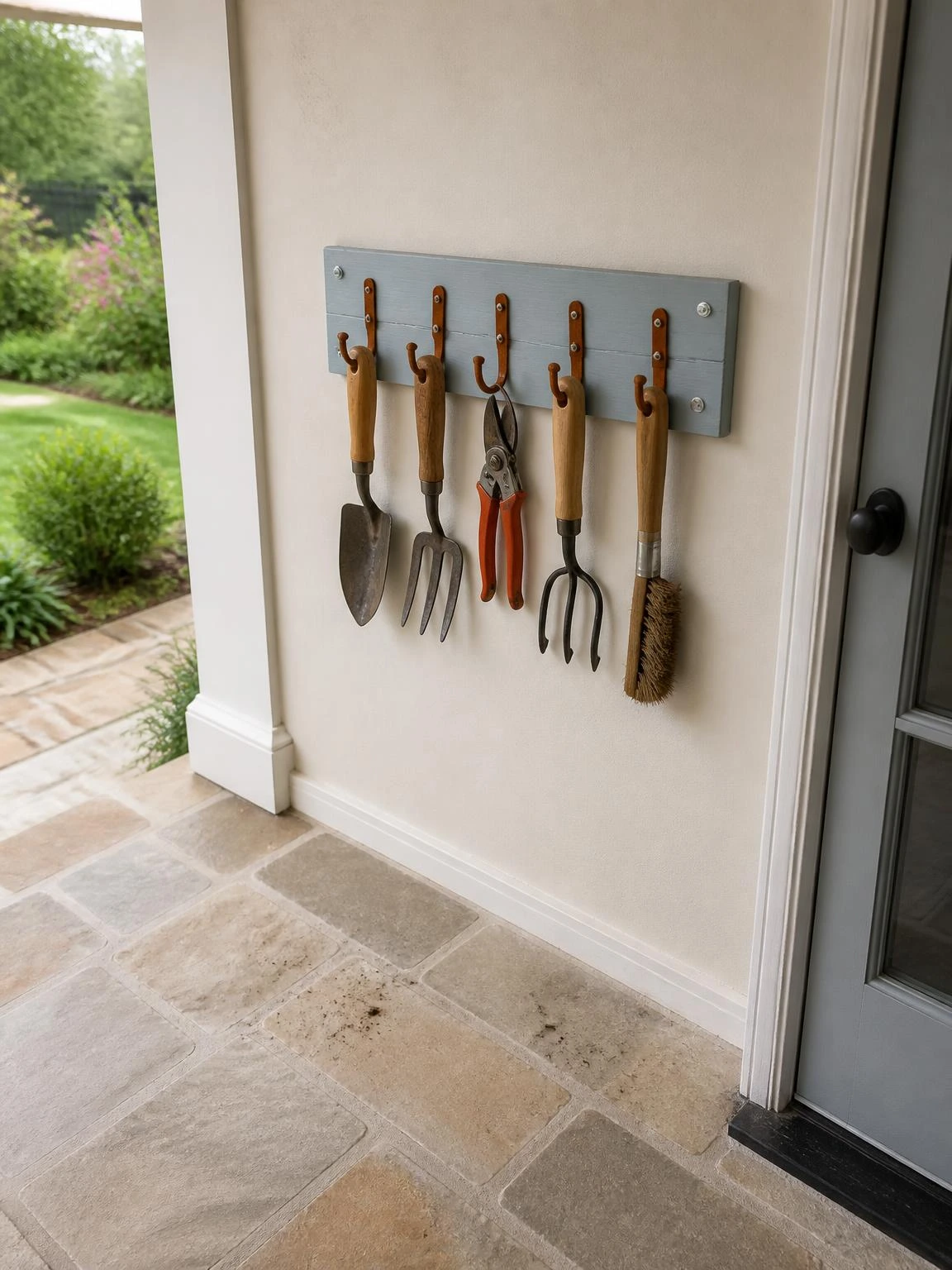
Hand tools tend to migrate across porches when they lack a home.
Mount rust-colored metal hooks on a soft-blue painted board inside a covered utility zone.
Choose wall anchors rated for the wall construction and combined tool load.
Keep handles from projecting into the main passage or near a door swing.
A stone floor underneath makes stray soil easier to spot and sweep.
11- Gravel Fire-Pit Border
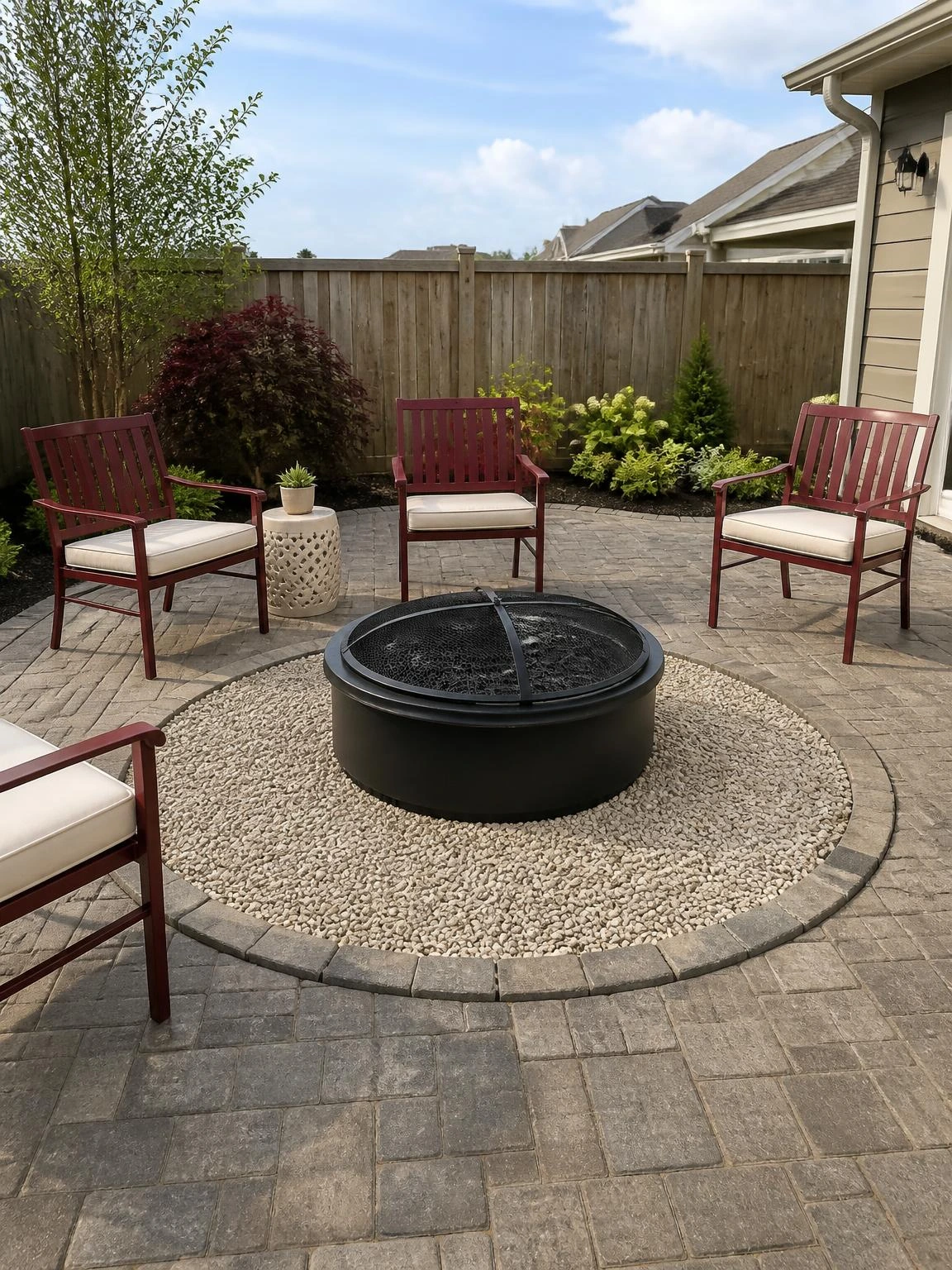
A freestanding fire pit needs clear space before it needs decoration.
Surround the approved pit with decorative gravel and low edging blocks on a level, noncombustible surface.
Center burgundy seating beyond the clearance required by the manufacturer’s instructions.
Follow local fire rules, since gravel cannot make unsafe placement acceptable.
Warm-gray pavers and ivory details keep the arrangement grounded after the fire is out.
12- Rain Barrel Screen
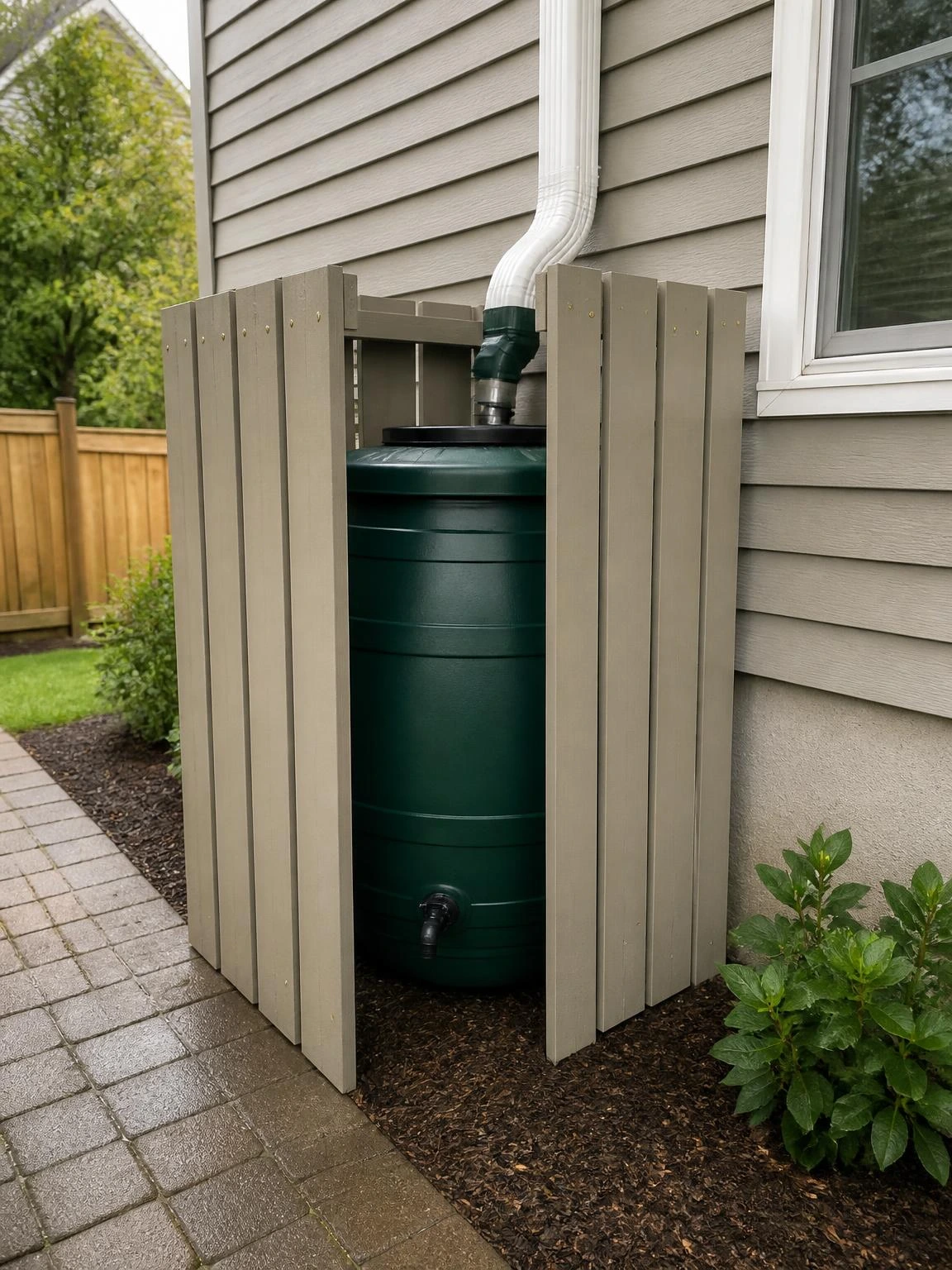
A rain barrel can be useful without becoming the first thing seen from the yard.
Place a dark green barrel beneath the downspout and screen it with simple painted vertical boards.
Keep the diverter, lid, and access route open for regular debris clearing.
Use collected water only as local rules permit, and keep the barrel securely covered.
Restrained brass-colored fasteners add a small detail against the warm neutral screen.
13- Painted Stone Markers
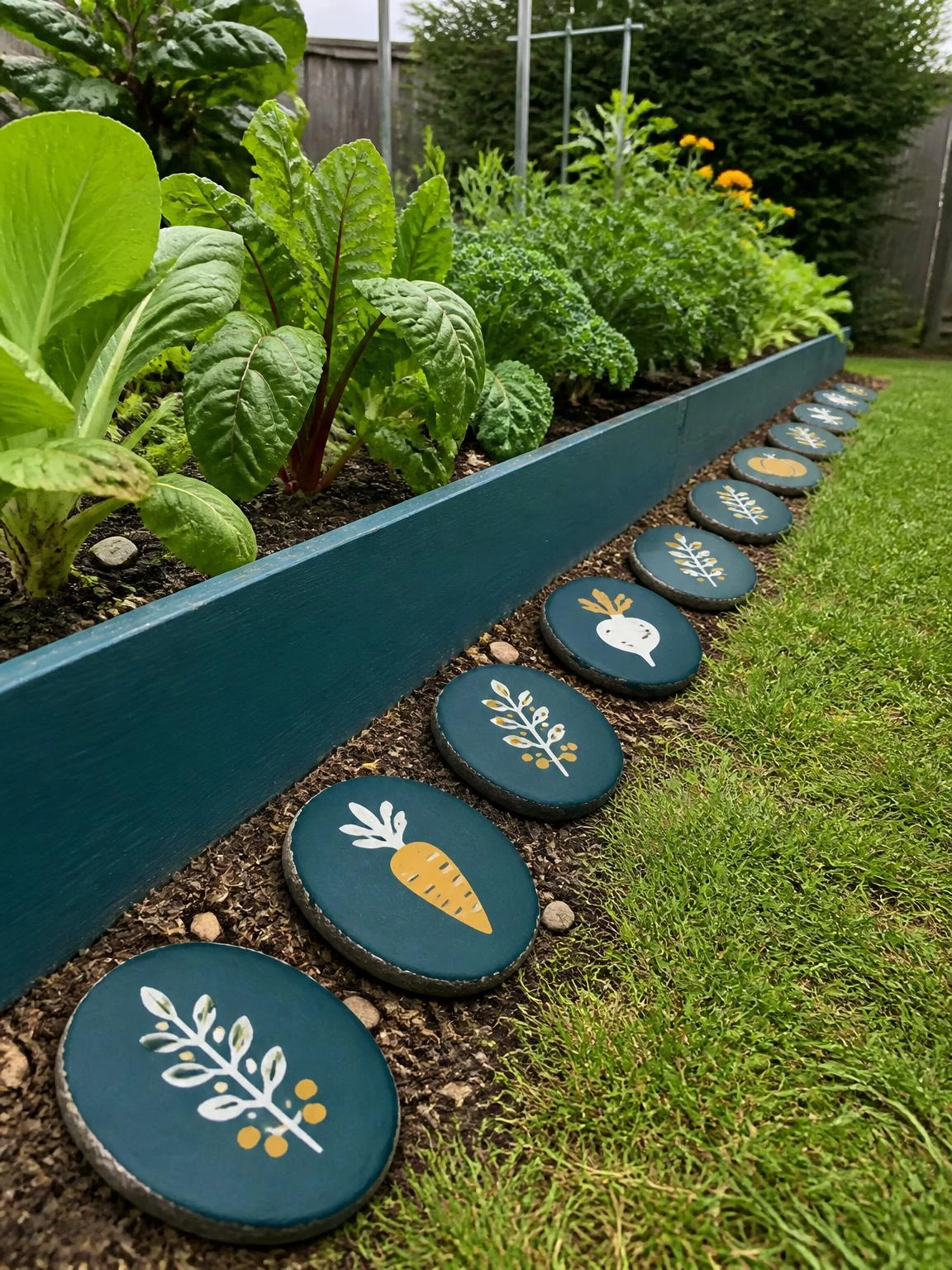
Vegetable beds are easier to read when their edges have small visual markers.
Paint smooth outdoor stones in deep teal, warm white, and mustard symbols rather than lettering.
Seal the dry painted faces before placing them beside the garden border.
Keep each stone away from mower paths and edging equipment.
Expect exposed paint to weather and plan for occasional seasonal touch-ups.
14- Privacy Screen Planter
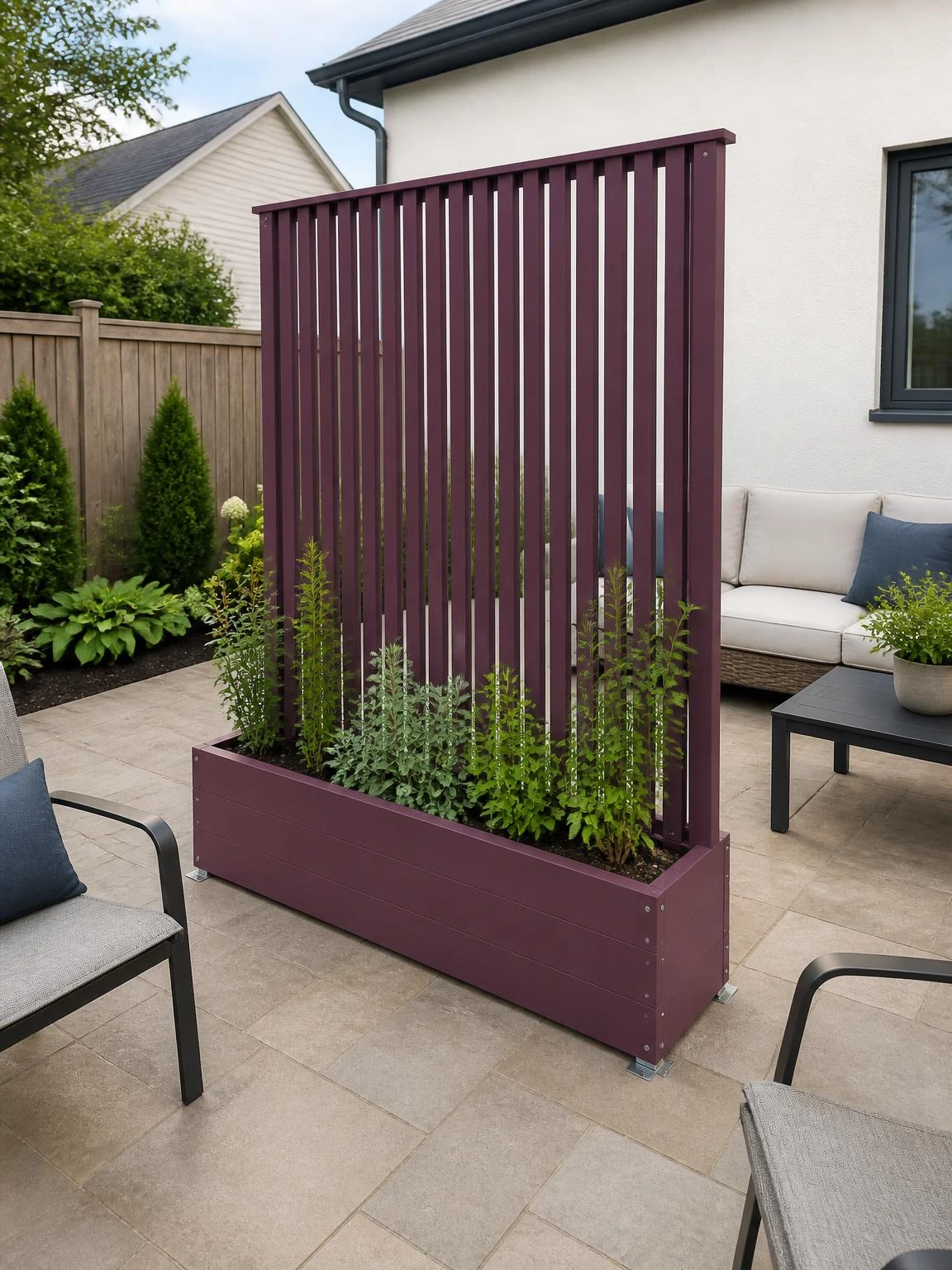
A small patio often needs privacy without a permanent wall.
Attach a muted plum slatted screen to a long rectangular planter filled with soft-green foliage.
Add ballast or fixed supports so wind cannot overturn the combined planter and screen.
Tall screens catch gusts, so choose anchors suited to the patio surface.
Leave enough stone-colored clearance around the planter for chairs and normal passage.
15- Tile Garden Table
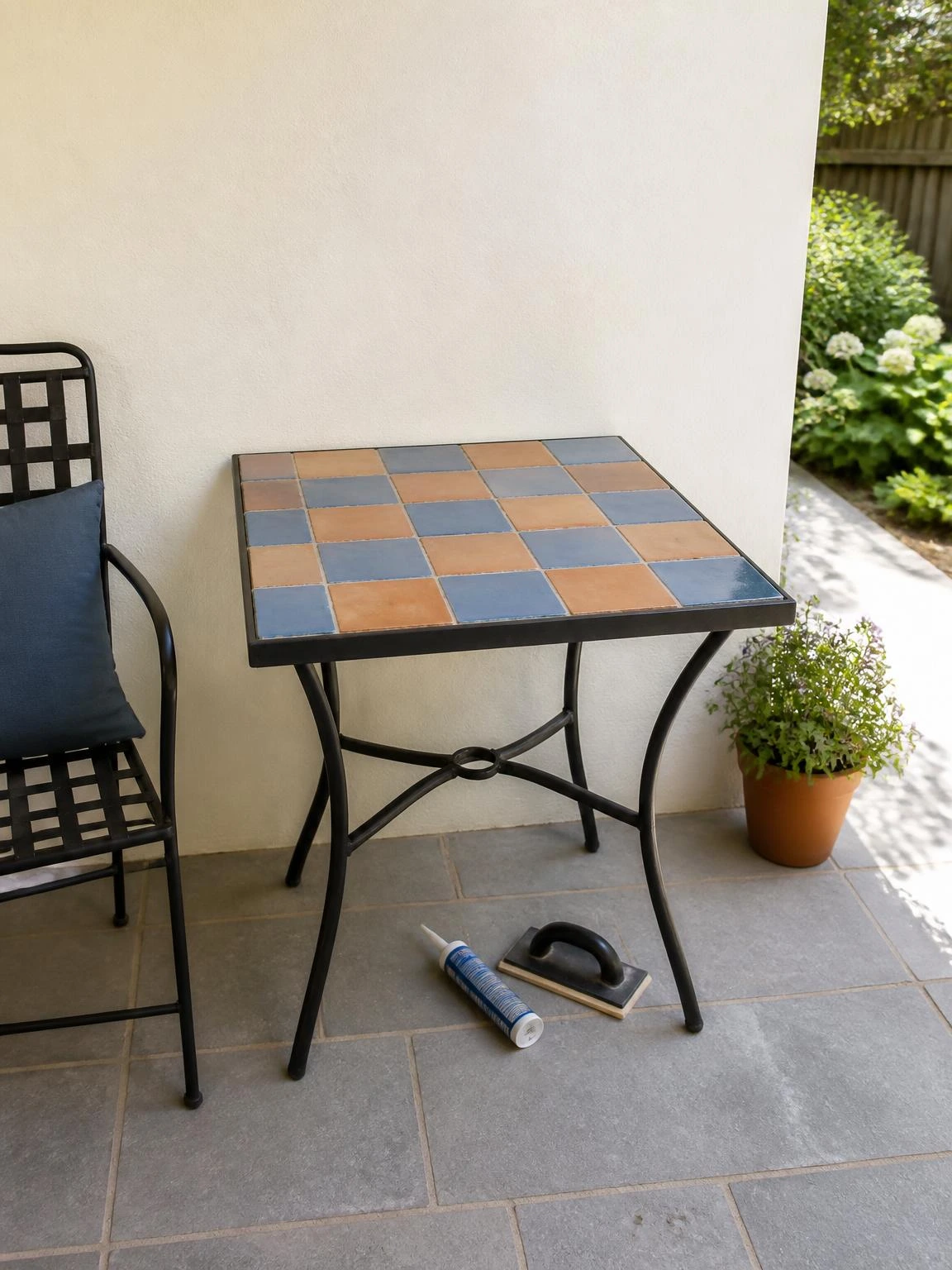
A tired patio table can gain character from a carefully planned tiled top.
Arrange terracotta and dusty-blue outdoor tiles on a small square metal table.
Use flexible outdoor adhesive and suitable grout before sealing the finished surface.
Tile adds weight, so check the base remains stable when the table is moved.
Keep walking clearance between the table, wall, and nearby seating.
16- Hanging Basket Rail
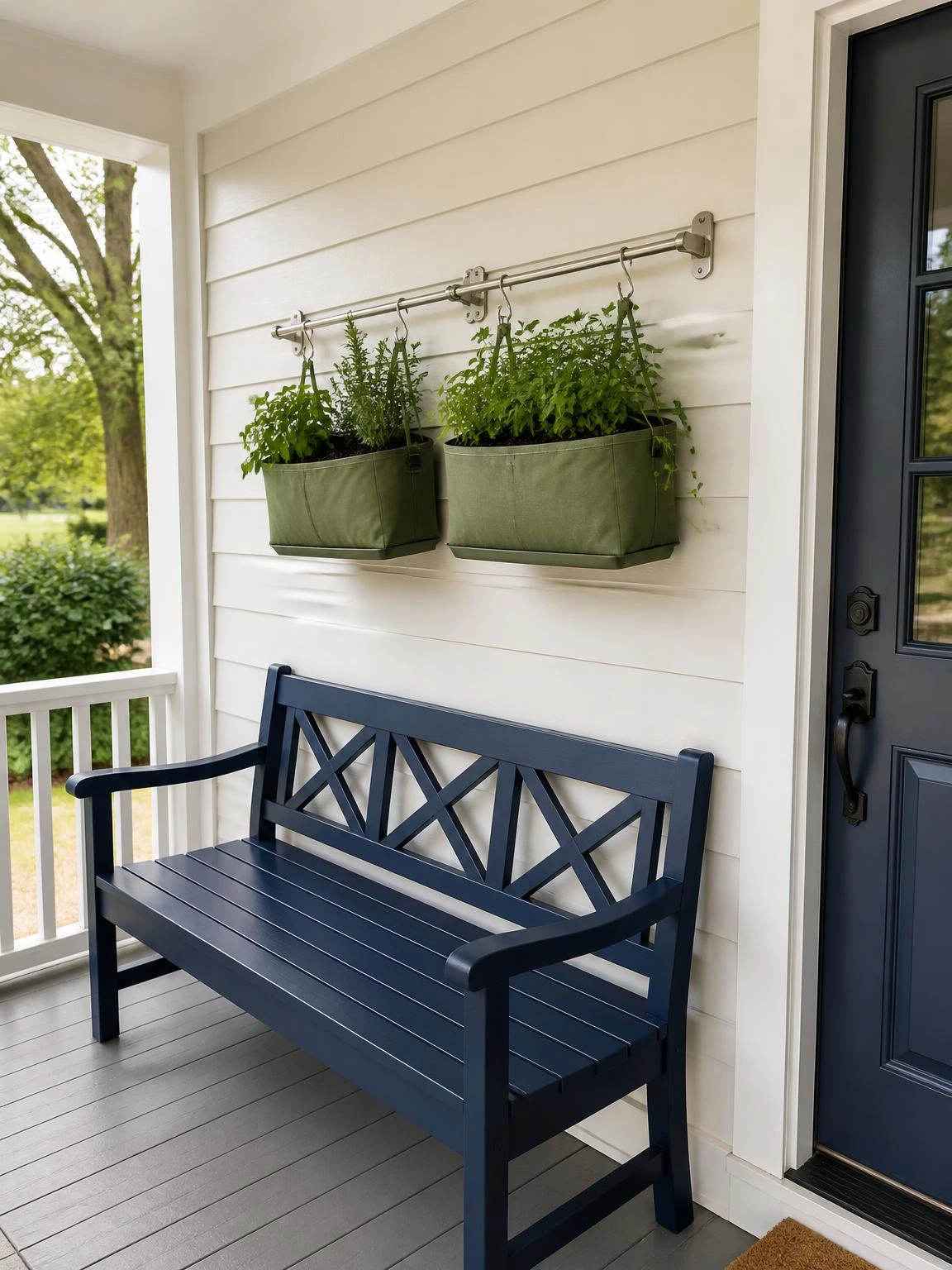
A covered porch wall can hold herbs while the navy bench stays clear.
Install a brushed-metal rail with brackets fixed over solid framing or suitable anchors.
Hang two compact fabric baskets, keeping them clear of the entry door swing.
Control drainage because water can stain ivory siding and flooring.
Inspect the fixings regularly as damp soil becomes surprisingly heavy.
17- Reclaimed Brick Edging
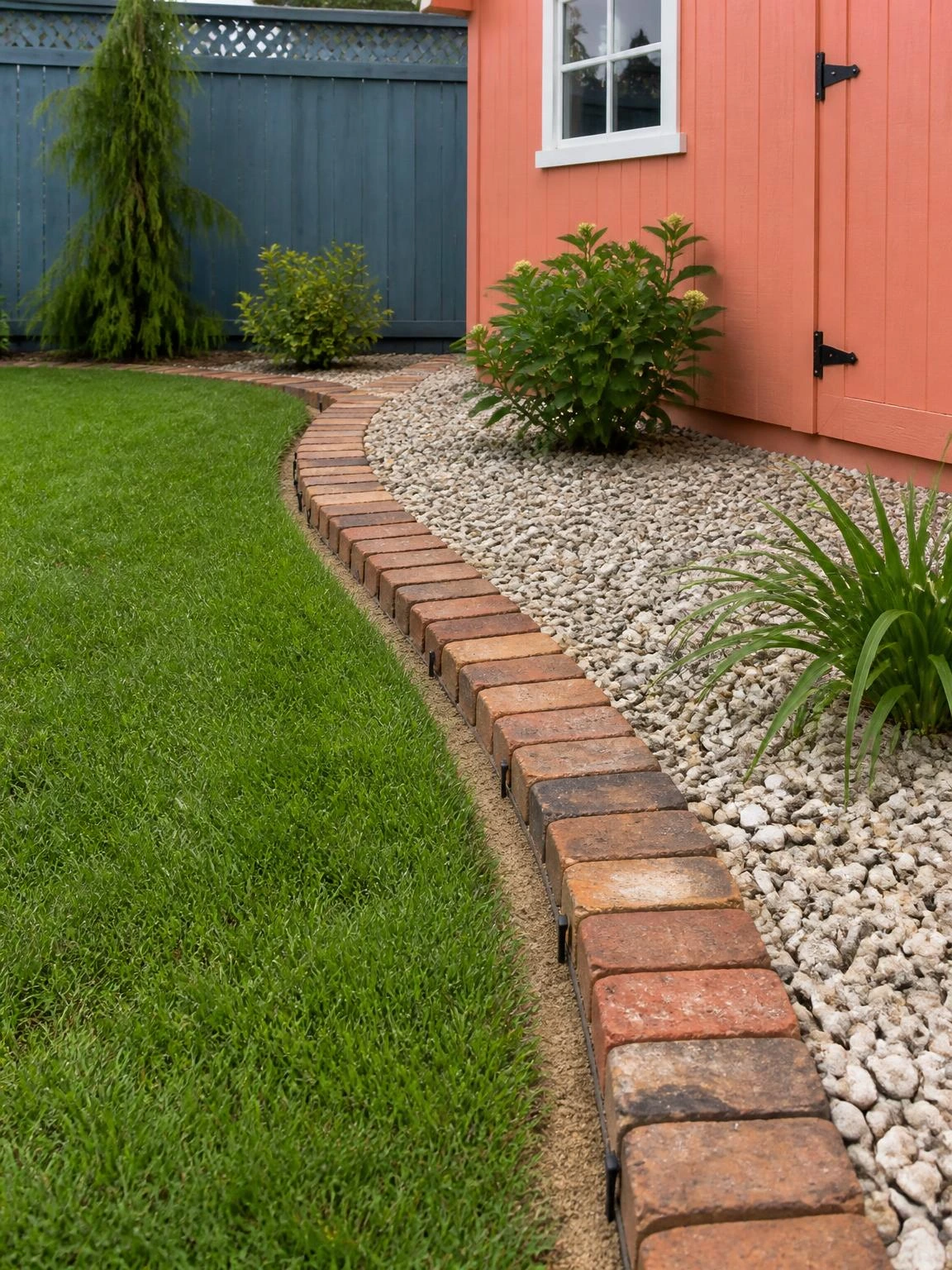
A curved planting bed looks neater when lawn and soil have a firm boundary.
Set clean reclaimed bricks into a shallow, level sand bed beside the coral-painted shed.
Use landscape edging pins where needed and add stone mulch inside the border.
Inspect every brick for unstable pieces before placing it along a mowing route.
The muted blue fence keeps the warm brick and coral shed from competing.
Where do you want to go next?
Explore by topic
Recently viewed
18- Garden Hose Station
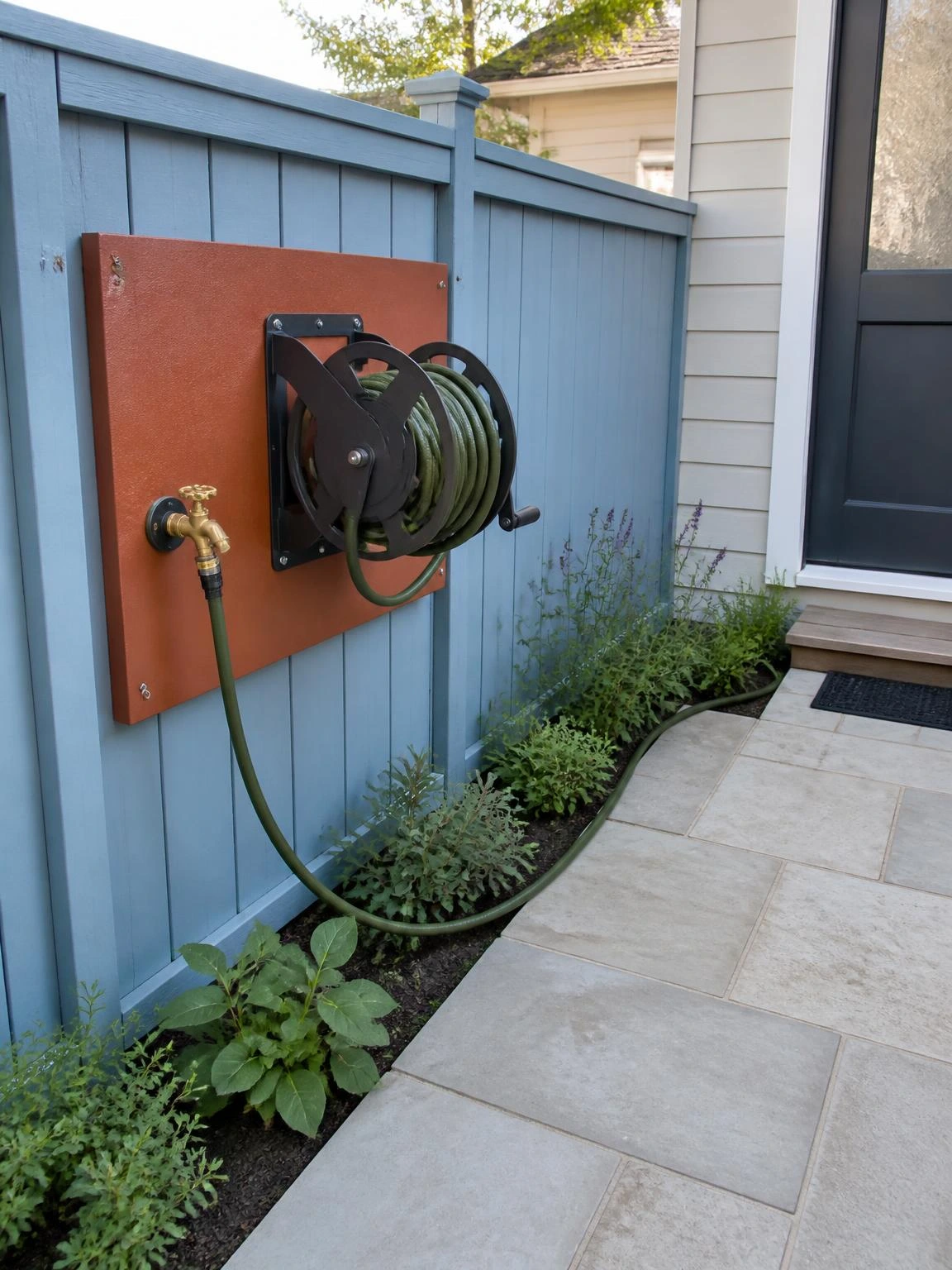
A hose left across the path can make a tidy garden feel difficult to use.
Mount a compact reel beside the outdoor tap on a rust-colored utility board.
Keep the reel close enough to avoid stretching the connection, then route the hose away from doorways.
Verify the wall and fixings support the reel plus a full hose.
The soft-blue fence and stone paving give the utility corner a calm backdrop.
19- Compact Compost Screen
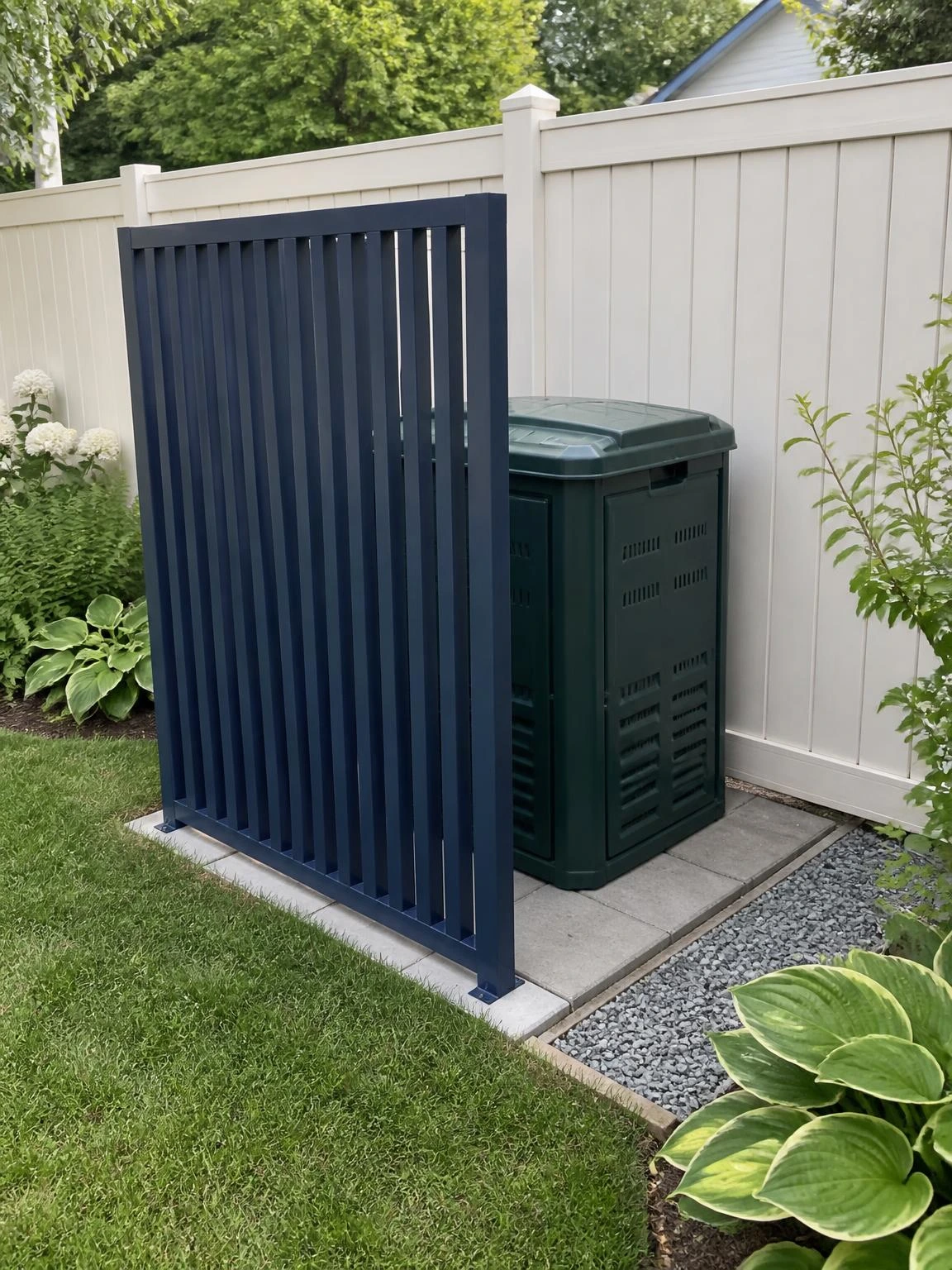
A small compost bin works best when access remains easy.
Place a lidded bin on concrete pavers behind a navy slatted screen.
Leave enough service space to lift the lid and remove the bin without dismantling anything.
Choose a location allowed by local rules and keep the lid secure against pests.
Warm-white fencing and muted green surroundings help the corner blend into the garden.
Making Small Garden Projects Work
The most useful DIY garden projects leave room for watering, walking, and maintenance.
Choose colors that repeat nearby, such as coral beside muted blue or terracotta near warm white.
Check weight, drainage, wind exposure, and wall strength before adding materials.
With those practical details settled, even one small planter can give an unused corner a clear purpose.