9 Living Room Brick Fireplace Ideas That Actually Look Good

A brick fireplace is one of those things that can either make a living room feel warm and grounded or look like it has not been touched since 1987.
Most people either love theirs or have been quietly ignoring it for years, not sure what to do with all that exposed texture staring back at them.
The usual assumption is that updating a brick fireplace means a full renovation, dust everywhere, and a contractor who is not available until spring.
Most of these living room brick fireplace ideas are things people can actually do themselves, or at least point a painter toward without a massive budget conversation.
Some of them change the whole feel of the room, and some just quietly fix the thing that was bothering everyone without anyone being able to explain why.
1- Whitewashed Brick for a Softer, Brighter Feel
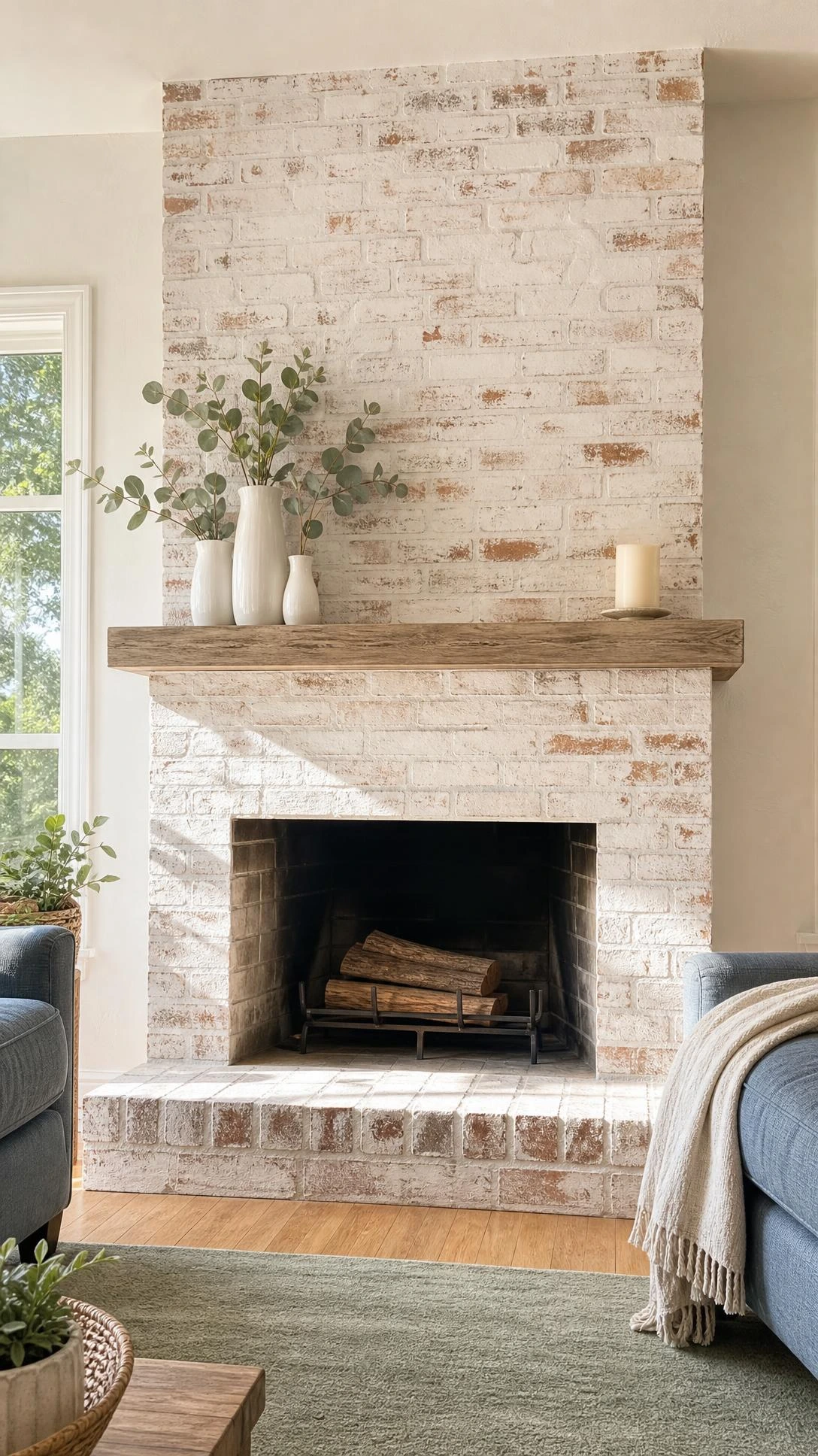
Whitewashing is one of those techniques that sounds like it might look unfinished, but it almost never does in person.
The idea is to dilute white paint with water, usually around a 50/50 ratio, and brush it onto the brick in thin layers so the texture still shows through underneath.
It softens the red without erasing it, which is a much more interesting result than painting the brick solid white.
A matte sealant applied after it dries locks in the finish and keeps it from looking chalky or picking up dust over time.
I think this works best in rooms that already have warm wood tones or linen-colored furniture, because the soft cream reads as intentional rather than half-done.
2- Painted Dark Brick for a Moody Living Room
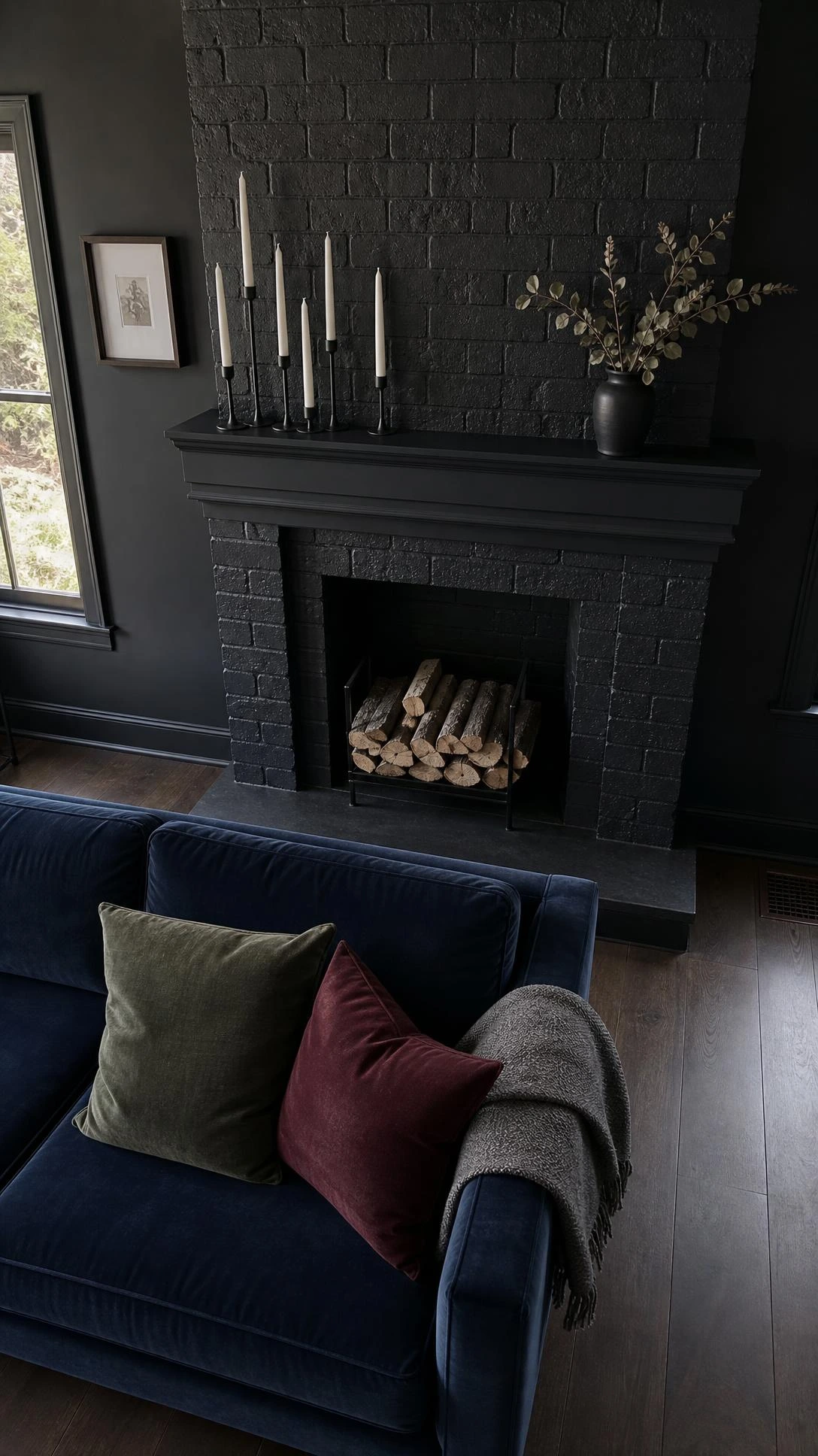
Going dark on a brick fireplace is one of those decisions that feels risky until it is done, and then the room suddenly has a spine.
Deep charcoal or a soft black pulls the fireplace forward as a real focal point instead of just a wall feature that blends into the background.
The key is balancing the dark brick with lighter elements nearby, like a pale rug, natural wood floors, or metallic accessories that catch the light.
Without that balance, the fireplace wall can start to feel like it is absorbing the rest of the room.
Most people who go this route end up wishing they had done it sooner, which is always a nice surprise after what felt like a bold commitment.
3- Rustic Red Brick with a Reclaimed Wood Mantel
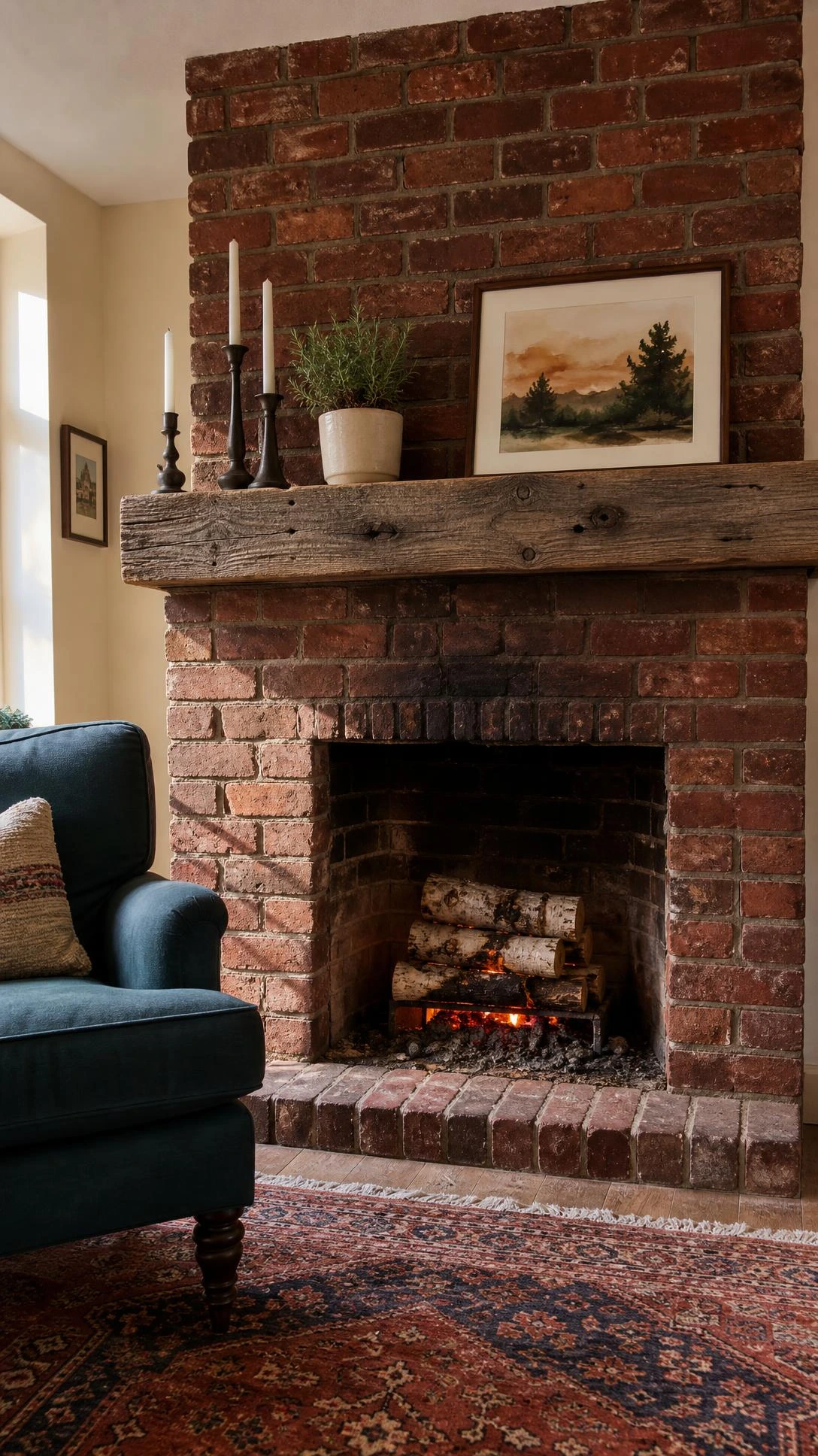
Original red brick is something a lot of people sand and paint over, which is genuinely a shame when the color is still warm and alive.
Pairing it with a reclaimed wood mantel is one of the easiest ways to lean into that natural, handcrafted feel without doing anything to the brick itself.
Chunky, rough-edged wood with visible grain and character works much better here than anything smooth and finished.
Adding plants nearby and keeping the surrounding wall light stops the whole setup from feeling heavy or cabin-dark.
The goal is just to let the materials do their thing without overcrowding the mantel with too many objects.
4- Herringbone Brick Pattern for Visual Interest
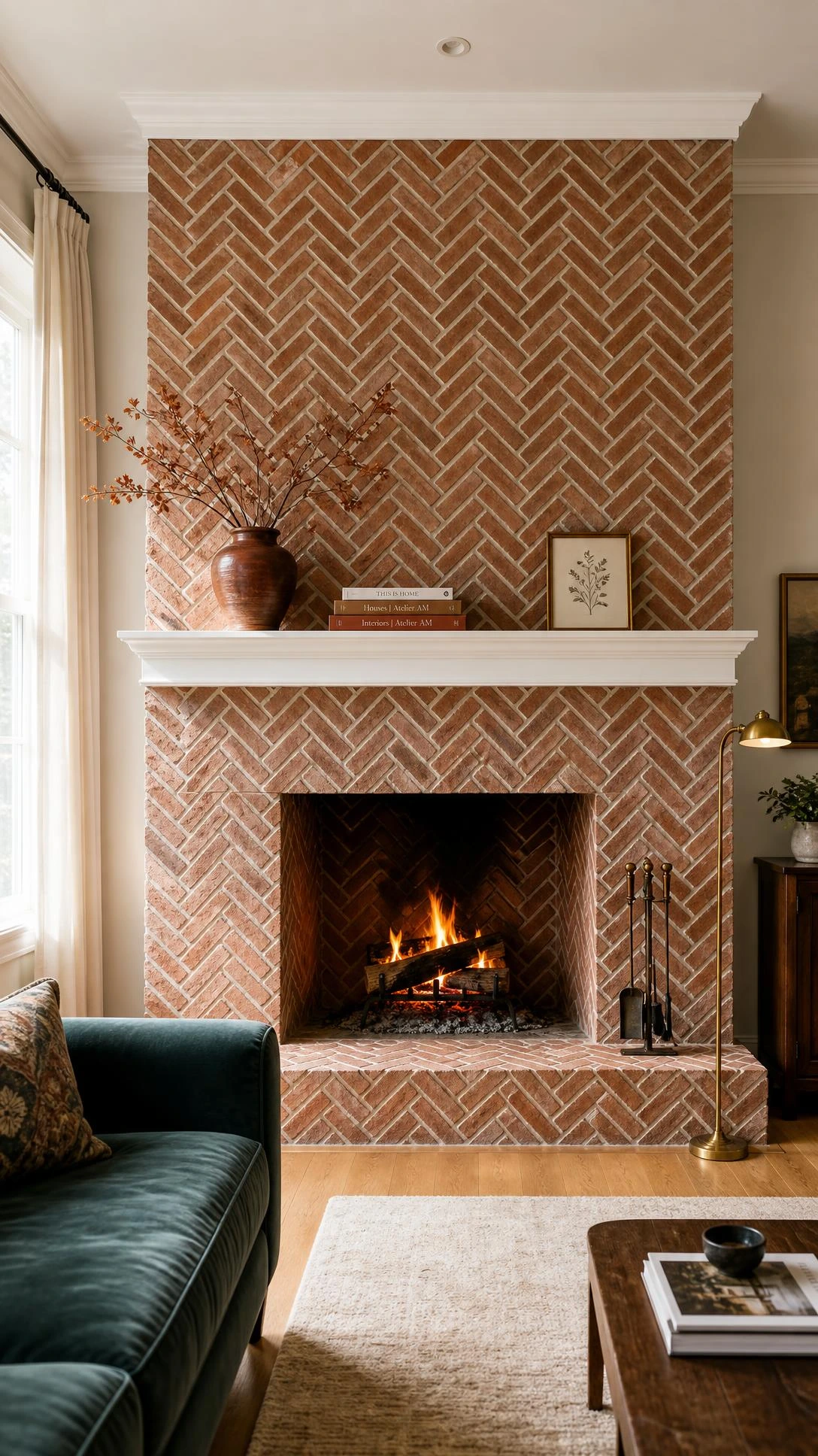
A herringbone brick pattern around or facing a fireplace is the kind of detail that makes a room look like someone actually thought about it.
It works especially well on a fireplace surround or as a feature panel above the firebox, where the angled pattern catches the eye naturally.
Using two slightly different brick tones instead of a single uniform color makes the herringbone geometry pop without needing anything fussy or decorative on top of it.
The most important thing is getting the symmetry right from the center out, because an off-center herringbone pattern is all anyone will see once they notice it.
This is one worth mapping out on paper before anything is set.
5- Floor-to-Ceiling Brick Statement Wall
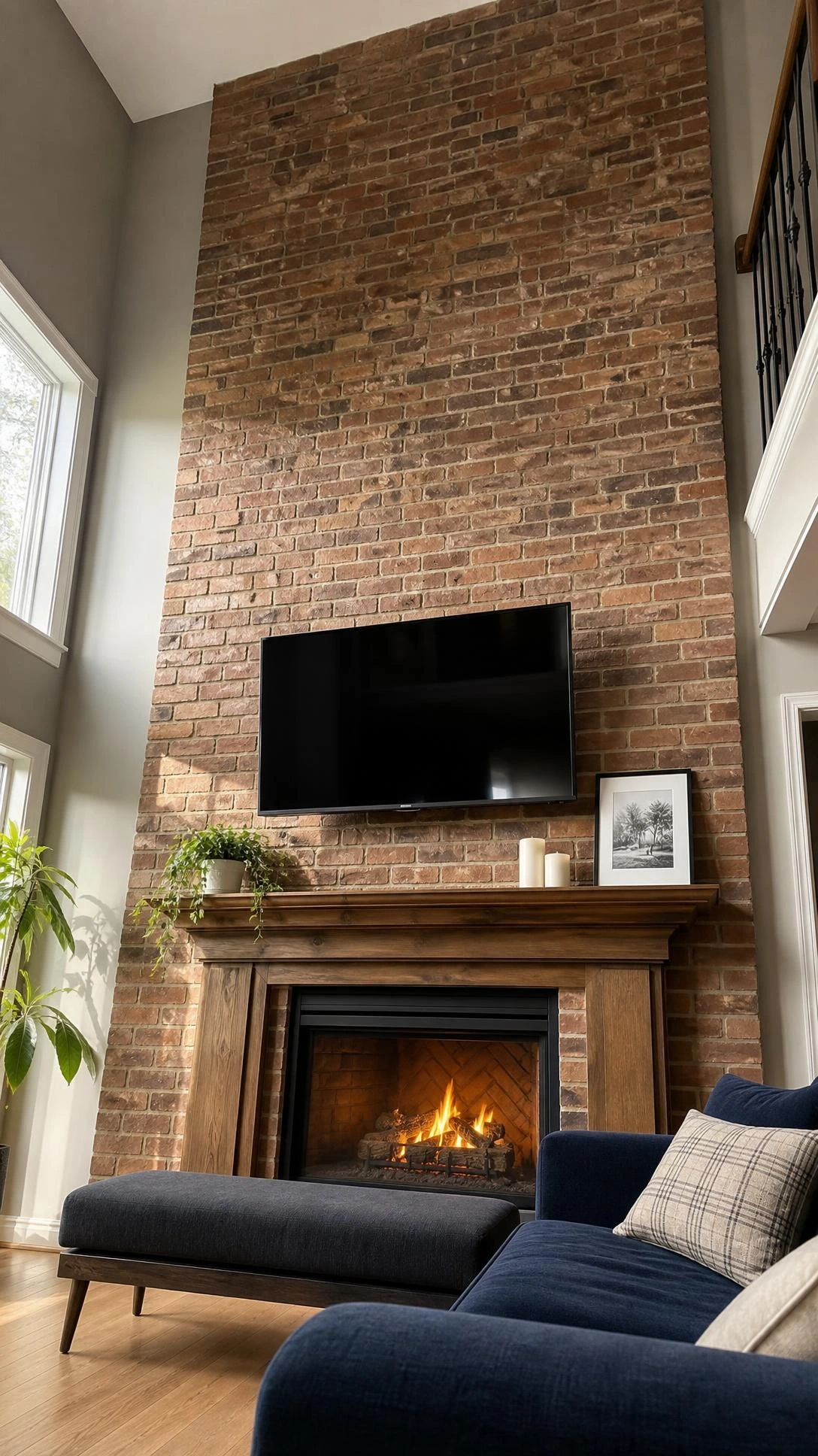
Extending the brick fireplace all the way up to the ceiling is one of those moves that turns a functional feature into an actual room decision.
It draws the eye upward, which makes ceilings feel higher and the whole space feel more considered and deliberate.
This works best in rooms with decent ceiling height, because in a low-ceilinged room it can start to feel like the walls are closing in.
Keeping the rest of the room simple, clean-lined furniture, minimal wall decor on the surrounding walls, lets the brick wall breathe and do its job.
It is a lot of material to commit to, so testing the look with a large mood board or a reference photo pinned up near the space first is not a bad idea.
6- Brick with Built-In Shelving on Either Side
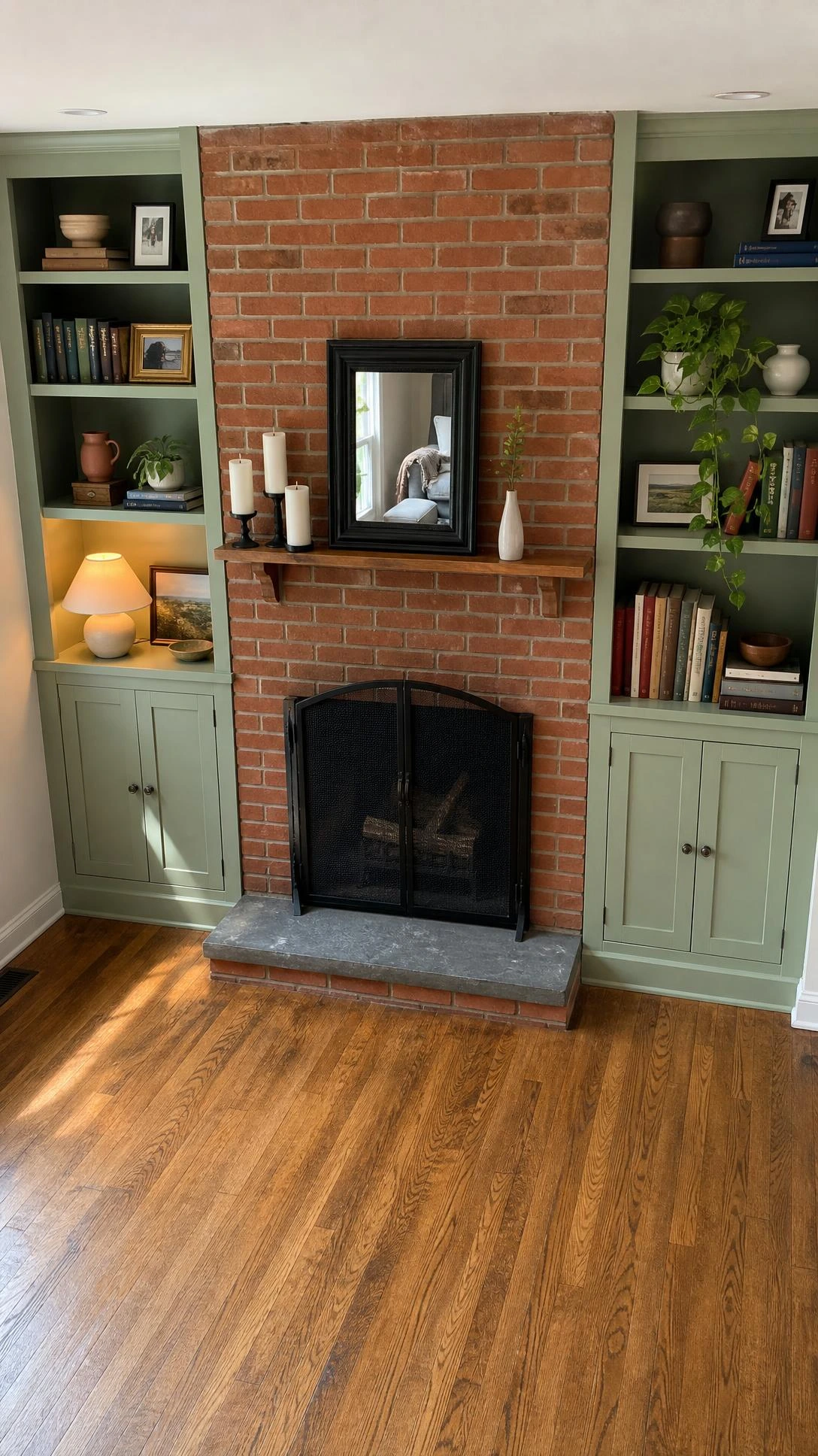
Flanking a brick fireplace with built-in shelving is one of those combinations that handles two problems at once, the room needs storage and the fireplace needs framing.
The shelving creates a sense of symmetry that makes even an awkwardly placed fireplace look like it was always meant to be exactly where it is.
Painting the shelves the same color as the surrounding wall, rather than matching the brick, keeps the whole thing cohesive without competing with the texture.
People tend to over-style built-ins, which ends up looking busier than the brick deserves, so keeping the shelves curated and a little sparse usually reads better.
Books, a few objects, some negative space, that is generally enough.
7- Contrasting Grout Color to Modernize Old Brick
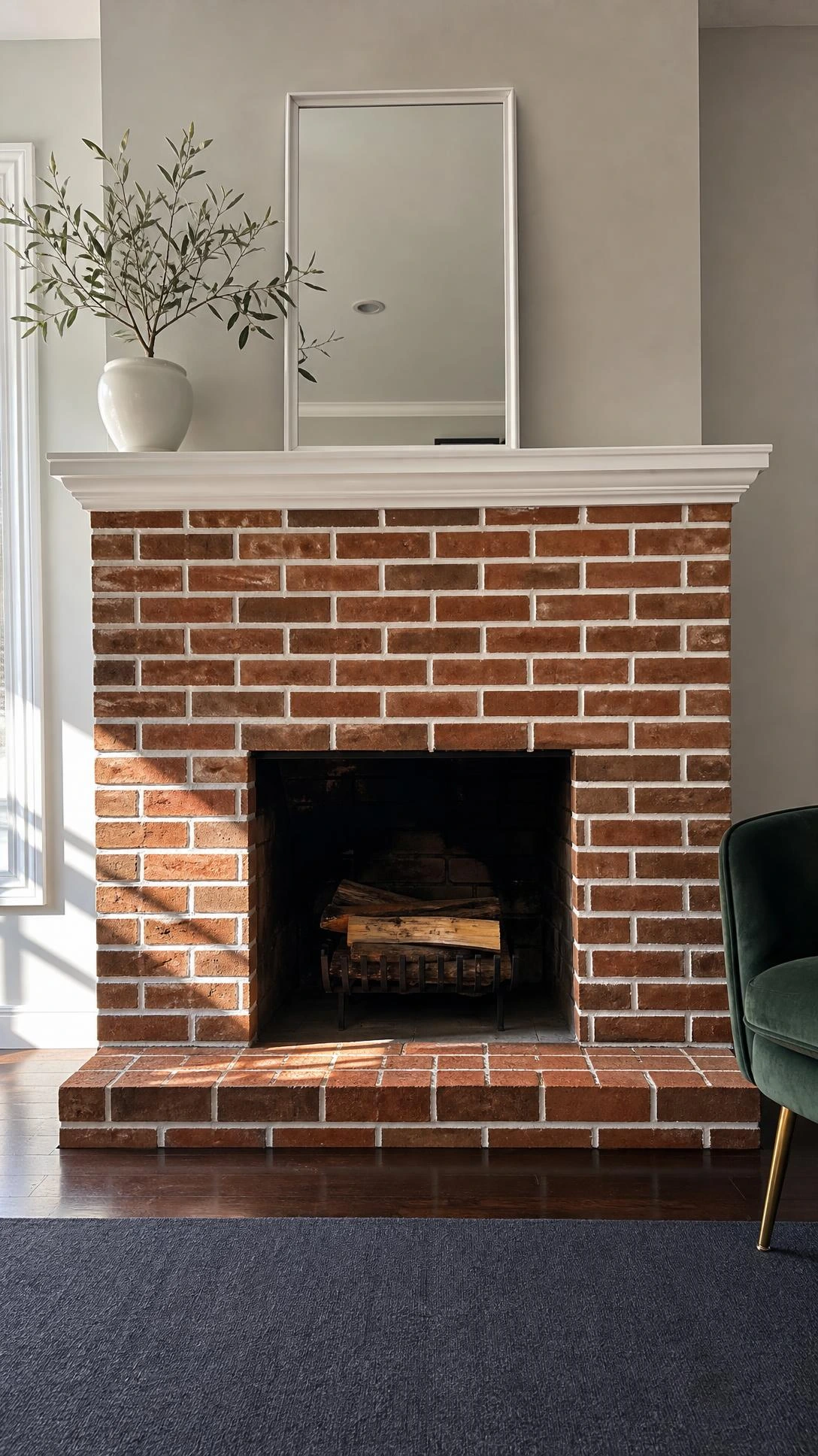
Nobody really talks about grout as a design element, but in a brick fireplace it is doing more visual work than most people realize.
Repointing the mortar with a contrasting color, a light gray against dark brick or a warm cream against red brick, adds depth and definition without touching the brick itself.
It is one of the more subtle updates on this list, but once someone starts paying attention to the grout lines they will notice how much the contrast changes the whole feel.
This is also a good option for older brick fireplaces where the mortar has started crumbling, because repointing needs to happen anyway and the color choice is essentially free at that point.
8- Limewash or German Schmear for an Updated Texture
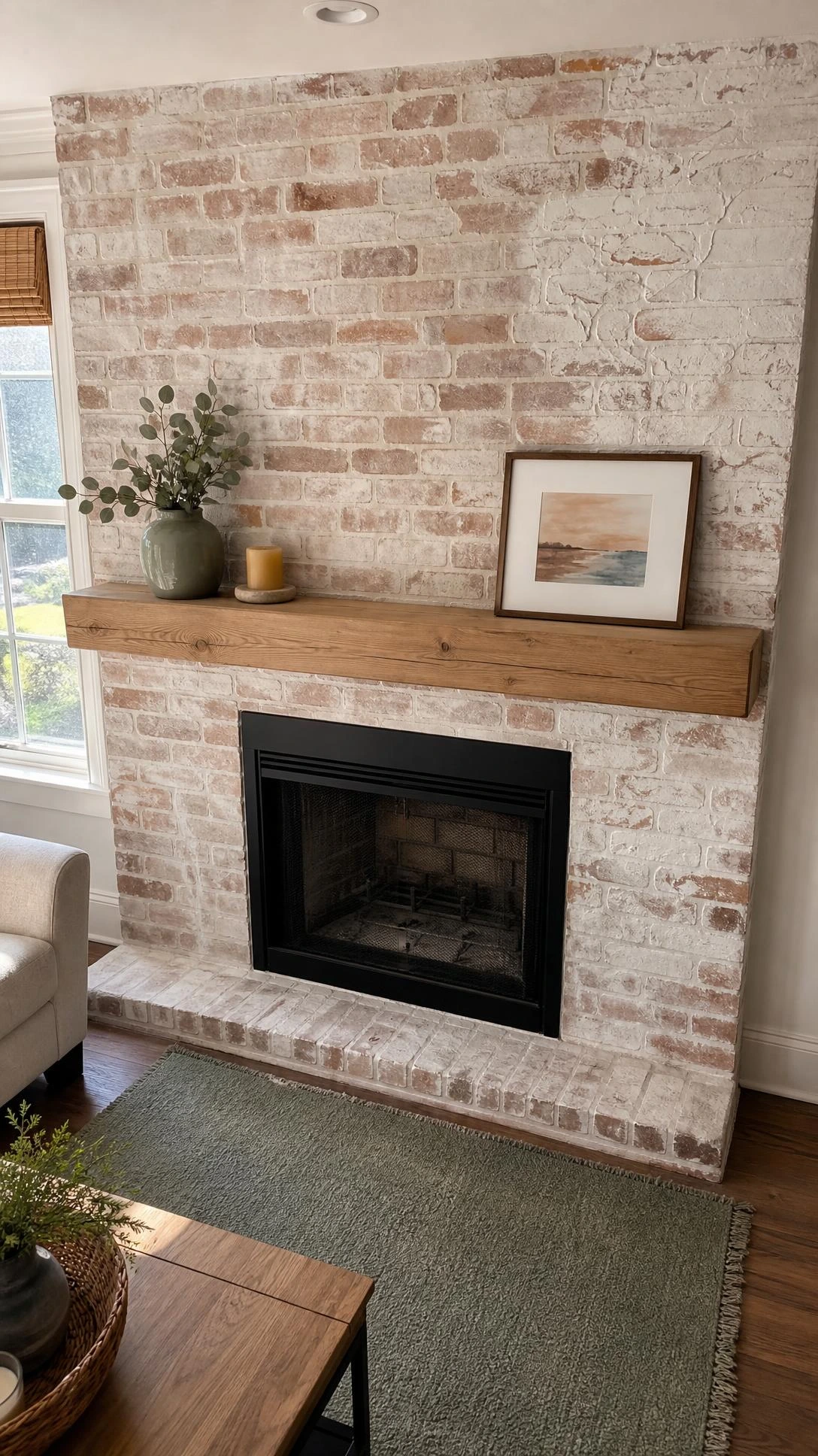
Limewash and German schmear are the two techniques that real people on forums keep bringing up when someone asks how to modernize a brick fireplace without losing the texture underneath.
Limewash gives a soft, aged, almost Mediterranean finish that looks like it has been there for decades in a good way.
German schmear is thicker, using a mortar-based application that settles into the gaps and creates a more rustic, irregular surface.
Both are more forgiving than regular paint because the variation is part of the look, so small imperfections just add character instead of looking like mistakes.
Most people find them easier to apply than expected once they practice on a small section first to get a feel for how much to leave and how much to wipe away.
9- Brick and Tile Combo for a Layered Look
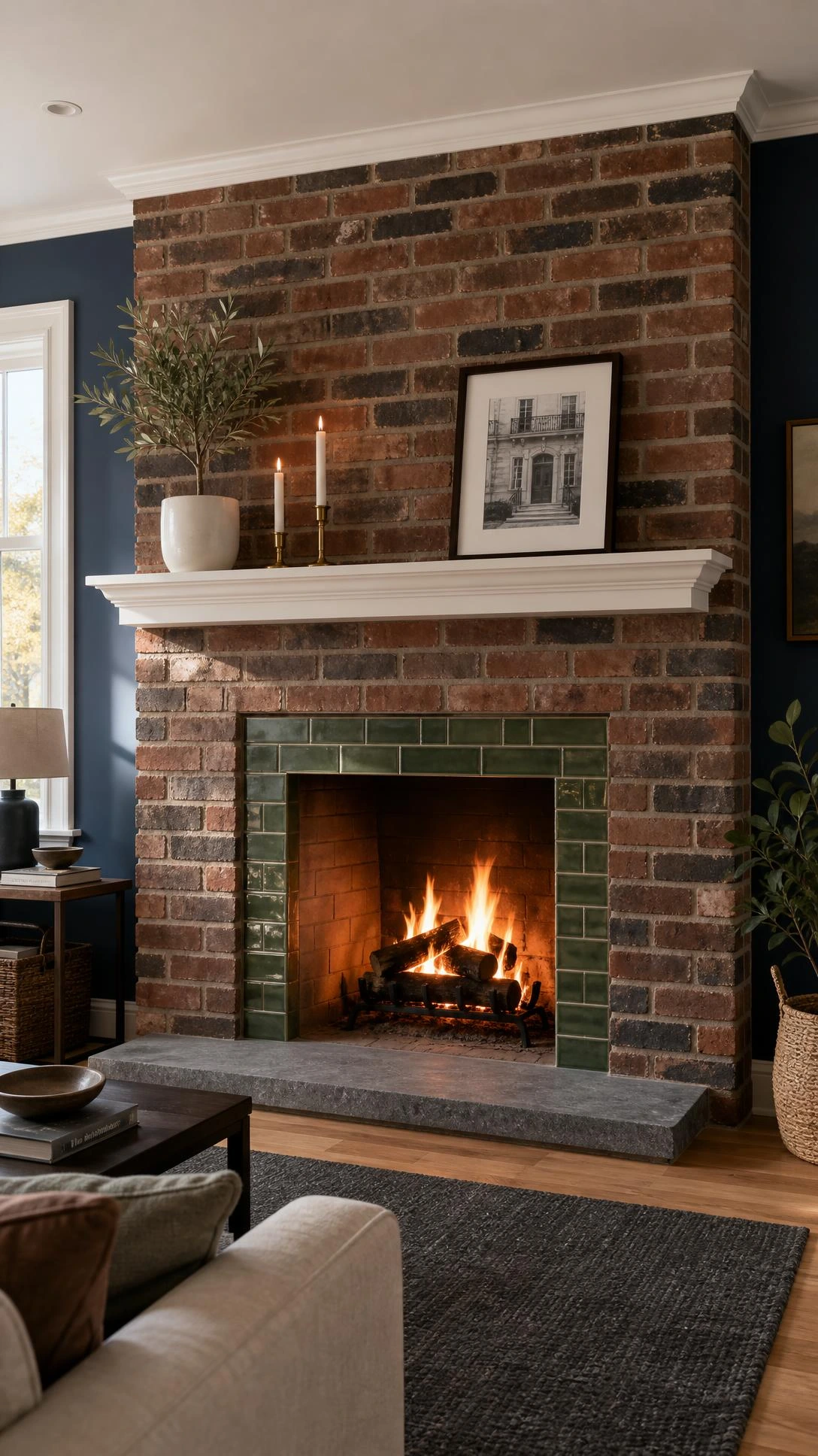
Combining brick with tile in a fireplace surround is one of those ideas that sounds like it might clash but rarely does when the materials are chosen with some intention.
A classic subway tile or a simple encaustic tile around the firebox opening against a full brick surround gives the fireplace two textures to work with instead of one.
The tile frames the actual fire opening and creates a clean, finished border that makes the brick feel more deliberate and less like raw construction material.
Keeping the tile neutral, white, off-white, or warm gray, lets the brick stay the main story without the two competing for attention.
It is also a good way to introduce a small amount of pattern into the room without committing to anything loud or hard to walk back.
The Easiest Place to Start with a Brick Fireplace
Most of these ideas cost far less than people assume, and several of them involve nothing more than a can of paint, a brush, and a free afternoon.
The brick fireplace ideas that tend to have the biggest impact are the ones that work with what is already there instead of fighting against it.
A little bit of contrast, some thoughtful framing, or a simple finish change can shift the whole feeling of a living room without moving a single piece of furniture.
Start with the one that solves the thing that has been quietly bothering you, and the rest tends to fall into place from there.